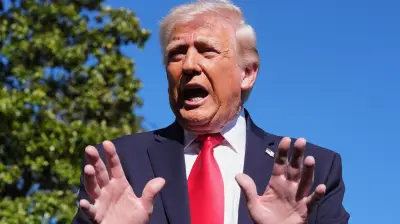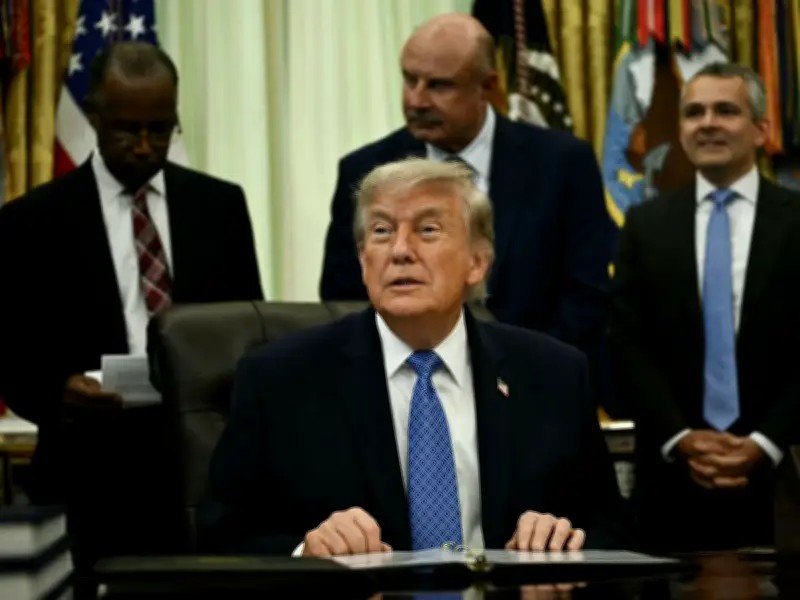
President Donald Trump has vowed to impose a 100% tariff on any country that implements a digital services tax (DST) targeting American companies, escalating trade tensions with European nations and others considering such measures.
Trump's Truth Social ultimatum
In a Truth Social post on Friday, Trump wrote that “numerous” European countries are discussing DST implementation, with some nearing completion. He declared: “Please let this statement serve to represent that any country that imposes such a tax will immediately be met with a 100 per cent tariff on any and all goods sent to the United States of America.” The tariff would override any trade deals “whether implemented, signed, or not,” he added.
Background on digital services taxes
Trump has repeatedly threatened tariffs against countries seeking to impose DSTs, arguing they unfairly target American tech giants. Around half of all European countries have implemented, announced, or proposed DST regimes, with rules already in effect in France, Poland, and the United Kingdom. Germany, Norway, and Belgium have proposed introducing DSTs.

Canada's DST rescinded
Last June, Trump cut off trade talks with Ottawa, citing Canada’s DST—first announced in 2020 and enacted in 2024—along with other trade irritants. Canada subsequently rescinded its DST in hopes of luring Washington back to the negotiating table.
U.S.-EU trade deal and DST gap
European Union nations signed off on the U.S.-EU trade deal negotiated by Trump and EU chief Ursula von der Leyen last July, which sets a 15% tariff rate on the bulk of EU exports to the U.S. and zero tariffs for American industrial goods flowing into EU countries. The agreement did not address DSTs.
Legal and policy implications
Peter Harrell, a visiting scholar at Georgetown University’s Institute of International Economic Law, wrote on X that Trump “cannot lawfully ‘immediately’ impose a 100 per cent tariff over Europe’s DSTs, though he could update his 2019 DST 301s to impose tariffs at some level” in the coming months. Harrell said Trump’s statement points to the risk of instability in any U.S.-EU trade deal and highlights the policy gap between Washington and Brussels.