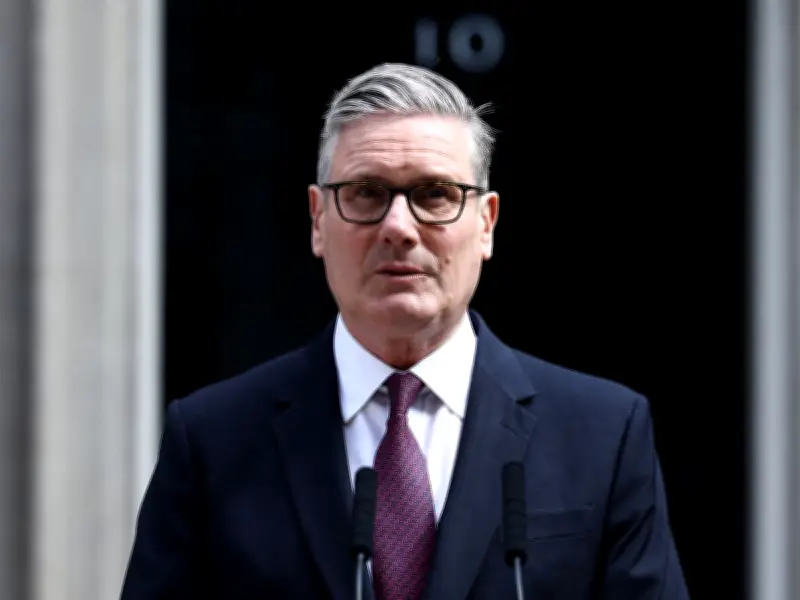
Keir Starmer announced his resignation as Britain's prime minister on Monday, setting in motion a leadership contest that is expected to culminate in Andy Burnham becoming the country's fifth premier since 2022. Starmer's voice faltered as he thanked his family and said he would devote more time to them after stepping down.
Starmer Steps Down After Labour Rebellion
Starmer's departure follows months of internal discontent within the Labour Party, crystallized by poor results in local elections in early May. While rumblings had long swirled around his leadership after a string of missteps, the electoral losses solidified the rebellion. In his resignation speech outside Downing Street, Starmer said: "The question my party is asking now is whether I am best placed to lead us into the next general election. I have heard the answer of my parliamentary party." He added that he accepted their verdict with "good grace."
Under Starmer's timeline, nominations for the Labour leadership open on July 9 and close on July 16. If only one candidate meets the nomination criteria, that person could become prime minister as early as July 17 or 18, according to a person familiar with the matter. If a contest is required, it would conclude by September 1, when Parliament's summer break ends. Starmer said he would remain in office until the process is complete to "ensure an orderly handover of power."

Andy Burnham Emerges as Frontrunner
Burnham, the mayor of Greater Manchester, declared his candidacy on X on Monday, stating he would "put himself forward." His path was cleared when former Health Secretary Wes Streeting, widely seen as a potential rival, immediately endorsed him. Streeting posted a statement saying he was "convinced" there was a place for his own ideas under Burnham's leadership. "We could spend the summer exaggerating small differences, or we can roll up our sleeves and help him deliver the change our party and our country needs," Streeting said. "That is the choice I am making and I hope that everyone else will back Andy, too."
Burnham's prospects were bolstered by his recent victory in a special election in Makerfield, near Manchester, where he defeated Nigel Farage's Reform UK party. Reform had swept all council seats in the same area during local elections just six weeks earlier, making Burnham's win a significant demonstration of his ability to beat the populist party. Streeting called it a "victory for unity and hope over division and hatred."
Political Fallout and Calls for General Election
Starmer's exit marks a jarring milestone for Britain's political system, which once prided itself on stability. He becomes the fifth prime minister since 2022, following Boris Johnson, Liz Truss, Rishi Sunak, and Starmer himself. Farage called for a general election on Monday, saying his party stood "ready to deliver radical change." Conservative Party Leader Kemi Badenoch described Starmer as a "terrible prime minister," while Liberal Democrat leader Ed Davey said "the British people are sick of being let down by an endless merry-go-round of prime ministers while nothing really changes."
With Burnham likely to take over without a contest, Britain could have a new prime minister within weeks. The transition is expected to proceed smoothly, with Burnham's soft-left positioning seen as unifying for a party eager to move past internal divisions.