







Chinese-Canadian Solar Tycoon Defies Trump's 'Scam' Label with U.S. Manufacturing Push
Solar Tycoon Challenges Trump's 'Scam' Label with U.S. Factories

Chinese-Canadian Solar Pioneer Charts American Manufacturing Renaissance

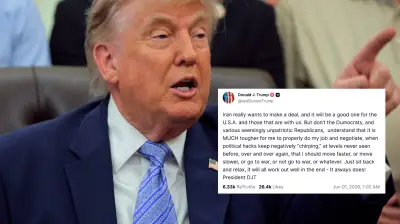
While former President Donald Trump has labeled solar energy "the scam of the century," Chinese-Canadian entrepreneur Shawn Qu is betting his company's future on a massive U.S. manufacturing expansion that he believes could revitalize American industry. The founder and CEO of Canadian Solar Inc., based in Kitchener, Ontario, has embarked on an ambitious plan to establish a network of factories across the United States, positioning solar technology as both an environmental solution and an economic opportunity.

From Humble Beginnings to Solar Visionary

Qu's journey to solar leadership began with modest origins. Growing up in post-Cultural Revolution China, his mathematician parents steered him away from arts education toward technical fields, ultimately leading him to physics. His academic path brought him to Canada in the mid-1980s for graduate studies at the University of Manitoba, where he encountered a country of vast open spaces and opportunity.

"My English was rough, winters were cold, and I had no clue about what my future might hold," Qu recalls of his early Canadian experience. He became a Canadian citizen in 1993 and would later found Canadian Solar in 2001, naming the company as a tribute to his adopted homeland where he met his wife, raised three children, and developed his business acumen.

The American Manufacturing Gambit

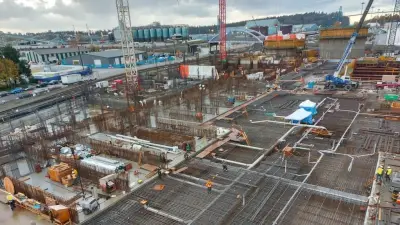
Qu's current focus represents a strategic pivot toward American production. Canadian Solar has already opened a $250-million plant in Mesquite, Texas, employing 1,400 workers and capable of producing 20,000 solar panels daily. Additional facilities are planned for Kentucky and Indiana, with potential expansion depending on business conditions.

"We see solar not only as a solution for climate change, but a solution for energy," Qu explains. His vision involves scaling down overseas production to bring manufacturing closer to key markets, creating what he describes as a "fairytale" return for U.S. manufacturing capabilities.

Navigating Political Headwinds

This expansion occurs against a complex political backdrop. The Trump administration has actively worked to dismantle green energy subsidies while boosting support for fossil fuels. Executive orders have created permitting delays for thousands of megawatts worth of solar projects, and federal tax credits for solar face elimination under proposed legislation.

Qu maintains a diplomatic stance regarding political figures, focusing instead on the economic and technological case for solar. "The U.S. has its challenges," he acknowledges, citing policy uncertainty as a significant concern. Yet he remains optimistic about long-term prospects, noting that establishing manufacturing operations represents a "generational undertaking" rather than a temporary venture.

Solar's Growing Market Presence

Despite political opposition, solar energy has achieved remarkable market penetration. Once accounting for negligible electricity generation, solar now provides approximately 4% of U.S. power, with the industry valued at $71.3 billion in 2024. Employment in the sector has reached 370,000 Americans—more than double coal industry employment—though still trailing petroleum and natural gas.

Growth has been particularly strong in unexpected regions. Texas leads the nation in utility-scale solar development, followed by Florida, with agricultural states like Iowa showing increasing adoption. Nearly 80% of new electricity generation added to the U.S. grid in 2025 came from solar, with similar growth projected for 2026.

Technological and Economic Advantages

Solar's competitiveness has improved dramatically through technological advances. The average price per watt has plummeted from $128 fifty years ago to approximately 25 cents today, making solar economically viable without relying on environmental appeals alone.

"This field is still relatively new compared to any other source of power generation and it is currently the least expensive, and that is expected to continue," observes Scott Spak, associate professor at the University of Iowa's School of Planning and Public Affairs. "More solar generation is proposed in the pipeline in the United States than there is actual generation today by a factor of two."

Overcoming Personal and Professional Challenges

Qu's journey hasn't been without personal adversity. In May 2019, he suffered a spinal cord injury in a car accident that left him paralyzed from the waist down. After intensive rehabilitation, he continues to lead his company from a wheelchair, maintaining an active travel schedule to visit facilities and engage with employees.

"I start to see that I am not always lucky," Qu reflects. "I'm just a middle-talent person, just like every other human being, and there can be challenges and difficult days, and you work hard, and sometimes miracles happen, and sometimes miracles don't happen, but the key is to be resilient."

Future Frontiers: Space and Storage Solutions

Looking ahead, Qu envisions solar applications extending beyond terrestrial boundaries. His Texas factory already produces panels designed for space deployment, and he sees potential for solar arrays to power artificial data centers in orbit.

"In space, solar has no competitor," Qu recently stated on social media. "When energy is needed beyond Earth, solar is not an option; it is the answer."

Closer to home, Canadian Solar's American subsidiary, Recurrent Energy, is developing a $470-million solar energy storage project in Arizona. The company continues research into fuel cell integration and other technologies to address solar's intermittency, aiming to provide reliable 24/7 power regardless of weather conditions.

Bridging Cultural Divides

Qu's approach to business emphasizes collaboration across cultural boundaries. Milfred Hammerbacher, an early mentor and colleague, describes Qu's philosophy: "Shawn's approach to business is that there are no enemies." This perspective has informed Canadian Solar's operational style, which Hammerbacher characterizes as a "United Nations" approach to team building.

As geopolitical tensions occasionally surface regarding Qu's Chinese heritage and business connections, he maintains an open engagement strategy. "I see this as my job to go out and talk to people and to make sure people see my face and hear me," he says. "I don't think I am a threat to anybody. I am maybe a threat to my competitors, but that's business competitors, right?"

With manufacturing operations expanding and technological innovation continuing, Qu's vision for solar energy represents both a challenge to political orthodoxy and a potential pathway for American industrial renewal. As the energy landscape evolves, his bet on American manufacturing capacity may prove prescient regardless of political winds.