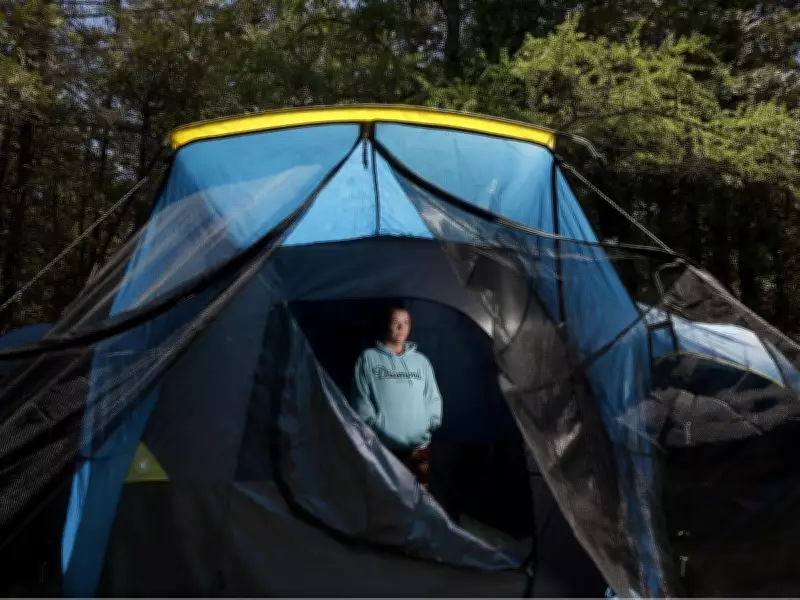
Amy Ayers and her three children, aged 26, 15 and 14, along with their cat and dog, are living in a tent in an Ottawa forest. Not for recreation, but because they have nowhere else to live.
Their precarious housing situation began more than a year ago. Ayers spent last winter in a heated camper but was asked to leave at the end of March. The family found temporary shelter with a friend. As of May 1, they had been without a home, cycling between hotels and the campsite.
‘I had panic attacks, anxiety, some severe depression’
Ayers described the emotional toll of losing everything. “I had panic attacks, anxiety, some severe depression, just from having to more or less get rid of everything I own,” she said. “It was almost like your house burned down and you lost everything. It was kind of like that feeling.”

Her oldest son discovered the open space in the forest by searching satellite images of city-owned woodlands. The campsite is only a few hundred metres from a highway. Hikers and dog walkers often pass nearby, but the family has either gone unnoticed or people have chosen not to notice.
“We went. We checked it out. We tried it for a night. It’s nice and quiet. It’s perfect,” Ayers said.
Shelter system overwhelmed
Ayers said she wanted her story told to draw attention to the struggles families face accessing emergency shelter. Shelters are overflowing, emergency accommodations are extremely limited, and families with pets face additional barriers. Many parents are forced into impossible choices between safety, keeping their children together, or surrendering beloved pets.
“There are gaps in the system for families in crisis,” she said.
According to a report to city council, demand for services for Ottawa families experiencing homelessness has steadily increased in recent years, except for a drop at the start of the COVID-19 pandemic. In January 2023, the system served an average of 377 families per night. By March 1, 2026, that number had risen by 76 per cent to 664 families, including about 1,220 children. About 41 per cent of those children were under age six. The length of stay for families also increased by 135 per cent in the past two years, averaging 327 days.
The city has seen a significant increase in families accessing the system, resulting in an unbudgeted hotel spend of $29.3 million for the City of Ottawa, director of housing and homelessness services Kale Brown told the community services committee in April. Family sizes have also continued to grow over the past two years.
The core problem is that more people are entering the system than leaving it. There has been a 42-per-cent decrease in outflow from the system, coupled with an inflow of people, including those coming to Ottawa from other municipalities, Brown told the committee.