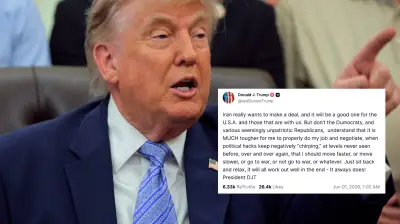








U.S. stock markets endured their most punishing session since the onset of the war with Iran, as optimism for a swift ceasefire evaporated and was replaced by deepening uncertainty. On Thursday, the S&P 500 index plummeted 1.7%, marking a significant reversal from prior gains and setting the stage for a potential fifth consecutive weekly loss. If this losing streak continues, it would represent the longest such period of decline in nearly four years.
Major Indexes Tumble Amid Geopolitical Tensions
The Dow Jones Industrial Average dropped 1%, while the technology-heavy Nasdaq composite suffered a steeper 2.4% decline. These dramatic movements reflect the latest volatility in global financial markets, which began the week with hope following President Donald Trump's announcement of productive talks, only to see those hopes dashed by Iran's rejection of a U.S. ceasefire proposal.
Oil Prices Surge as Strait of Hormuz Tensions Escalate
Concurrently, oil prices experienced a sharp upward trajectory, with Brent crude climbing 4.8% to settle at $101.89 per barrel. This surge is directly linked to Iran's tightening control over the strategically vital Strait of Hormuz, a narrow waterway through which approximately one-fifth of the world's oil transits from the Persian Gulf to global markets. Benchmark U.S. crude followed suit, rising 4.6% to $94.48 per barrel.
The escalating situation has pushed oil prices significantly higher than the pre-war level of roughly $70 per barrel, with occasional spikes nearing $120. President Trump responded forcefully on his social media platform, warning Iran's negotiators: "They better get serious soon, before it is too late, because once that happens, there is NO TURNING BACK, and it won't be pretty!"
Inflation Fears Intensify as Treasury Yields Climb
The spike in oil prices has exacerbated existing concerns about persistent inflation, leading to increased activity in the bond market. The yield on the 10-year Treasury note climbed to 4.41% from 4.33% the previous day, representing a substantial increase from the 3.97% level observed before the war began. This upward movement in yields has already translated to higher borrowing costs for mortgages and various loans, potentially slowing economic activity.
Tech Stocks Bear the Brunt of Market Sell-Off
Technology shares were particularly hard-hit during Thursday's trading session. Meta Platforms saw its stock price fall 8.1%, while Alphabet declined 3.3%. Both companies had maintained relative stability the previous day despite a landmark jury verdict finding Instagram and YouTube liable in a social-media addiction trial.
Although the financial penalties imposed were minimal compared to these tech giants' substantial profits, the ruling could signal a watershed moment that invites further litigation. Other major technology stocks also declined, with Nvidia dropping 3.6% and Amazon falling 1.8%. Apple proved an exception, posting a modest 0.6% gain.
Global Markets Reflect Widespread Concern
The market downturn was not confined to U.S. exchanges. International markets experienced similar declines, with Germany's DAX losing 1.5%, Hong Kong's Hang Seng sinking 1.9%, and South Korea's Kospi dropping 3.2%. Japan's Nikkei 225 recorded a comparatively milder 0.3% decline.
Economic Indicators and Federal Reserve Implications
A Thursday morning report indicated a slight increase in U.S. workers filing for unemployment benefits, though the number remains low by historical standards. Typically, a softening job market might encourage the Federal Reserve to consider interest rate cuts to stimulate economic growth.
However, Wall Street's expectations for rate reductions in 2026 have diminished significantly. Traders who began the year forecasting multiple cuts now face the reality that lower interest rates could potentially worsen inflation, a concern amplified by the recent surge in oil prices.
Corporate Performance and Market Conditions
Beyond the technology sector, Commercial Metals fell 2.2% after reporting weaker-than-expected quarterly profits. CEO Peter Matt attributed the disappointing results to adverse weather conditions affecting North American operations, while noting that underlying market fundamentals remained favorable.
As thousands more U.S. troops approach the region and Iran advances its own ceasefire proposal—which includes demands for war reparations—financial markets continue to respond with heightened sensitivity to geopolitical developments. The combination of military escalation, energy market disruptions, and inflation concerns has created a perfect storm of uncertainty for investors worldwide.