
Energy Price Shock to Worsen Canada's Inflation, Economists Say
Chief economist Pedro Antunes discusses rising CPI data, highlighting energy costs as a key driver of inflation, with broader economic implications for Canadian households and policy.


Chief economist Pedro Antunes discusses rising CPI data, highlighting energy costs as a key driver of inflation, with broader economic implications for Canadian households and policy.

A Bank of Canada survey reveals firms' outlooks were improving prior to the Iran conflict, with inflation expectations easing and hiring plans increasing.

While Prime Minister Mark Carney points to improving indicators, housing and food costs continue to strain Canadian households, with living standards remaining stagnant.

Statistics Canada reports annual inflation rose to 2.4% in March, driven by soaring fuel prices following Iran's Strait of Hormuz closure. Food inflation decreased to 4%.

Shared lists with real-time sync. No signup needed — just open and shop together.
Recommended
Statistics Canada reports inflation accelerated to 2.4% in March, up from 1.8% in February, with fuel prices surging over 21% due to geopolitical tensions.

Canada's inflation rate jumped to 2.4% in March, driven by rising oil prices from the Iran conflict, according to Statistics Canada. The increase marks a significant shift in economic pressures.

Canada's inflation rate increased to 2.4% in March, driven by rising costs in key sectors. This uptick signals ongoing economic pressures for consumers and businesses nationwide.

The Canadian government's temporary suspension of the federal gasoline and diesel tax has officially begun, aiming to reduce fuel costs for consumers amid global price pressures.

Statistics Canada is poised to unveil March inflation data, offering critical insights into economic trends and consumer price pressures across the nation.
Shared lists with real-time sync. No signup needed — just open and shop together.
Recommended
A former Bank of Canada governor predicts a 30% probability of Canada falling into a recession due to mounting global economic challenges and domestic vulnerabilities.
A former Bank of Canada governor warns Canada faces a 30% probability of entering a recession due to mounting global economic challenges and domestic pressures.
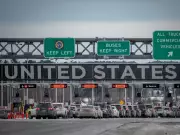
Young Canadians are leaving due to economic challenges, not lack of patriotism. Solutions require fixing systemic issues rather than punitive measures like proposed $500K exit fees.

Cuba has approved a new policy allowing members of its diaspora to invest in the country, marking a significant economic reform aimed at boosting foreign capital and development.
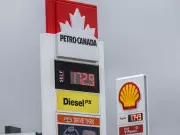
Economists predict gas prices will significantly impact Canada's inflation report. Bank of Canada discusses AI risks, while experts debate mortgage terms and retirement savings strategies.
Shared lists with real-time sync. No signup needed — just open and shop together.
Recommended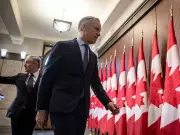
The International Monetary Fund praises Canada's fiscal strength relative to other G7 countries, highlighting its debt management and economic resilience amid global challenges.
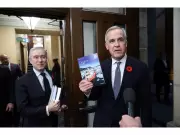
The International Monetary Fund highlights Canada's robust fiscal standing compared to other G7 countries, with Finance Minister Francois-Philippe Champagne set to release a mini-budget update.

Federal and provincial debt accumulation is accelerating simultaneously, with total public liabilities projected to reach $2.526 trillion by year's end, matching Canada's annual economic output for the first time since the 1990s.

Inflation is projected to jump significantly in March as the effects of the Iran oil shock enter price data, driven by rising gas prices and broader economic pressures.
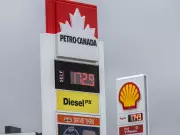
Economists predict a significant shock to Canada's March inflation report due to a record 21% gas price surge between February and March, driven by Middle East tensions.
Shared lists with real-time sync. No signup needed — just open and shop together.
Recommended
Economist Jack Mintz argues against exit fees or restrictions for Canadians leaving, linking brain drain and Alberta separation to dissatisfaction with opportunities at home.

A comprehensive RBC report reveals that Canada experienced over $1 trillion in investment exodus during the Liberal tenure, with GDP per capita growth falling below 1% due to regulatory burdens and policy uncertainty.

The International Monetary Fund cautions that Asia's economies are highly exposed to potential energy supply disruptions caused by geopolitical conflicts, threatening regional stability.

China's economy demonstrated resilience with 5% growth in the first quarter of 2026, overcoming initial disruptions from the Iran conflict. The expansion highlights robust domestic demand and technological innovation.
The International Monetary Fund warns that deficits and debts are dangerously high worldwide, urging governments to exercise fiscal restraint despite pressures from the Iran-Israel-U.S. conflict.
Shared lists with real-time sync. No signup needed — just open and shop together.
Recommended
A Fraser Institute study reveals Canada's federal equalization program has overpaid 'have not' provinces by $10.5 billion since 2018 due to a design flaw, with Alberta, B.C., and Saskatchewan subsidizing others disproportionately.

Regina, Saskatchewan is experiencing the effects of a worldwide helium shortage, driven by the ongoing conflict in the Middle East, which is disrupting supply chains and affecting local industries.

Treasury Secretary Scott Bessent indicates that former President Donald Trump's tariffs could be reinstated to previous levels by early July, following Supreme Court setbacks and new Section 301 investigations.

Prime Minister Mark Carney's temporary suspension of federal excise taxes on gasoline and diesel could ease inflation pressures and influence Bank of Canada monetary policy decisions amid Middle East conflict disruptions.

Inflation in Canada acts as a hidden tax, disproportionately affecting families and seniors while creating social divisions. Structural factors and policy decisions have fueled this persistent economic challenge.
Shared lists with real-time sync. No signup needed — just open and shop together.
Recommended
Winnipeg drivers express varied opinions on a temporary federal gas tax reduction, with some welcoming relief and others questioning its impact amid ongoing economic pressures.
