

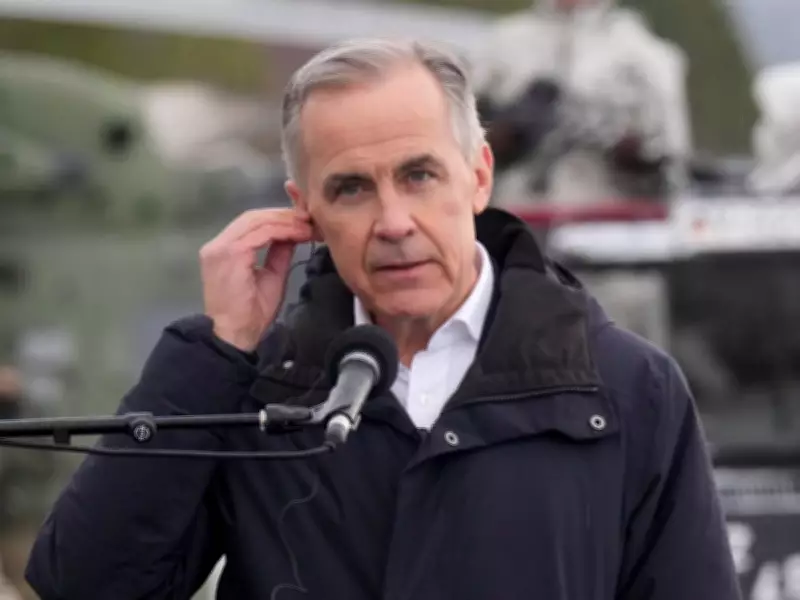
Carney's Economic Leadership Fails to Deliver Promised Recovery
When Mark Carney assumed the role of prime minister one year ago, his central pledge was to revitalize Canada's struggling economy. The former central banker promised to end the stagnation that characterized Justin Trudeau's tenure and steer the nation toward prosperity with his financial expertise. However, the reality has proven starkly different, with the Canadian economy emerging as one of the most significant weaknesses of the Carney administration.
Economic Indicators Show Consistent Decline
While the Prime Minister's Office highlights minor achievements in areas like immigration control and military recruitment, Canada's crucial economic metrics reveal a troubling pattern of stagnation and regression. The Carney government's economic performance stands in sharp contrast to the optimistic promises made during his inauguration.
Unemployment Crisis Deepens Under Carney's Watch
Recent Statistics Canada data reveals devastating job losses, with the Canadian economy shedding 84,000 positions in February following an additional 24,000 job losses in January. This represents the most severe employment decline since the COVID-19 pandemic era and solidifies Canada's position as having the second-highest unemployment rate among major economies, trailing only France.

Canadian unemployment currently stands at 6.7 percent, significantly higher than comparable nations. The United Kingdom maintains a 5.2 percent unemployment rate, the European Union averages 5.8 percent, and the United States reports just 4.4 percent unemployment.
Despite Carney's claims of creating 80,000 "net" jobs during his tenure, the unemployment rate has barely improved from 6.8 percent when he took office to the current 6.7 percent. Statistics Canada characterized this minimal change as "virtually unchanged from 12 months earlier."
Private Sector and Youth Employment Hit Hardest
The employment situation becomes even more concerning when examining private sector data. Since Carney assumed leadership, the number of non-government jobs has actually decreased from 13.49 million to 13.48 million positions.
Young workers face particularly severe challenges, with youth unemployment reaching 14.1 percent. However, this figure doesn't account for tens of thousands of young Canadians who have abandoned job searches entirely, removing themselves from official labor force statistics. Analyst Richard Dias notes that including these "inactive" youth would push Canada's youth unemployment rate to nearly 18 percent—a level not seen since the 1990s.
Productivity Stagnation and International Comparisons
Canada's productivity crisis continues unabated under Carney's leadership. Productivity, measured as GDP generated per worker, has shown consistent decline over the past decade. Each year, the average Canadian worker produces slightly less wealth than the previous year.
This productivity stagnation occurs while American productivity soars, creating an increasingly competitive disadvantage for Canadian businesses and workers. The only factor preventing a decade-long recession has been Canada's reliance on immigration-driven population growth to artificially boost GDP numbers.
Shifting Trade Dynamics and Economic Position
Compounding these economic challenges, Mexico has now surpassed Canada as the United States' largest trading partner. This significant shift in North American trade dynamics represents another economic setback during Carney's tenure and reflects broader concerns about Canada's competitive position in international markets.
The combination of job losses, stagnant productivity, and declining trade prominence paints a troubling picture of Canada's economic trajectory under Carney's leadership, directly contradicting the central promise of his premiership.






