A significant geopolitical shift is underway, with the ideology of the Muslim Brotherhood and its state sponsors coming under increased international pressure. This movement coincides with what some analysts describe as the potential end of the Islamic Revolution in Iran, creating a pivotal moment in the Middle East.
Global Crackdown on Muslim Brotherhood Branches
The United Arab Emirates recently issued a strong statement welcoming the decision by the United States to designate several branches of the Muslim Brotherhood as terrorist organizations. This move by a Muslim-majority nation represents a clear stance against radical Islamist ideologies. The U.A.E. explicitly acknowledged U.S. President Donald Trump's sustained efforts to counter the violence and destabilizing activities perpetrated by these groups worldwide.
This development follows a 2018 U.S. House Oversight and Government Reform Committee hearing titled "The Muslim Brotherhood's Global Threat." Testimony revealed the organization, founded by Hassan al-Banna in 1928, operates in over 70 countries with the stated goal of establishing a new Islamist caliphate under Shariah law. Al-Banna himself declared jihad an "obligation from Allah."

President Trump's initial actions targeted Muslim Brotherhood branches in Lebanon, Jordan, and Egypt—the group's birthplace. Argentina followed suit on Thursday, January 16, 2026, declaring the same branches terrorist entities. The U.A.E. emphasized the importance of cutting off the resources that enable extremism, hatred, and terrorism.
Qatar's Controversial Role and Omission
However, a notable omission from the U.S. terror designation list is the State of Qatar. The Gulf nation has long been accused of being a key financial backer of the Muslim Brotherhood. Furthermore, Qatar has been a principal funder of Hamas, which the U.S. State Department has viewed as a chapter of the Muslim Brotherhood since its 1988 inception.
Reports indicate Qatar provided Hamas with approximately $380 million annually, totaling around $1.8 billion since the group took control of the Gaza Strip. This financial support, critics argue, makes Qatar complicit in the October 7, 2025, massacre in southern Israel, where 1,200 people were killed, and the subsequent war in Gaza.
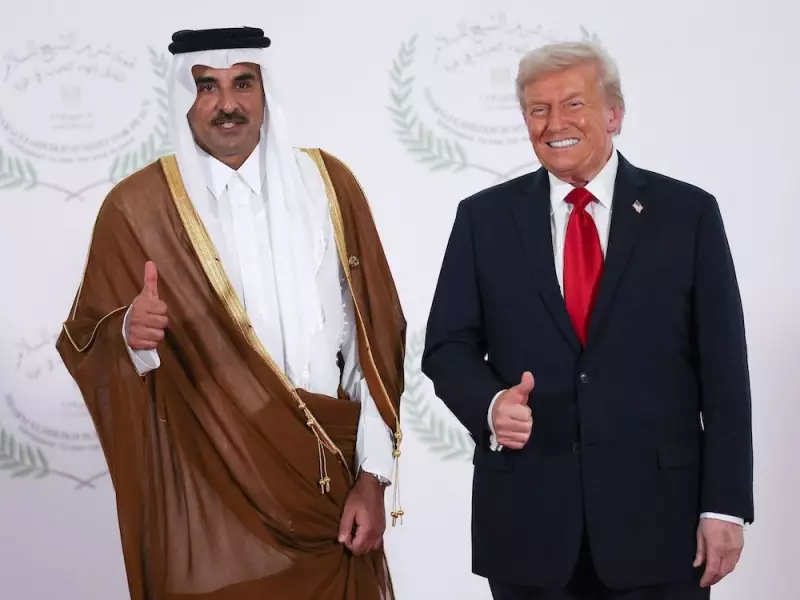
Despite this, the Trump administration has treated Qatar as a protectorate. Following an Israeli attack on Hamas leadership within Qatar, President Trump issued an order stating the U.S. "shall regard any armed attack on the territory, sovereignty or critical infrastructure of the state of Qatar as a threat to the peace and security of the United States." Canada has similarly appeared to overlook Qatar's role in financing the organization.
The Backlash Against Radical Ideology
The broader context is a growing global backlash against the radical Islamist ideology embodied by both the Muslim Brotherhood and the Iranian regime. The 1979 Islamic Revolution in Iran mobilized with the goal of confronting the so-called "Great Satan" (America) and "Little Satan" (Israel).
Today, analysts point to a powerful counter-revolution within Iran itself, with its own people rejecting fundamentalist rule. The Muslim Brotherhood's declared war on Western secularism, freedom, and democracy is now meeting organized resistance from both international coalitions and internal dissent within the Muslim world.
The convergence of these events—from terror designations and regional condemnations to potential regime change in Iran—signals a potential reconfiguration of power and ideology in a volatile region. The focus now remains on whether international pressure will extend to all state actors supporting these networks.