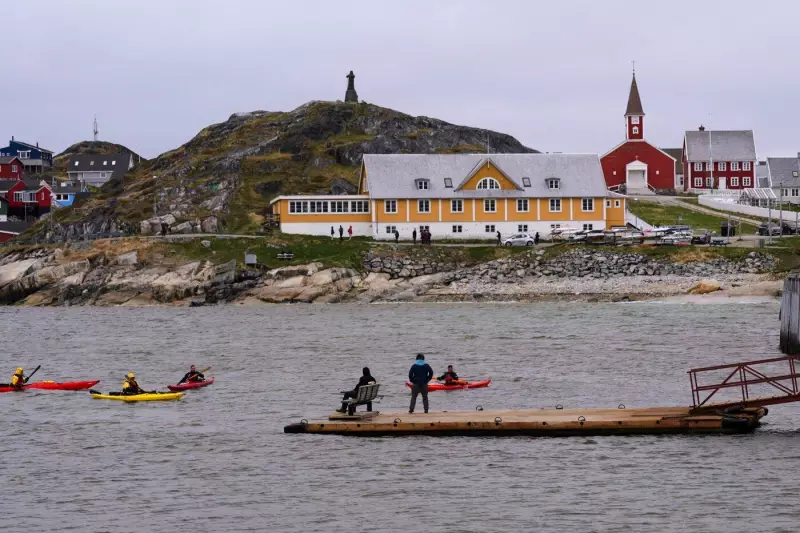
The immense reserves of rare earth minerals buried beneath Greenland's icy surface continue to defy exploitation, held captive not by politics but by the island's formidable natural environment and a stark absence of basic infrastructure. Despite global demand for these critical elements used in everything from smartphones to electric vehicles, the logistical and environmental hurdles present a daunting challenge for any mining ambition.
The Formidable Arctic Barrier
Greenland's landscape is a study in extremes. Its harsh Arctic climate, characterized by long, dark winters, pervasive sea ice, and volatile weather patterns, creates a prohibitively short operating window for industrial activity. The remote locations of potential mineral deposits, far from existing settlements, amplify these difficulties. Transporting heavy machinery, sustaining a workforce, and establishing reliable supply lines in such conditions requires monumental effort and investment, far exceeding typical mining projects in more temperate regions.
Infrastructure Deficit: A Critical Missing Link
Beyond the climate, the fundamental lack of infrastructure is perhaps the most significant impediment. Large-scale mining operations depend on robust support networks that simply do not exist in most of Greenland. There are few roads connecting potential mining sites to ports capable of handling ore carriers. Reliable energy grids, water treatment facilities, and housing for workers are scarce or non-existent in the targeted areas. This deficit means companies must consider building entire towns and logistics networks from scratch, a prospect that dramatically escalates costs and environmental impact.

The situation underscores a global dilemma. As the world seeks to transition to green technologies, it requires more rare earth elements for magnets in wind turbines and batteries in electric vehicles. Yet, developing new sources often points to ecologically sensitive and logistically challenging frontiers like Greenland. The tension between resource need and environmental stewardship, compounded by physical barriers, creates a complex stalemate.
Balancing Potential with Preservation
The pause in development, enforced by nature itself, also allows for critical reflection. Greenland's government and its citizens are deeply aware of the environmental risks associated with large-scale mining, including pollution and disruption to fragile ecosystems and traditional livelihoods like hunting and fishing. The current barriers, while frustrating for developers, provide time to assess whether and how such projects could proceed with the highest environmental and social safeguards.
For now, Greenland's rare earth wealth remains a geopotential locked in a deep freeze, its future extraction contingent not just on market prices but on overcoming some of the planet's most inhospitable conditions and making foundational investments that could reshape the island's landscape and economy.