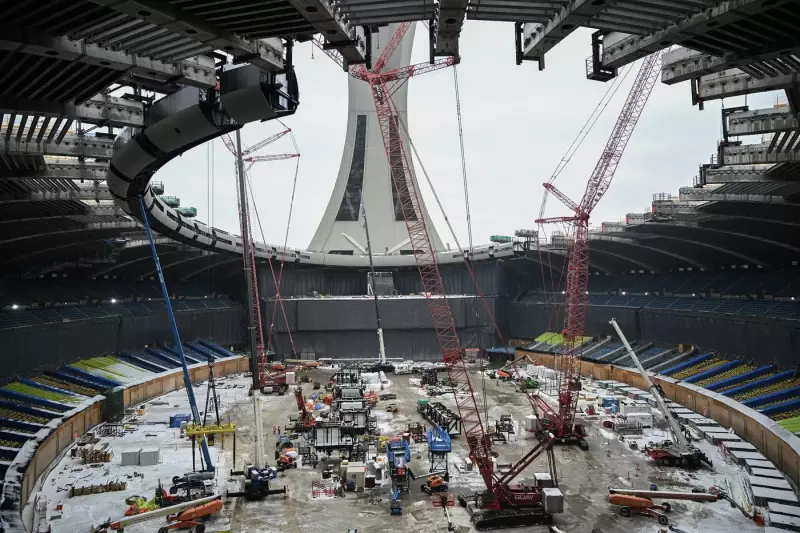
Five decades after hosting the Summer Olympics, the iconic Montreal Olympic Stadium remains a significant financial commitment for Quebecers, with major renovation work continuing into 2026.
A Legacy of Ongoing Investment
The stadium, originally built for the 1976 Summer Games, is once again the site of substantial construction. Photographs from Thursday, January 8, 2026, show cranes operating inside the massive bowl, actively involved in the complex process of replacing the structure's famous roof.
This latest project is merely the newest chapter in a long history of maintenance and repair costs that have burdened provincial coffers since the venue's controversial and over-budget construction. The "Big O," as it is colloquially known, has become synonymous with architectural ambition followed by decades of financial upkeep.

The Never-Ending Roof Saga
The roof itself has been a particular point of contention and expense. The original design was innovative but problematic, leading to multiple replacements and repairs over the years. The current operation, captured by The Canadian Press photographer Graham Hughes, underscores the persistent technical challenges and financial outlays required to maintain the aging facility.
While the exact cost of this 2026 roof replacement has not been disclosed in the initial report, historical context suggests it represents another multi-million dollar investment. Quebec taxpayers have funneled well over $2 billion into the stadium when accounting for construction debt, interest, and continuous renovations since the 1970s.
Weighing Heritage Against Cost
The ongoing spending raises persistent questions about the balance between preserving a key piece of Quebec's architectural and sporting heritage and the practicalities of fiscal responsibility. The stadium is a landmark on the Montreal skyline and a venue for major events, but its operational costs are a perennial topic of public debate.
As the 50th anniversary of the Montreal Olympics approaches, the sight of cranes inside the stadium serves as a potent visual reminder that the financial legacy of the 1976 Games is far from over. The facility continues to demand significant resources, ensuring its story—one of both pride and protracted expense—remains a live issue for Quebecers.