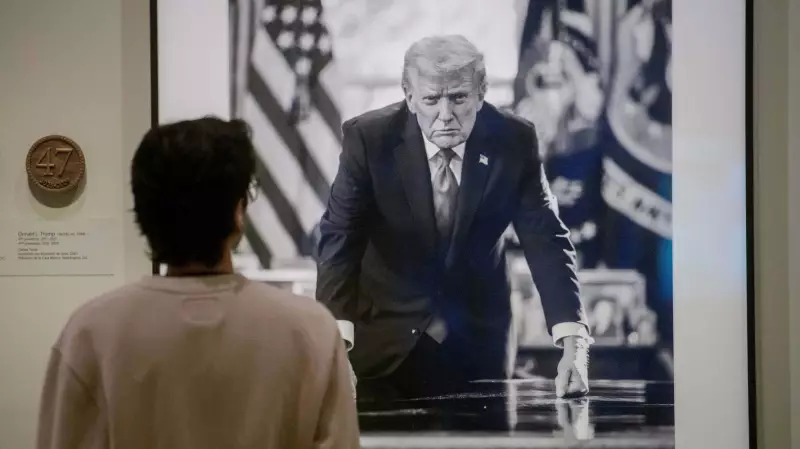
The Smithsonian Institution's National Portrait Gallery in Washington, D.C. has made a notable change to its display of former President Donald Trump, removing all textual references to his two impeachments. The alteration, observed in early January 2026, is the latest development in an ongoing effort by the Trump administration to influence how U.S. history is presented in federal cultural institutions.
What Changed at the Portrait Gallery?
The gallery's "American Presidents" exhibition previously featured a photograph of Trump from his first term alongside a descriptive wall label. That text summarized his first presidency, noting his Supreme Court nominations and his administration's role in COVID-19 vaccine development. It also included the fact that he was impeached twice—first on charges of abuse of power and later for incitement of insurrection following the January 6, 2021, attack on the U.S. Capitol—and acquitted by the Senate both times. The label also mentioned his 2024 electoral comeback.
As of Sunday, January 11, 2026, that text block was gone. In its place is a new photograph by White House photographer Daniel Torok, showing Trump leaning over his Oval Office desk with a furrowed brow. The display now includes only medallions identifying him as the 45th and 47th president, with no extended biography. Trump is currently the only president in the gallery without such a textual summary, though the original label remains available online.

The Political Backdrop and Institutional Review
Neither the White House nor the Smithsonian provided explicit confirmation that the change was requested by Trump's administration. However, the move follows a directive issued by President Trump in August ordering Smithsonian officials to review all exhibits ahead of the nation's 250th anniversary celebrations on July 4, 2026.
The stated goal of that review, according to the Republican administration, is to "ensure alignment with the president’s directive to celebrate American exceptionalism, remove divisive or partisan narratives, and restore confidence in our shared cultural institutions." This effort is part of a broader pattern where Trump has sought to shape the federal government's documentation of history and culture.
White House spokesman Davis Ingle, when asked about the new display, praised the photograph for ensuring Trump's "unmatched aura ... will be felt throughout the halls of the National Portrait Gallery." He did not answer questions about whether Trump or an aide requested the removal of the impeachment references.
Contrasting Treatments and Broader Implications
The gallery stated that it is beginning a planned update of the America’s Presidents gallery, with a larger refresh scheduled for spring. It noted that for some new displays, it is exploring simpler "tombstone labels" that provide only basic information like the artist's name.
Notably, references to the impeachments of other presidents—Andrew Johnson in 1868 and Bill Clinton in 1998—remain part of their portrait labels, as does the mention of President Richard Nixon's 1974 resignation. The Smithsonian asserts that "the history of Presidential impeachments continues to be represented in our museums," including at the National Museum of American History.
This incident is not isolated. Prior to his order for the Smithsonian review, Trump fired the head archivist of the National Archives and attempted to dismiss the National Portrait Gallery’s director, Kim Sajet, who later resigned. Furthermore, at the White House, Trump has installed a subjective "Presidential Walk of Fame" with plaques he largely authored—one praising his own tenure and another disparaging President Joe Biden as "the worst President in American History."
The removal of the impeachment text from Trump's official portrait display highlights the ongoing tension between historical documentation and political narrative in Washington's most prestigious museums, setting a precedent for how contemporary political figures are memorialized.