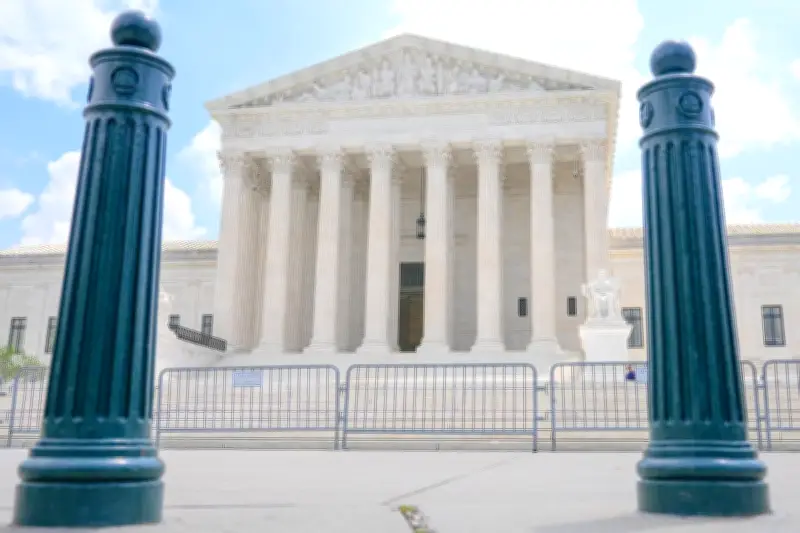
The U.S. Supreme Court on Tuesday cleared the way for states to enforce bans on transgender athletes participating in school sports, a significant ruling that affects thousands of students nationwide. The decision, issued without oral argument or a signed opinion, allows lower court rulings to stand that upheld laws in several states restricting transgender girls and women from competing on female sports teams.
Ruling Details and Impact
The Supreme Court's decision effectively ends legal challenges to bans in at least three states, including West Virginia, Idaho, and Florida. The justices declined to hear appeals from transgender students and advocacy groups who argued that the laws violate Title IX, the federal law prohibiting sex discrimination in education. According to court documents, the rulings were left in place without comment, a common practice when the Court declines to take up a case.
Transgender rights advocates expressed disappointment, with the American Civil Liberties Union stating that the decision "allows discrimination against transgender youth to continue." The ruling comes amid a wave of similar legislation in more than 20 states, with proponents arguing that the bans protect fairness in women's sports.

Legal and Political Context
The Supreme Court's action follows a 2020 ruling in Bostock v. Clayton County that interpreted sex discrimination to include sexual orientation and gender identity in employment. However, the Court has not directly addressed the issue in the context of sports or education. The current ruling does not set a national precedent but allows state-level bans to remain in effect while legal battles continue in other jurisdictions.
President Joe Biden's administration had previously issued guidance stating that transgender students are protected under Title IX, but that guidance has been blocked by federal courts in several states. The Supreme Court's decision may prompt further action from Congress or the executive branch.
Reactions and Future Outlook
Supporters of the bans praised the ruling. "This is a victory for fairness and the integrity of women's sports," said a spokesperson for the Alliance Defending Freedom, a conservative legal group that defended the laws. Opponents vowed to continue fighting. "We will not stop until every transgender child is treated with dignity and respect," said a representative from the Human Rights Campaign.
The ruling is expected to encourage more states to pursue similar legislation. Legal experts say the issue may ultimately return to the Supreme Court for a definitive ruling on the constitutionality of transgender sports bans under Title IX.