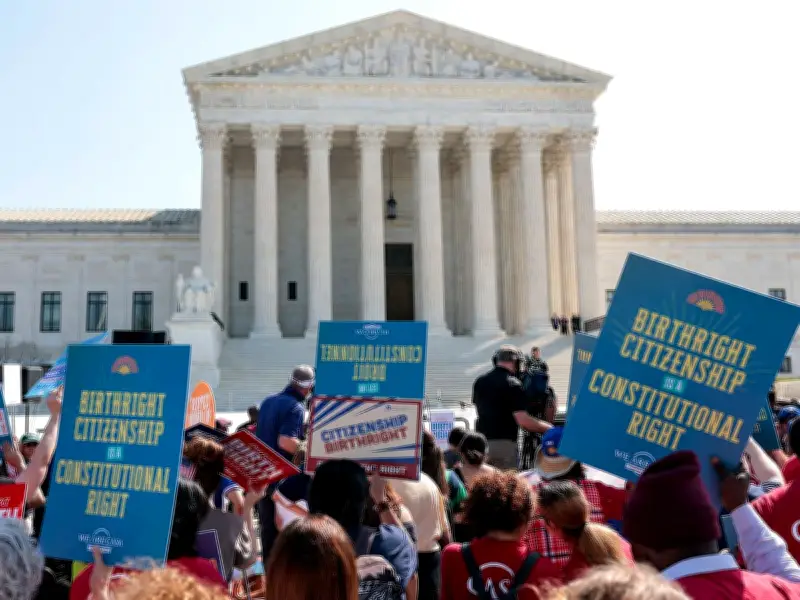
The U.S. Supreme Court on Tuesday struck down a core element of President Donald Trump's immigration agenda, ruling that his executive order limiting birthright citizenship violated the Constitution. The 6-3 decision affirmed that the 14th Amendment guarantees citizenship to virtually everyone born on American soil, a principle established after the Civil War.
Court's Ruling and Rationale
Chief Justice John Roberts, writing for the majority, emphasized the historical significance of the 14th Amendment. "Citizenship, then and now, was the right to have rights — to freely participate in our political community," Roberts wrote. "The framers of the Fourteenth Amendment extended that promise to every free-born person in this land. We keep that promise today." The court found that Trump's January 2025 executive order, issued hours after his inauguration, conflicted with the amendment's language and longstanding interpretation.
Trump's order sought to restrict birthright citizenship to children with at least one parent who is a U.S. citizen or lawful permanent resident. This would have affected an estimated 250,000 children born annually to undocumented immigrants and temporary visa holders. The administration argued that the 14th Amendment's phrase "subject to the jurisdiction thereof" excluded children of non-citizens, but the court rejected that interpretation.

Dissenting Opinions and Legislative Implications
Justice Brett Kavanaugh sided with the majority but on narrower grounds, arguing that the executive order violated federal immigration statutes rather than the Constitution. He suggested Congress could amend those laws to achieve similar restrictions. Trump seized on this, posting on social media: "We could easily make it up in Congress through Legislation. Congress should start TODAY to work on ending expensive and unfair to our Country, Birthright Citizenship."
However, any legislative effort would face steep hurdles, requiring 60 votes in the Senate. Hard-line conservatives, including Representative Lauren Boebert of Colorado, called for visa restrictions on pregnant foreigners, while Representative Andy Ogles of Tennessee introduced legislation to ban pregnant foreigners from entering the U.S. These proposals are unlikely to advance.
Administration's Response and Enforcement
The Justice Department announced it would prioritize prosecutions of birth tourism schemes, targeting individuals who lie on visa applications about their intent to give birth in the U.S. "We will prioritize the prosecutions of birth tourism schemes across the country," the department stated on social media. This enforcement approach does not require new legislation.