MSNBC Host Accuses Trump of Incoherent War Strategy Amid Iran Conflict
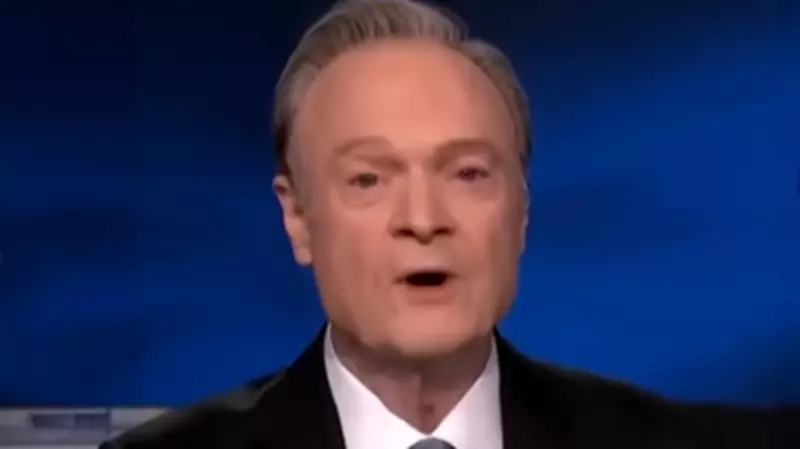
MSNBC's Lawrence O'Donnell launched a scathing critique of President Donald Trump on Tuesday, focusing on the commander-in-chief's frequently changing objectives and deadlines in the ongoing tensions with Iran. O'Donnell, host of "The Last Word," argued that Trump is effectively "doing a very good job of sounding like the hopeless loser of his own war," highlighting a pattern of shifting demands that he claims undermines U.S. credibility.
From 'Unconditional Surrender' to Abandoned Deadlines
O'Donnell began by asserting that Trump effectively announced "his own personal surrender" during a press briefing. The host pointed out that Trump told reporters Iran does not need to agree to a deal for the U.S. to cease bombing, despite initially demanding Iran's "unconditional surrender" when hostilities escalated. This reversal, according to O'Donnell, signals a significant retreat from the president's original hardline stance.
The MSNBC commentator detailed how Iran's decision to close the Strait of Hormuz—a critical waterway responsible for approximately 20% of global oil shipments—prompted Trump to pivot his war aims. "Trump's new objective became opening the Strait of Hormuz, that was closed only because of his war," O'Donnell stated, emphasizing the reactive nature of the administration's strategy.

Missed Deadlines and Escalating Threats
O'Donnell noted that Trump repeatedly issued ultimatums to Iran, threatening "obliteration" if the strait wasn't reopened within specific timeframes, sometimes as short as two to five days. However, the host accused the president of "chickening out" each time these deadlines passed without action.
Instead, Trump reportedly warned on Monday that if a deal wasn't reached "shortly" and the strait wasn't opened "immediately," the U.S. might target Iran's electrical grid, oil infrastructure, and desalination plants. "So that was yesterday," O'Donnell remarked sarcastically. "The Strait of Hormuz has to be opened 'immediately.'"
Trump's Surrender and Nuclear Ambiguity
The television host argued that Trump essentially declared "unconditional surrender" himself on Tuesday by discarding previous demands, announcing the U.S. "will be leaving very soon," and advising other nations to protect their own vessels in the region. Furthermore, Trump commented that Iran won't be able to develop a nuclear weapon "for years," suggesting a future president "like me" would handle the issue—a statement O'Donnell mocked as a departure from the goal of dismantling Iran's nuclear program.
"OK, so we've gone from 'unconditional surrender' to 'Some years from now, another president is going to have to do the same thing and that other president will be just like me, Donald Trump,'" O'Donnell said. "No, Donald, there will not be another president like you."
Historical Context and Economic Pressures
O'Donnell contrasted the current instability with the 2015 Iran nuclear deal negotiated by then-Secretary of State John Kerry, which he noted provided a period of stable U.S.-Iran relations until Trump withdrew in 2018. The host tied the president's evolving rhetoric to economic factors, stating, "The stock market and the price of gas have been in control of Donald Trump's war from the start."
With the stock market experiencing its worst quarter in four years, O'Donnell contended that Trump's wavering positions make him appear like a "hopeless loser" in a conflict of his own making. This perception was reinforced, according to O'Donnell, when Trump admitted to CBS News reporter Weijia Jiang that he doesn't "even think about" removing Iran's enriched uranium—a former key objective.
A Damning Conclusion
In his closing remarks, O'Donnell summarized Trump's approach as chaotic and ineffective. "First, it was an objective of Donald Trump's war. And then in his surrender, 'I don't even think about it,'" he said. "That is how a madman wages war in the 21st century." The host's commentary paints a picture of a presidency struggling to maintain a consistent foreign policy, with shifting goals that critics argue have weakened America's strategic position.