

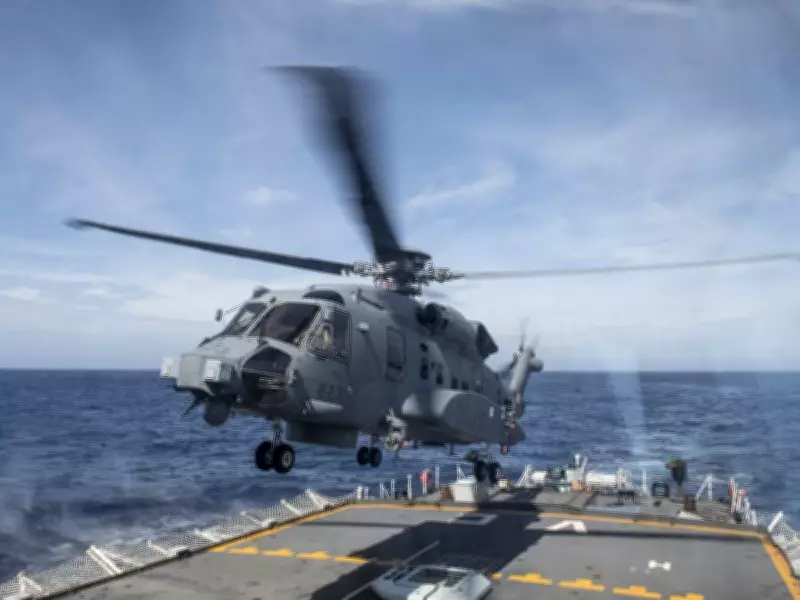
Cyclone Helicopter Fleet Faces Extended Delays Until 2029
The Canadian Forces' CH-148 Cyclone helicopter program has encountered another significant setback, with full operational capability now pushed back to December 2029. This represents a 25-year timeline from when Canada originally signed the contract with Sikorsky in November 2004.
Supply Chain Issues Force Extended Timeline
According to documents obtained through the Access to Information Act, the military had initially hoped to declare the fleet fully operational this September. However, persistent supply chain problems and a critical shortage of spare parts have forced a four-year extension of the timeline.
"There remains work to be done to achieve the final aircraft configuration for the fleet," confirmed Department of National Defence spokesperson Andrée-Anne Poulin. "The new timeline for full operating capability is December 2029."

The program has been plagued by delays since its inception. Originally scheduled for delivery by 2010, the first six helicopters didn't arrive until 2015, and the final aircraft was only delivered in 2025.
Operational Frustrations Mount
Despite most of the fleet being technically operational, availability remains a serious concern. Vice-Admiral Angus Topshee, head of the Royal Canadian Navy, expressed significant frustration about the helicopters' limited availability for day-to-day missions.
In June 2025, Topshee revealed to the National Post that the fleet was grounded for most of May that year due to spare parts shortages. "Am I satisfied? No, not at all," he stated bluntly.
Technical Challenges and Safety Issues
The Cyclone program has faced numerous technical hurdles beyond supply chain problems:
- Software modifications were required following the April 2020 crash of a CH-148 Cyclone off the coast of Greece, which killed all six personnel on board during a training mission
- In November 2021, technicians discovered cracks in the tails of 21 helicopters, though Poulin confirmed this issue has since been resolved through structural redesign
- June 2022 saw an airworthiness risk affecting 46 main rotor blades, which Sikorsky eventually repaired
Poulin explained that the COVID-19 pandemic exacerbated existing supply chain issues, contributing to production delays and technical challenges faced by Sikorsky, a subsidiary of U.S. defense giant Lockheed Martin.
Long-Term Design Solutions Implemented
The Department of National Defence has implemented permanent fixes for some of the most persistent technical problems. "Sikorsky identified a long-term design fix, which consists of replacing the structural area experiencing the extra stress with an overall more robust design that uses thicker material," Poulin noted. "This design fix is being implemented on the fleet through the regular inspection cycle."
Despite these improvements, the extended timeline means Canada's maritime helicopter capability will remain constrained for several more years, raising questions about defense procurement processes and military readiness.






