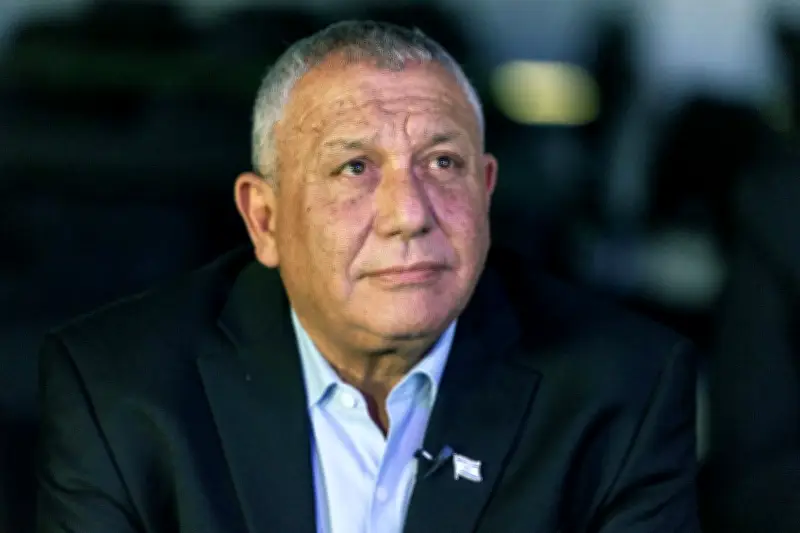
Former Israeli military chief Gadi Eisenkot has emerged as a challenger to Prime Minister Benjamin Netanyahu in the upcoming Israeli election, representing what analysts describe as his polar opposite. Eisenkot, who served as the 21st Chief of Staff of the Israel Defense Forces from 2015 to 2019, is positioning himself as a centrist alternative to Netanyahu's long tenure.
Eisenkot's Background and Platform
Eisenkot, 64, brings decades of military experience to the political arena. He was born in Tiberias and served in the IDF for 40 years, including commanding the Northern Command and serving as Deputy Chief of Staff before his top appointment. His campaign emphasizes national security, social cohesion, and economic reform.
According to political analysts, Eisenkot's appeal lies in his stark contrast to Netanyahu. While Netanyahu is known for his divisive rhetoric and polarizing style, Eisenkot projects a calm, technocratic demeanor. He has pledged to unite Israelis and restore trust in government institutions.

Election Context and Polling
The election, expected to be held in late 2026, comes amid ongoing political turmoil and protests against Netanyahu's government. Recent polls show Eisenkot's party gaining traction, though Netanyahu's Likud remains strong. A survey by the Israel Democracy Institute in June 2026 indicated that 28% of voters would support Eisenkot's new party, compared to 32% for Likud.
Eisenkot has criticized Netanyahu's handling of the economy and security, particularly regarding the ongoing conflict with Hamas and Hezbollah. He advocates for a more strategic approach to defense and diplomatic efforts to reduce isolation.
Challenges and Criticisms
Critics argue that Eisenkot lacks political experience and may struggle to build a coalition. However, his supporters see this as an asset, contrasting him with career politicians. Eisenkot has also faced scrutiny over his role in the 2014 Gaza war, but he defends his record as necessary for Israel's security.
In a statement to CNN, Eisenkot said, “Israel needs leadership that puts the country above personal interests. I offer a vision of unity and strength, not division and fear.”
Implications for Israeli Politics
Eisenkot's candidacy could reshape the political landscape, drawing support from centrist and center-left voters disillusioned with Netanyahu. If elected, he would be the first former military chief to become prime minister since Ariel Sharon. The election outcome will have significant implications for U.S.-Israel relations, the Palestinian conflict, and regional stability.