Carney's Controversial Comment on Grassy Narrows Protester Sparks Outrage
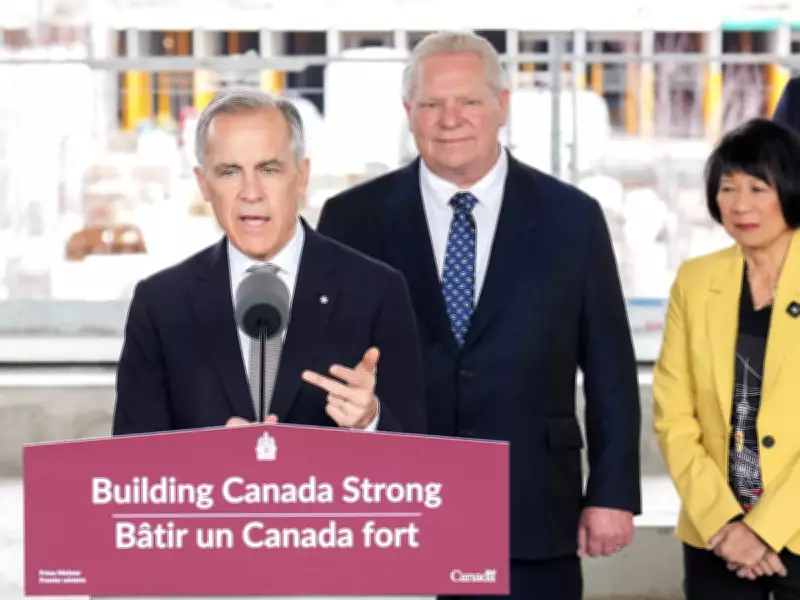
Prime Minister Mark Carney's recent remark about a Grassy Narrows First Nation protester has ignited a political firestorm, drawing uncomfortable parallels to his predecessor Justin Trudeau's own controversies. During a housing announcement in Toronto on Monday, March 30, 2026, Carney responded to a woman protesting on behalf of the mercury-poisoned community with the astonishing statement: "I can outlast her."
Stage Laughter Compounds the Insult
The immediate aftermath of the quip proved just as remarkable as the words themselves. Everyone on stage, including Ontario Premier Doug Ford and Toronto Mayor Olivia Chow, burst into laughter at the prime minister's comment. This collective reaction was captured by CityNews Toronto and has since circulated widely, adding fuel to the growing criticism of political leadership's sensitivity toward Indigenous issues.
Historical Parallels with Trudeau's Reconciliation Missteps
This incident bears striking resemblance to one of Justin Trudeau's several watch-through-your-hands moments on the reconciliation file. In March 2019, at a party fundraiser also in Toronto, Trudeau told Grassy Narrows protesters who crashed the event: "Thank you very much for your donation." He later apologized for the remark, but the damage to his reputation on Indigenous relations was already done.

Political observers have long noted that Carney benefited tremendously simply from not being Justin Trudeau. As it turned out, it wasn't Liberal governance Canadians were sick of—or at least, not quite enough of them—so much as it was the prime minister himself. Yet with this "outlast her" remark and follow-up smirk, Carney couldn't really have looked or sounded more like Trudeau.
The Grassy Narrows Context
The Grassy Narrows First Nation in northwestern Ontario represents one of the worst environmental disasters in Canadian history. Decades of mercury poisoning from industrial pollution have devastated the community's health and traditional way of life. For a prime minister to make light of this tragedy represents what many are calling political malpractice at the very least.
Carney's comment becomes particularly problematic when considering the verb choice. As one commentator noted: "If you're going to try to make yuks out of mercury poisoning, which I absolutely advise against, 'outlast' is not a verb you want to use." The implication that a political leader would outlast a community suffering from generational trauma adds a particularly cruel dimension to the remark.
Political Repercussions and Leadership Dynamics
The incident presents both challenges and opportunities for opposition parties. Newly installed NDP leader Avi Lewis could potentially leverage this moment to differentiate his party from what he might characterize as establishment politics. As one observer suggested: "If I were newly installed NDP leader Avi Lewis I would be putting that photo on T-shirts."
Meanwhile, the episode raises broader questions about Carney's leadership style. Some skeptical pundits are reconsidering their initial assessments, wondering if they underestimated just how fundamental an itch Carney scratches for a critical mass of Canadians: the desire to be dominated by a technocrat, reminiscent of the Chrétien-Martin Liberal era.
Long-term Implications for Indigenous Relations
First Nations groups who oppose economic and resource development can make Carney's life very difficult if they choose to, and thereby affect Canadians' economic prospects—not least Indigenous Canadians who support such development. This dynamic will matter significantly in the long term for national unity and economic policy.
As Carney settles into his role with what appears to be growing comfort, watching his approval ratings hold steady or even climb despite economic challenges, one wonders about the durability of his political approach. The Grassy Narrows remark may represent more than just an isolated gaffe—it could signal a deeper pattern in how this administration approaches Indigenous relations and political discourse.