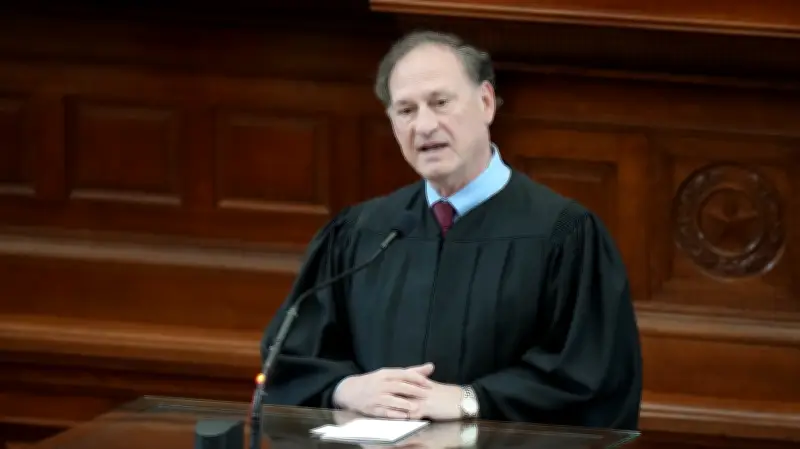
In the majority opinion for Mullin v. Doe, Justice Samuel Alito dismissed President Donald Trump's racist statements about Haitian and Syrian immigrants as mere 'heated language,' arguing that none of the cited statements were 'overtly racial' and could rest on race-neutral justifications. Alito, joined by five other Republican-appointed justices, wrote that political rhetoric 'by prominent public figures is increasingly couched in terms that would have scandalized the public just a short time ago.'
Alito's Inconsistency on 'Heated Language'
However, just six years earlier, in the 2020 case Espinoza v. Montana Department of Revenue, Alito easily labeled past 'heated language' about immigrants as bigotry. In that case, Alito identified Montana's ban on public funding for religious schools as rooted in anti-Catholic and anti-immigrant sentiment, describing it as 'prompted by virulent prejudice against immigrants, particularly Catholic immigrants.' He noted that the rhetoric portrayed Catholics as 'soldiers of the Church of Rome' who would 'attempt to subvert representative government,' and referenced an 1871 Harper's Weekly cartoon depicting Catholic priests as crocodiles lunging at American children. Alito wrote that this context was necessary to show that seemingly neutral support for public school funding was built on 'bigoted code language.'
Trump's Racist Rhetoric in Detail
In her dissent, Justice Elena Kagan listed Trump's racist statements that Alito dismissed, including: 'Haitians are eating the dogs... They're eating the cats... They're eating the pets of the people that live [in Springfield, Ohio]'; Haitians 'probably have AIDS'; Haiti is a 'shithole country'; and Haitian immigration is 'like a death wish for our country.' Trump also said Haitians and others are 'poisoning the blood' of the country and asked, 'Why is it we only take people from shithole countries like Haiti [and] Somalia? Why cannot we have some people from Norway [and] Sweden?'

Alito claimed these statements were not 'overtly racial' because they described countries, not individuals. Yet his 2020 opinion recognized similar rhetoric against Italian, Irish, Jewish, and Slavic immigrants as bigotry. Alito, the son of a Catholic Italian immigrant who came to the U.S. in 1914, failed to apply the same standard to Trump's remarks.
Impact of the Ruling
The majority opinion in Mullin v. Doe upheld Trump's cancellation of temporary protected status for Haitians and Syrians, ignoring evidence of discriminatory intent. Critics argue that Alito's double standard stains the court by refusing to acknowledge racist motivations behind the policy.