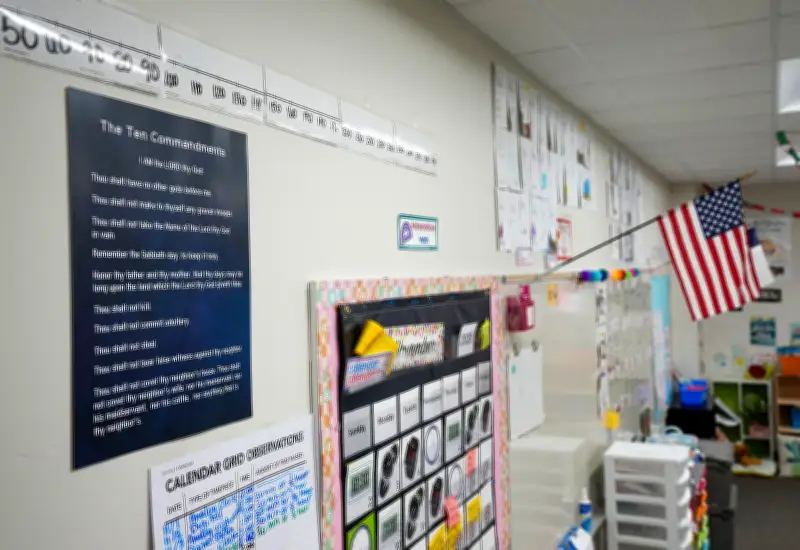
The Texas Board of Education has approved a curriculum that mandates the inclusion of Bible stories as required reading in public schools. The decision, announced on June 26, 2026, has ignited a contentious debate over the role of religion in public education.
Curriculum Details
The new curriculum requires students in elementary and middle school to read selected Bible stories as part of English language arts and social studies classes. Proponents argue that the Bible is a foundational text for Western literature and history, and that students need exposure to its stories to understand cultural references and historical events.
According to the board, the curriculum will include stories such as Noah's Ark, the Ten Commandments, and the parables of Jesus. The materials are designed to be taught from a literary and historical perspective, not as religious doctrine.

Reactions and Controversy
The decision has drawn sharp criticism from civil liberties groups and some parents, who argue that it violates the separation of church and state. “This is a clear attempt to inject religion into public schools,” said a spokesperson for the Texas Freedom Network. “Public schools should not be promoting any religious text as required reading.”
Supporters, including some conservative Christian groups, maintain that the Bible is an essential part of education. “The Bible is the most influential book in Western civilization,” said a representative of the Texas Values organization. “Understanding it is crucial for students to fully grasp literature, history, and even law.”
Legal and Educational Implications
The board’s approval comes amid a broader national debate over religious content in schools. Several other states have considered similar measures, and legal challenges are expected. The Texas decision may set a precedent for other states, as Texas is a major textbook market that often influences curriculum choices nationwide.
Educational experts are divided on the impact. Some worry that the mandate could lead to proselytizing in classrooms, while others believe it can be taught objectively. “It’s all about how it’s implemented,” said Dr. Jane Smith, an education professor at the University of Texas. “If teachers present the stories as literature, it could be a valuable addition. But if it becomes devotional, it crosses a line.”
Next Steps
The curriculum is set to be implemented in the 2027-2028 school year. The board will now develop detailed lesson plans and teacher training materials. Meanwhile, opponents are preparing to challenge the decision in court, arguing that it violates the Establishment Clause of the First Amendment.