U.S. Pediatric Hospital Launches Literacy Screening Initiative to Combat Reading Deficits
In a groundbreaking move to address persistently low literacy rates across the United States, a major pediatric hospital has begun systematically screening young patients for reading ability during routine medical visits. Nationwide Children's Hospital in Columbus, Ohio, is pioneering this innovative approach, recognizing that early identification of reading challenges can significantly impact a child's academic trajectory and overall development.
Integrating Education Assessment into Pediatric Healthcare
The program, which operates through the hospital's Linden Primary Care Center, represents a novel fusion of healthcare and educational intervention. During standard pediatric appointments, specially trained coordinators now conduct brief literacy assessments for children as young as four years old. These screenings evaluate fundamental pre-reading skills, including letter recognition, phonological awareness, and basic comprehension abilities.
"We're seeing this as preventative medicine for educational outcomes," explained Crystal Webb, a kindergarten readiness coordinator at the hospital. "Just as we screen for vision or hearing problems, we're now screening for literacy readiness because the consequences of unidentified reading difficulties can be just as profound."

A Family-Centered Approach to Early Literacy
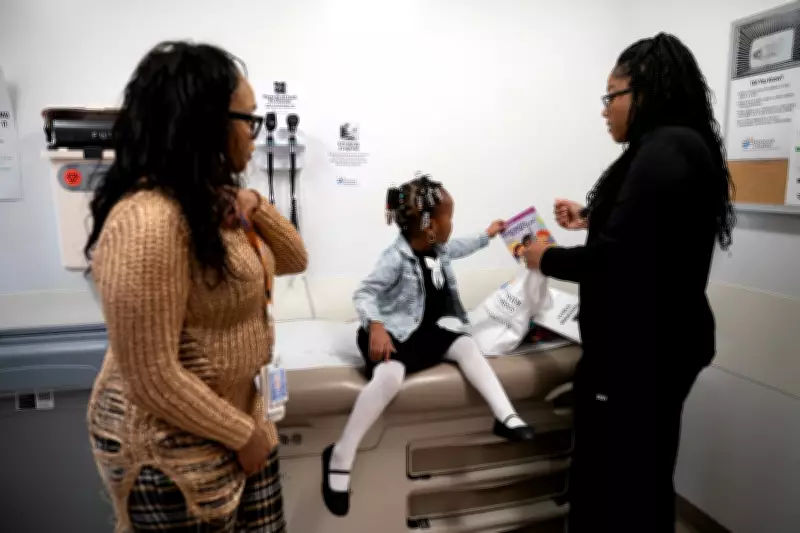
The initiative extends beyond mere assessment. Families receive comprehensive literacy kits containing age-appropriate books and educational materials designed to foster reading engagement at home. During a recent session, four-year-old Juri Sleet selected a book from one such kit while his grandmother, Quintina Davis, consulted with Webb about the screening process and strategies to support his emerging literacy skills.
"Many families don't realize how critical these early years are for literacy development," Webb noted. "We're providing both the tools and the knowledge to help children enter kindergarten ready to succeed."
Addressing a National Literacy Crisis
This hospital-based intervention responds to alarming national statistics indicating that approximately one-third of American fourth graders read below basic proficiency levels. Research consistently demonstrates that children who struggle with reading in early elementary school face increased risks of academic underachievement, behavioral issues, and diminished long-term educational attainment.
The program at Nationwide Children's Hospital represents one of the most comprehensive medical-literacy partnerships implemented to date. By embedding literacy assessment within the trusted context of pediatric healthcare, providers hope to reach families who might otherwise miss early intervention opportunities through traditional educational channels alone.
Evidence-Based Methodology and Future Expansion
The screening protocol employs validated assessment tools aligned with kindergarten readiness standards. Children identified as potentially at risk receive targeted recommendations, which may include referral to specialized literacy programs, follow-up assessments, or enhanced home-based reading strategies.
Preliminary data from the program's initial implementation phase suggests strong family engagement and promising early outcomes. Hospital administrators are closely monitoring results with an eye toward potential expansion to additional clinics and adaptation by other pediatric healthcare systems nationwide.
"Healthcare providers have unique, regular access to young children during their most formative years," emphasized a hospital spokesperson. "By incorporating literacy screening into our standard of care, we're leveraging that access to address one of the most significant predictors of lifelong success."
As literacy rates continue to lag across demographic groups, this innovative hospital-based approach offers a promising model for early identification and intervention, potentially transforming how communities address foundational educational challenges through cross-sector collaboration.