

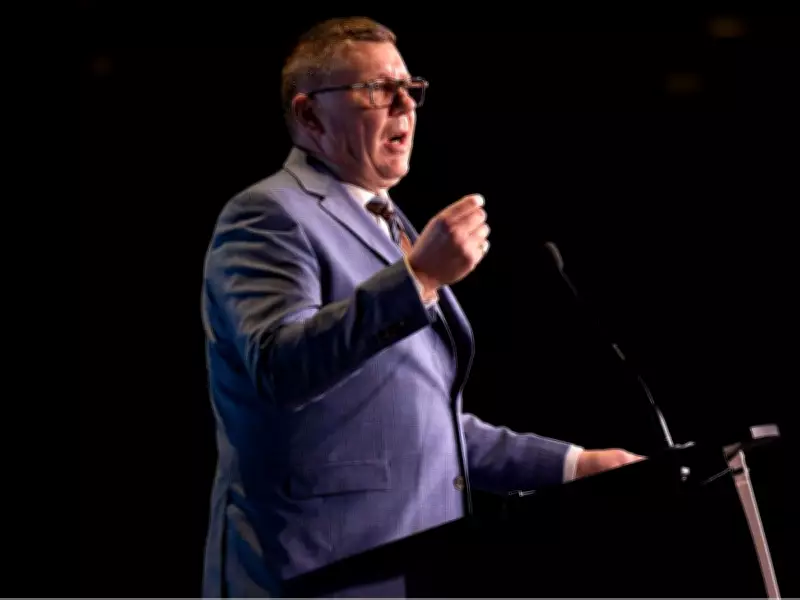
Saskatchewan Premier's India Trip Targets Tariff Mitigation Over Trade Deal
Saskatchewan Premier Scott Moe has clarified that his upcoming trade mission to India will primarily focus on mitigating potential tariff increases on agricultural exports, rather than finalizing a comprehensive trade agreement. Speaking at the Saskatchewan Legislative Building, Moe emphasized that the immediate goal is to prevent further tariffs on products currently exported to India, with hopes of eventual tariff removal in future engagements.
Trade Mission Details and Objectives
The mission is scheduled from February 28 through March 6, with Premier Moe accompanying Prime Minister Mark Carney to New Delhi and Mumbai. While Carney is set to meet with Indian Prime Minister Narendra Modi to negotiate a Canada-India Comprehensive Economic Partnership Agreement (CEPA) aimed at doubling two-way trade to $70 billion by 2030, Moe expects no signed agreement during this trip. Instead, he anticipates a "cumulative" effect in strengthening bilateral relations and expanding exports of agricultural products, potash, and uranium to India.
Opposition's Perspective on Pulse Tariffs
The NDP Opposition, represented by Sally Housser, has highlighted the importance of removing import levies on pulse crops, which include lentils, peas, and beans. Housser stated that tariff removal on pulses should be the "bare minimum" for success on Moe's trip, noting these crops are a massive resource crucial for Saskatchewan farmers. In 2024, Saskatchewan's total exports to India reached $1.4 billion, with lentils alone accounting for $529 million and peas for $479 million, despite recent Indian tariffs of 30% on peas.

Context of Previous Trade Efforts
Premier Moe recently joined an Ottawa delegation to Beijing, which led to improved bilateral relations with China and eased tariffs on Canadian canola and Chinese electric vehicles. This experience informs his approach to the India mission, where discussions will also cover partnerships in trade, energy, technology, artificial intelligence, talent, culture, and defence, as outlined by the Prime Minister's Office.






