New Orca Calf Documented in Juan de Fuca Strait Amid Population Decline
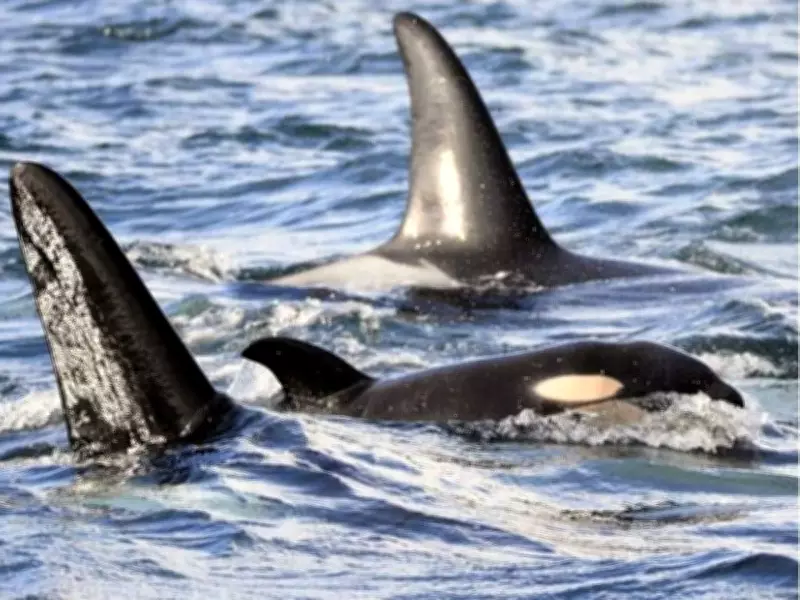
Biologists from the Washington state-based Center for Whale Research have confirmed the birth of a new calf to the critically endangered southern resident killer whale population in the Salish Sea. The calf, designated as L129, was spotted on Monday near Race Rocks, off Metchosin, in the Juan de Fuca Strait, travelling with members of L Pod.
Population Status and Recent Births
The southern resident killer whale population now stands at just 74 members, according to the most recent census conducted in July. This new arrival follows a calf born to K Pod in early December, which was the first birth in that pod in three years. However, a calf spotted with J Pod in September went missing and was presumed dead weeks later, highlighting the fragility of these births.
Pod breakdown:

- L Pod: 34 members
- J Pod: 27 members
- K Pod: 14 members
L Pod also contains the oldest surviving southern resident orca, L25 Ocean Sun, estimated to be 95 years old.
Mother and Calf Details
The calf L129 was observed travelling with 49-year-old L55, known as Nugget, and her 23-year-old daughter, L103 Lapis. The Center for Whale Research noted that L55 would be an exceptionally old southern resident mother if confirmed as the calf's parent, while this would be L103's second calf. More encounters are needed to definitively determine the mother.
Cautious Optimism from Researchers
Scientists are balancing optimism with caution regarding the newborn. In a social media post, the center stated, "The calf appears to be very young, likely just a few days old at most, and it’s too early to say much about its health." They emphasized that the first year of life, particularly the early days and weeks, is extremely challenging for killer whales, with many calves not surviving.
The center added, "We hope to see L129 again soon, and that the calf’s mother can find enough food to keep this new addition healthy." This concern is particularly relevant as the southern residents primarily depend on chinook salmon, which face scarcity issues.
Threats to Survival
The southern resident killer whale population continues to face multiple threats that jeopardize their recovery:
- Scarce food sources, particularly chinook salmon
- Noise pollution from vessel traffic
- Physical disturbance from boats and ships
- Environmental contaminants in their habitat
These factors compound the challenges for newborn calves like L129, making each successful birth a significant but uncertain event in the conservation efforts for this endangered population.