At 13, Kris Saim sat in the back seat of his parents' white Chevy Cavalier, convinced he was about to be outed. They wouldn't tell him where they were driving. His mind raced through every scenario: they were taking him for an HIV test. What would he say? Would his family survive the revelation? Instead, they pulled up to a bike shop—a birthday surprise. Relief flooded him, but instead of thinking it was okay to be who he was, he thought: I have to hide better. And he did, for another 18 years.
A Second Diagnosis and the Weight of Secrets
Now 52, Saim has Stage 4 colon cancer—his second diagnosis with the same disease. By every medical measure, he is running out of time. Yet, for the first time in his life, he is completely out of secrets. Dying, he says, has a way of making secrecy feel like an extraordinary waste of time.
His first diagnosis came at 38 with Stage 3 cancer. Two years of chemotherapy, radiation, and surgery followed, and he faced it with the belief that effort could earn his way back to okay. He went into remission and built a life on the other side. Then, exactly 10 years to the day, it returned. There is no language adequate to that specific cruelty, he says. This time, he was also recovering from COVID and nursing a broken wrist, and he was completely out of the optimism that had carried him through the first time.

The Letters That Became a Podcast
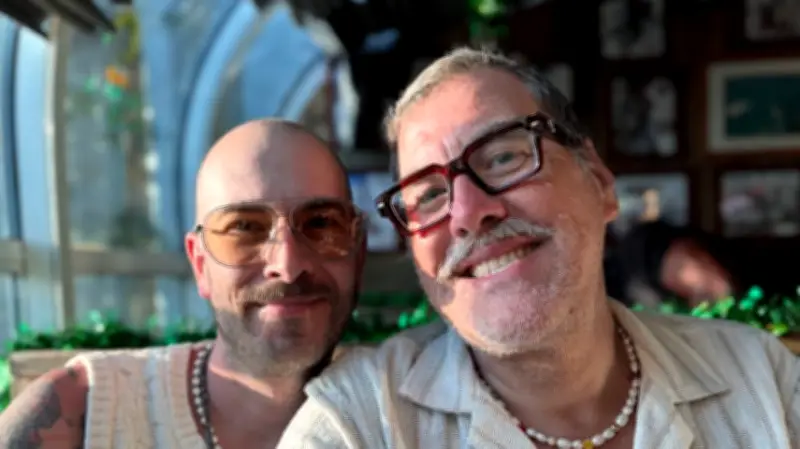
During chemotherapy sessions, Saim began writing letters by hand—74 in total. Some were to colleagues, friends, or those he had wronged. Others were to different versions of himself. He wrote three versions of a letter to his husband, Anthony, whom he married in summer 2024. The first two felt incomplete, but the third clicked when he stopped worrying about perfect words and just laid out the truth. When he read it aloud to Anthony, he saw on his husband's face that every sentence hit home. Anthony didn't give a speech; he made himself present and immovable, letting Saim know that every word had been received. That is the gift of saying the true thing out loud: it lands, and the person you love gets to carry it forever.
The idea for the podcast "Dying Out Loud" emerged from these letters. Saim and Anthony explored delivery methods—giving Anthony the responsibility after death seemed unfair, direct messages felt impersonal. They settled on Zoom recordings, allowing recipients to respond in real time and creating a living memory.
Letters to His Children and a Childhood Secret
Writing to his daughter, now 29, and son, 25, was different. Saim assumed they knew how proud he was, but reading the letter revealed genuine surprise. He told them specifically how proud he was, with examples, and also shared regret for times he was present but absent. The tears came from deep and old places. Afterward, he felt relief mixed with love mixed with grief—grief for years those words had remained unspoken.
In another episode, Saim read a letter to himself revealing that he had been sexually abused from age 4 to 16—more than a decade of silence. He considered not airing it, but underneath the terror was a voice saying, This is the last weight. Put it down. After it aired, messages came from people who had carried similar burdens, needing to know the silence could end. Saim says the things we hide have far more power over us than the things we release.
The Cost of Silence and the Gift of Speaking Now
By the midway point of the second season, Saim has delivered more than 30 letters—to his high school best friend, his theater teacher, his work community of almost 800 people, and others. Each conversation shared memories, laughter, and tears. Everyone expressed gratitude, and many recognized the importance of expressing love while there is still time.
Coming out at 31, after that car ride to the bike shop, was not a single dramatic moment but a slow process of deciding that being fully known was worth the risk. Growing up Pentecostal in a household where gay people were cautionary tales, he built a life around hiding—a constant, low-level expenditure of energy. Cancer cuts the power to that system. In the infusion chair with a terminal diagnosis, the energy for a false version of yourself simply isn't there. What remains is the actual you.

Saim chose to come out, to say what happened as a child, to write 74 letters and read them into a microphone. He says he's not particularly brave—he's been terrified at every step—but he's finally more afraid of leaving things unsaid than of saying them.
A Final Plea: Speak Now
Kris Saim leaves readers with this: the conversation you're postponing is costing you more than you know. The person you love deserves to hear exactly what they mean to you while you're still here—not in a eulogy or a letter after you're gone, but now, while you can watch their face as the words land. He wrote 74 letters because he finally understood that the things worth saying don't keep. Say the thing. Write the letter. Make the call. Not because you're dying, but because you're alive. That has always been reason enough.