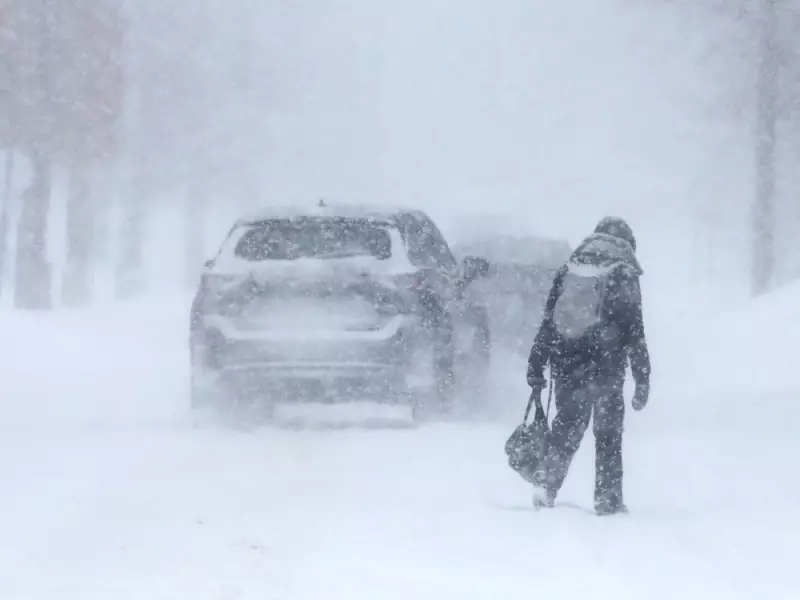
Residents of Ottawa and eastern Ontario are being urged to prepare for dangerous travel conditions as a significant snow squall is forecast to hit the region Tuesday evening. Environment Canada has issued a weather warning, highlighting the risk of near-zero visibility due to high winds and blowing snow.
Weather Warning Details and Expected Conditions
The national weather agency's alert, issued for Monday evening, warns that the primary threat will be significantly reduced visibility rather than heavy snow accumulation. Southwesterly winds are predicted to gust up to 70 km/h, creating widespread blowing snow. This hazardous phenomenon could persist into the overnight hours.
While snowfall accumulations are expected to be between five and 10 centimetres, the combination of fresh snow and strong winds will create whiteout conditions. "Travel will likely be hazardous. Visibility will likely be suddenly reduced to near zero at times," the warning states, advising the public to prepare for quickly changing and deteriorating conditions on roads.

Frigid Temperatures and Frostbite Risk
The dangerous visibility issues will be accompanied by a plunge in temperatures. Overnight lows are expected to drop to around -18°C. When combined with the strong winds, the wind chill will make it feel more like -27.
The deep freeze will continue into Wednesday. The daytime high is forecast to be only -11°C, with an overnight low of -13°C. The morning wind chill on Wednesday is predicted to be a biting -28, creating a serious risk of frostbite for anyone exposed to the elements.
Public Safety Advice and Context
Environment Canada's warning is a clear directive for residents to reconsider non-essential travel once the squall moves in. The sudden onset of near-zero visibility makes driving extremely perilous. This weather event follows significant snowfall in Ottawa just last week, which already challenged city infrastructure and pedestrian mobility.
Authorities recommend that those who must travel ensure their vehicle emergency kits are stocked and to check road conditions frequently. Pedestrians should exercise extreme caution, as blowing snow can obscure pathways and force people onto streets, as seen in recent winter weather events.