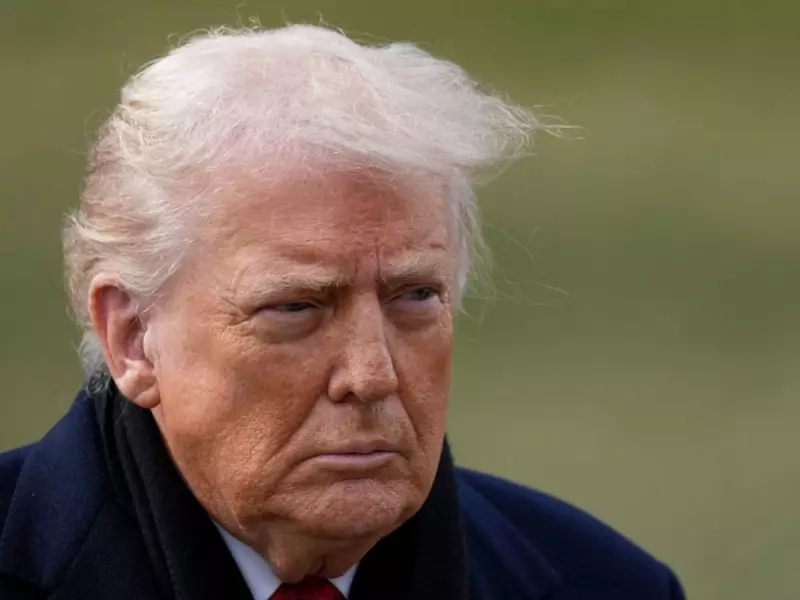
President Donald Trump's newly proposed 'Board of Peace' is already mired in controversy, facing significant international pushback and calls for a major rewrite just days after its details emerged. The initiative, conceived to oversee post-war Gaza's redevelopment, has been met with skepticism from European allies, criticism from Israel, and approval from Kremlin-friendly voices, marking a deeply divisive start.
A Billion-Dollar Price Tag for Membership
The most contentious condition, confirmed by the White House, is a demand for nations to pay US$1 billion for permanent membership on the board. This staggering fee, first reported by Bloomberg, has blindsided world leaders and left many bewildered, according to sources familiar with the discussions. The demand raises immediate questions about where these substantial funds would ultimately be directed.
Trump's administration is pushing for the full constitution and remit of the committee to be signed in Davos as soon as Thursday, January 22, 2026. However, the fine print of the charter, seen by Bloomberg, has caused invited nations to hesitate. A primary concern is wording that appears to vest ultimate decision-making power solely with President Trump himself.

Global Reactions: From Rejection to Reluctant Engagement
The international response has been fragmented. European allies are actively working to modify the terms and coordinate a unified response. Their strategy, reflective of a broader approach to Trump's second term, involves playing for time, appearing engaged, and attempting to negotiate him down from his initial demands. These delicate conversations are further complicated by simultaneous negotiations over Russia's war in Ukraine and Trump's threats regarding Greenland.
So far, Israeli Prime Minister Benjamin Netanyahu has issued the most direct public criticism. While supportive of the board's concept, his office stated that the composition of a subordinate Gaza committee—which includes officials from Qatar and Turkey—was "not coordinated with Israel and runs contrary to its policy."
Other leaders have expressed cautious interest contingent on changes. Former Bank of Canada Governor and potential member Mark Carney stated he was open to joining "in principle," but that the terms needed discussion. A source clarified that Canada would not pay the $1 billion fee. British Prime Minister Keir Starmer declined to endorse the board, saying only that he would consult with allies.
In contrast, Argentina's President Javier Milei confirmed he would become a founding member, and Italy's Prime Minister Giorgia Meloni positioned herself as a willing mediator.
Behind-the-Scenes Negotiations and Potential for Change
Key figures are maneuvering to salvage the proposal. Former British Prime Minister Tony Blair, appointed as an executive to the board, is playing a crucial role behind the scenes alongside Trump envoys Steve Witkoff and Jared Kushner. There is some indication that the charter's terms could be adapted based on feedback from the initial draft, offering a glimmer of hope for those seeking substantial revisions.
The State Department did not immediately respond to requests for comment on the growing diplomatic impasse. As the proposed Davos signing date approaches, the future of Trump's Board of Peace hinges on whether its most controversial clauses can be rewritten to gain broader global acceptance.