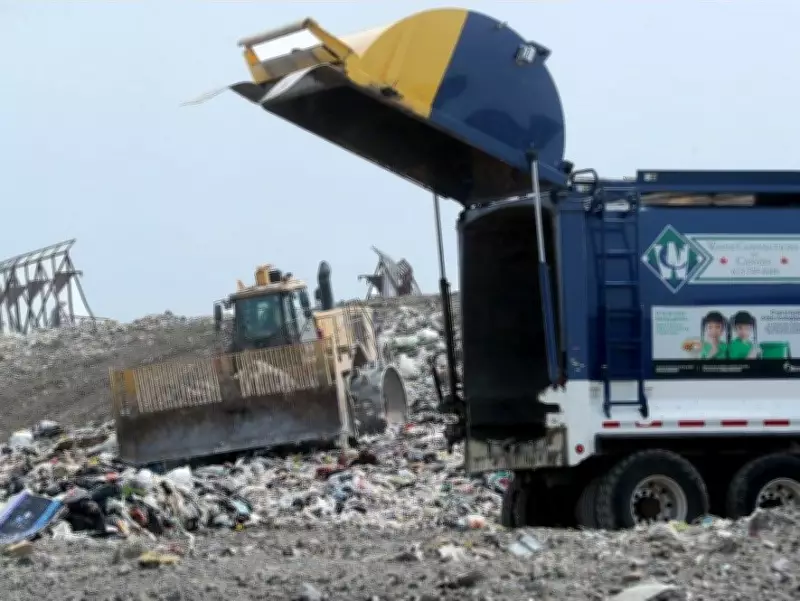
Ottawa city councillors face a seemingly difficult choice about how to dispose of the city's garbage in the long term. The city's purchase earlier this year of a provincially approved landfill site on Boundary Road near Carlsbad Springs determined where garbage will be handled, but not how.
The options are not especially attractive. The city could create a new landfill or build an incinerator. Storing our garbage in a landfill for decades seems outmoded. Incineration has the advantage of greatly reducing the volume of what goes into landfill, but there will be predictable concerns over emissions from the process.
What if there was a cheaper, smarter, greener way to solve the garbage problem?
NH3, a Canadian-based company with offices in Ottawa, is proposing just such a solution. If their plan is half as good as it sounds, councillors should give it serious consideration.

Instead of burning garbage, NH3's technology uses a high temperature thermochemical process to create anaerobic decarbonization that breaks down garbage and turns it into hydrogen, a product widely used in oil refining, producing ammonia for fertilizers, and manufacturing methanol.
The waste is processed in a closed chamber with no emissions, making it a green waste disposal solution with a big advantage over incineration, but that's not all.
Cost Comparison
The technology is remarkably inexpensive, says Robert Leth, the company's managing director. One of their systems costs $26 million U.S. It would take four to six linked systems to dispose of Ottawa's residential garbage. By comparison, city staff estimate that an incinerator would cost between $497 million and $862 million.
This technology is designed to consume any kind of waste. Valuable recyclables would still be separated out, but everything else would be turned into hydrogen. The system particularly likes old tires because of their high carbon content, Leth says. Disposal of tires has become a huge problem across the province.
Potential Risks and Past Lessons
Now let's get to the potential negatives. While this technology has been lab-tested, it has never been operated at a commercial scale. A pilot project in Ottawa would be the first such test for the company.
Those with long memories will recall Plasco, an Ottawa company that tried to reduce garbage to gas using a technology called plasma gasification. In 2006, local entrepreneur Rod Bryden and the city launched a tiny pilot project, but it was under-capitalized and had frequent technical issues. The deal ended in 2015.
Bryden was more of a salesman than a tech guy, but NH3 is an experienced environmental company. It operates in Denmark, Florida and the U.K. While the group seems to have expertise, producing its waste-to-hydrogen system would still be a challenging next step.
It's difficult for a layman to judge the merits of what NH3 proposes, but the city would be wise to get an expert assessment.
A pilot project here would have an element of risk. Meanwhile, the city's waste management plan says it wants a “proven” technology for the new site. In this case, proven means old. Which is the greater risk, trying something new and potentially better, or sticking with unsatisfactory old approaches?
Randall Denley is an Ottawa journalist and author.