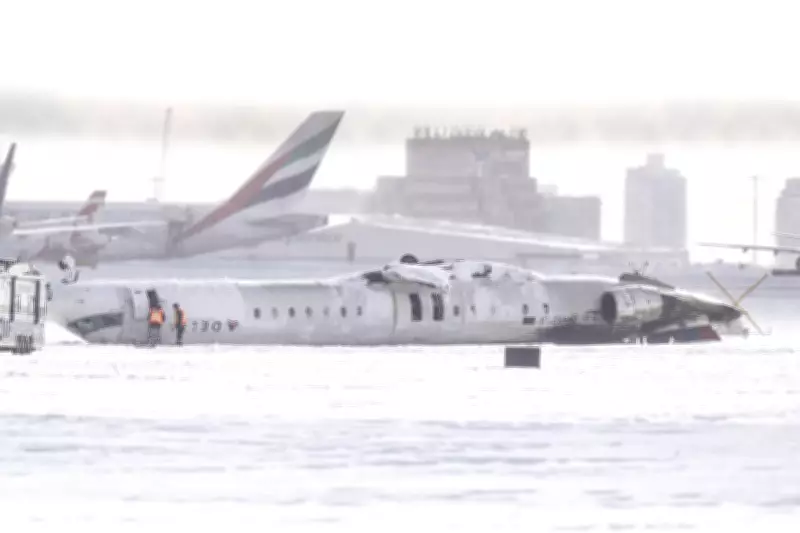
A Year Later, Fiery Pearson Airport Crash Still Haunts Delta Flight 4819 Survivors
One year after a terrifying aviation incident, passengers from Delta Flight 4819 continue to grapple with the psychological aftermath of a fiery crash at Toronto Pearson International Airport. The Bombardier CRJ-900 jet, operated by Delta subsidiary Endeavor Air, crashed while landing on February 17, 2025, after a flight from Minneapolis, leaving the aircraft inverted and sparking traumatic memories that persist for those on board.
The Day That Changed Everything
"I was absolutely certain that was going to be my final day," recalled one passenger, who requested anonymity due to ongoing emotional distress. The landing attempt turned catastrophic as the aircraft skidded and flipped, coming to rest upside down on the tarmac. Emergency responders rushed to the scene, evacuating all passengers and crew, though the physical escape was just the beginning of a much longer journey.
Initial investigations pointed to possible landing gear failure combined with adverse weather conditions, though official reports from transportation authorities remain pending. The visual of the Delta plane lying wrecked and inverted became an iconic image of aviation vulnerability, circulated widely in media coverage.

Lingering Psychological Scars
For many survivors, the anniversary has reopened wounds that never fully healed. Several passengers report ongoing symptoms of post-traumatic stress, including anxiety around travel, sleep disturbances, and flashbacks triggered by routine sounds like aircraft engines or emergency sirens. "Every time I hear a plane overhead, my heart races," shared another survivor. "It's like my body is still stuck in that moment."
Mental health professionals have noted that aviation accidents can create particularly persistent trauma due to the combination of sudden violence, confinement during the event, and the public nature of such incidents. Support groups have formed among survivors, providing a crucial network for sharing experiences and coping strategies.
Broader Implications for Aviation Safety
The Pearson crash has reignited discussions about regional jet safety protocols and emergency preparedness at major airports. Aviation experts emphasize that while statistically rare, such accidents underscore the importance of rigorous maintenance checks, pilot training for extreme scenarios, and passenger safety education.
Delta Air Lines and Endeavor Air have implemented additional training modules focused on crisis management and passenger communication following traumatic events. The airline has also expanded its support services for accident survivors, including extended counseling access and flexible rebooking policies for those with travel anxiety.
As the investigation continues, regulatory bodies are reviewing whether current safety standards for CRJ-900 aircraft need updating, particularly regarding landing systems and structural integrity during ground impacts. The Toronto Pearson incident serves as a sobering reminder of the complex interplay between human factors, mechanical systems, and environmental conditions in aviation safety.
For the passengers of Flight 4819, the path forward involves both personal healing and advocacy for improved safety measures. "We survived, but we're forever changed," one survivor summarized. "If our experience can help prevent even one future accident, then some meaning emerges from the terror."