Analysts Forecast Enduring Oil Price Increases as Geopolitical Tensions Embed Risk Premiums
Canadian consumers, who received temporary relief at the gasoline pumps last year following the federal government's removal of the carbon tax on fuel, now face the prospect of those savings completely disappearing. Economists and energy market specialists are sounding alarms about a potential permanent shift toward higher baseline oil prices, driven by embedded risk premiums that may persist long after current geopolitical conflicts subside.
The Emerging 'New Normal' for Energy Costs
Avery Shenfeld, chief economist at CIBC Capital Markets, recently stated in a podcast that the energy market is unlikely to return to pre-conflict pricing levels. "The new normal is not likely to be US$60 a barrel," Shenfeld explained. "There's likely to be a remaining risk premium in the energy market, but, say, somewhere between US$75 and US$80 a barrel in the course of the fourth quarter; that's the base for our forecast."
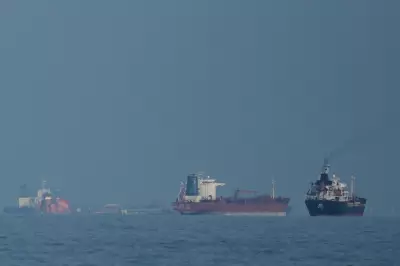
Prior to recent Middle East tensions, West Texas Intermediate crude traded around US$60 per barrel. Prices subsequently surged nearly 70 percent to a peak of US$112.95 before moderating to approximately US$90. This volatility reflects market reactions to supply disruptions, particularly Iran's effective closure of the Strait of Hormuz, a critical passageway for oil and gas shipments to Europe and Asia that removed an estimated 10 million barrels daily from global markets.

Risk Premiums Expected to Double
Randy Ollenberger, managing director and oil and gas analyst at BMO Capital Markets, anticipates that risk premiums will remain elevated even after hostilities conclude. "When the war does come to an end, that risk premium will be higher," Ollenberger noted during an investor web session, projecting the premium could increase to US$10 per barrel from the previous US$5.
Market indicators support this outlook. Oil futures are signaling expectations for sustained higher prices through 2026 and 2027, with West Texas Intermediate futures pricing above US$70 per barrel. Derek Holt, vice-president of economics at Scotia Capital, observed that "the futures curve remains elevated at sustainably higher prices throughout 2026–27."
Long-Term Market Signals Versus Historical Precedents
Douglas Porter, chief economist at Bank of Montreal, distinguishes between immediate price impacts and longer-term risk premiums. "Where you get into talking about a risk premium is when you get two years from now, or maybe even a year from now," Porter clarified, noting that one-year future prices for Brent crude have risen to US$80 from US$67 just before recent conflicts began.
However, Porter cautions that elevated risk premiums and higher prices aren't inevitable outcomes. "That is the signal markets are sending to us," he acknowledged, while pointing to historical precedents where energy markets reversed course after previous shocks.
The economist referenced the 2008 commodity supercycle when West Texas Intermediate prices soared to US$150 per barrel before collapsing for reasons unrelated to the initial price surge. Similarly, in 2014, prices exceeded US$100 amid fears that the Islamic State would destabilize Middle Eastern oil production, yet those increases proved temporary rather than permanent.
Despite these historical patterns, current market indicators suggest a different trajectory may be emerging. The combination of geopolitical tensions, supply disruptions, and shifting market expectations appears to be creating conditions for what analysts describe as a structural change in oil pricing dynamics that could leave Canadian consumers facing persistently higher energy costs for years to come.