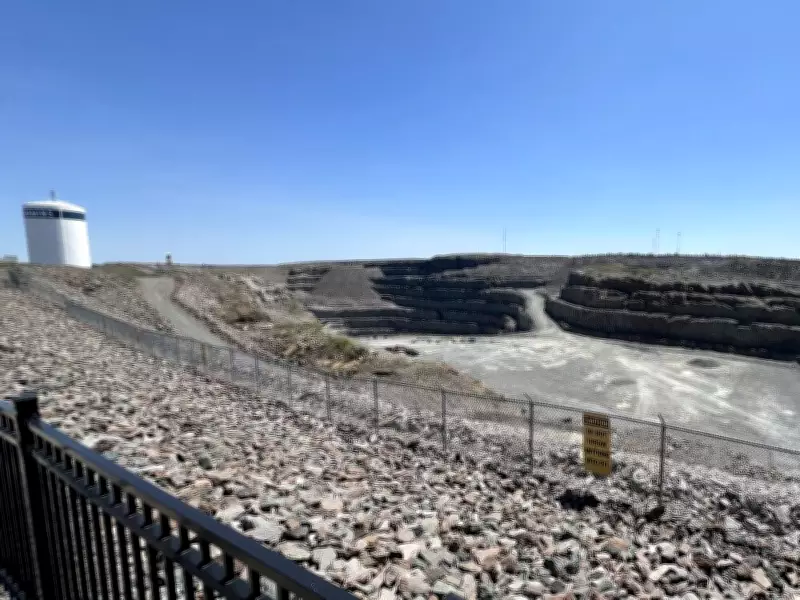
Ontario Issues First Permit Under New Regime to Explore Old Mine Tailings
Ontario has issued the inaugural mining exploration permit under its recently established Recovery of Minerals Regime, a legislative framework designed to facilitate the examination of abandoned mines and their residual waste materials. This landmark permit enables Toronto-based STLLR Gold Inc. to conduct detailed assessments of the tailings left at the historic Hollinger Mine in Timmins, Ontario.
Historic Mine Site with Significant Potential
The Hollinger Mine, which operated from 1915 through the 1960s, produced an estimated 19.5 million ounces of gold during its peak years. Following its closure in 2024, the site left behind approximately 50 to 60 million tonnes of waste rock. STLLR Gold Inc. believes that substantial amounts of gold remain recoverable from these tailings, particularly given current record-high gold prices, which reached US$5,080 per ounce recently.
Keyvan Salehi, Chief Executive of STLLR, emphasized the project's multifaceted benefits in a statement: "At a time of elevated gold prices, Hollinger is uniquely positioned to deliver a 'triple win': significant potential cash flows, responsibly remediating a century-old site and securing a prosperous, sustainable future for Timmins and the surrounding communities."

Technological Approach and Timeline
The company plans to employ cyanidation, an electrochemical process that extracts gold from low-grade ores, to recover valuable metals from the site. STLLR aims to commence operations by 2027, anticipating that the project will be economically viable due to advanced extraction techniques and favorable market conditions.
Legislative Background and Government Support
The Recovery of Minerals Regime was enacted in 2025 as part of broader efforts to streamline mining permits in Ontario. This initiative is embedded within Bill 5, officially titled the Protect Ontario by Unleashing the Economy Act, which amended the Mining Act to reduce permit processing times by half, targeting a two-year approval window. The legislation also established a single point of contact for all provincial approvals to enhance efficiency.
Stephen Lecce, Ontario's Minister of Energy and Mines, highlighted the progress: "Our new framework cuts red tape and turns legacy mine sites into engines of economic growth and stewardship." He noted that this permit demonstrates the province's commitment to revitalizing old mining areas while supporting economic development.
Controversial Aspects and Opposition
Despite the economic promises, the legislative changes have faced significant opposition from Indigenous and environmental groups. The amendments included repealing portions of the Endangered Species Act and introducing protections against litigation that could delay mining projects. Critics argue that disturbing old mining sites might re-release toxins into the environment, posing ecological risks.
The Recovery of Minerals Regime specifically targets old or abandoned mines, known as brownfield sites, aiming to expedite exploration permits for tailings. This approach has precedent in Ontario's mining history, with successful revivals such as the Canadian Malartic gold mine near Val D'Or, Quebec. Originally discovered in the 1920s and operational through the 1960s, it was rejuvenated by Osisko Mining Corp. in 2011 and is now operated by Agnico Eagle Mines Ltd., projected to produce 590,000 ounces of gold in 2025, making it one of the world's largest gold mines.
Future Implications and Economic Impact
This permit marks a significant step in Ontario's strategy to leverage historical mining assets for contemporary economic gain. By focusing on brownfield sites, the province aims to:
- Generate revenue through resource recovery
- Remediate environmentally impacted areas
- Create sustainable job opportunities in local communities
As STLLR Gold Inc. moves forward with its exploration, the outcomes will likely influence future applications under the Recovery of Minerals Regime, shaping Ontario's mining sector and its approach to environmental stewardship in the years to come.