Democrats Target Grocery Surveillance Pricing with New Legislative Ban
In a significant move to address consumer affordability concerns, Democratic senators are intensifying pressure on President Donald Trump's affordability initiatives by proposing a union-supported ban on surveillance pricing in grocery stores. Senators Ben Ray Luján of New Mexico and Jeff Merkley of Oregon introduced the bill on Thursday, aiming to outlaw the contentious practice where retailers leverage customers' personal data to dynamically adjust prices. This legislation also seeks to restrict supermarkets from employing electronic shelf labels, which enable rapid and remote price modifications, thereby curbing potential exploitation.
Modeled on House Efforts and Addressing Inflation Fears
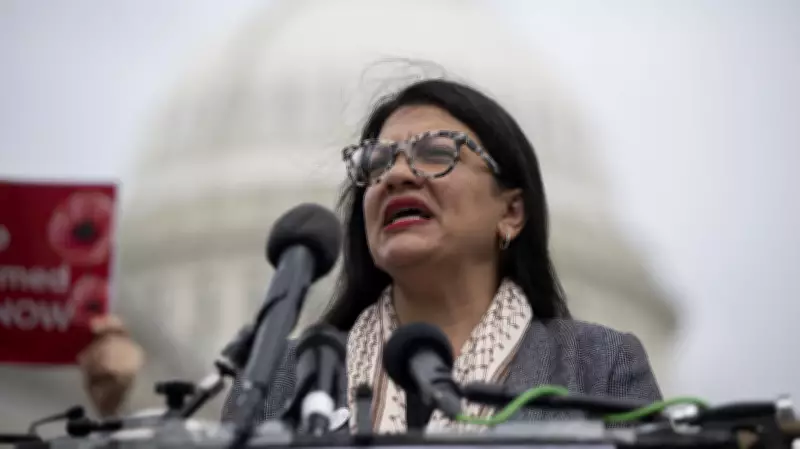
The Senate proposal mirrors a House bill previously advanced by Representative Rashida Tlaib of Michigan, who reintroduced the legislation on Thursday alongside Representative Val Hoyle of Oregon. Tlaib expressed deep concerns to HuffPost about how powerful corporations could utilize personal information to implement individualized price increases, particularly during a period when consumers are already strained by persistent inflation. She emphasized that major retailers are exploring the use of private data—such as browsing habits, app usage, geographic location, employment status, and even demographic details—to craft personalized pricing profiles. Tlaib condemned this as a form of price gouging driven by corporate greed, leveraging artificial intelligence technology to inflate costs unfairly.
Legislative Carveouts and Broader Implications
The proposed legislation includes specific exemptions to balance consumer protection with practical needs. Supermarkets would still be permitted to use personal data for offering discounts to students or seniors, and smaller stores under 10,000 square feet would be exempt from the ban on electronic shelf labels. Democrats argue that without such measures, companies might exploit personal data to hike prices on individual shoppers, exacerbating the affordability crisis. Surveillance pricing, which relies heavily on personal data, is considered more extreme than algorithmic pricing, where prices are adjusted based on localized supply and demand. Even the latter practice could be hindered by the ban on electronic shelf labels, as grocery stores would need to revert to manual paper price tags, slowing down price changes.

Evidence from Consumer Reports and Union Support
Supporting the need for this ban, an analysis conducted last year by Consumer Reports, More Perfect Union, and the Groundwork Collaborative revealed that prices for Instacart shoppers varied by up to 23% for identical products at the same time across different stores. The investigation highlighted that algorithmic pricing experiments were occurring through Instacart at major grocery retailers, including Albertsons, Costco, Kroger, Safeway, Sprouts Farmers Market, and Target. This underscores the widespread nature of such practices and their potential impact on consumer wallets.
The Democratic legislation has garnered strong backing from the United Food and Commercial Workers union, which represents hundreds of thousands of grocery store employees nationwide. The union has been advocating for similar bans at the state level, fearing that advancements in artificial intelligence could not only drive up prices for consumers but also threaten union jobs in supermarkets. UFCW President Milton Jones stated that Americans are suffering under the affordability crisis, with union members witnessing the distress firsthand in grocery stores and experiencing it themselves when shopping for their families.