

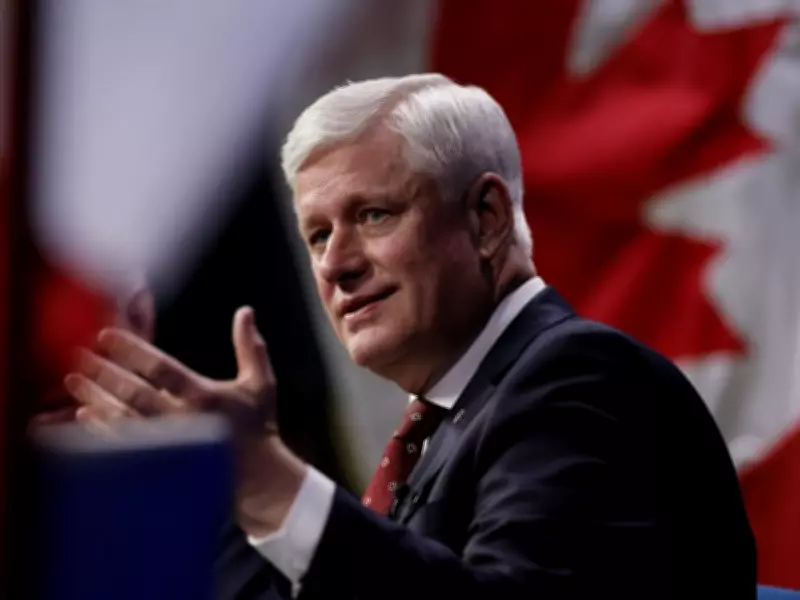
Michael Taube: Why Canada Will Never See Another Politician Like Stephen Harper
This week marks a significant milestone in Canadian political history: the twentieth anniversary of former Conservative prime minister Stephen Harper's swearing-in ceremony. The occasion has been celebrated with various events in Ottawa, including a fireside chat with former Liberal prime minister Jean Chrétien and the unveiling of Harper's official portrait by artist Phil Richards.
The Unrepeatable Political Figure
There will never be another "next Harper" in Canadian politics, according to columnist Michael Taube, who argues that Harper represented the complete political package. This perspective comes as numerous tributes have appeared in the National Post from figures like Tom Flanagan, Royce Koop, and Peter MacKay, each highlighting different aspects of Harper's legacy.
The question of who might become the next Harper has been asked repeatedly about various political leaders, including comparisons to Ronald Reagan, Margaret Thatcher, and William F. Buckley Jr. Taube asserts the answer remains consistent across all these historical figures: there simply won't be another one.

A Personal Perspective on Harper's Qualities
Taube first met Harper in Toronto in December 1996 through mutual friend Line Maheux, a political consultant who had worked with Preston Manning, Stockwell Day, and Mike Harris. At the time, Taube was running his publication From The Right while Harper was a respected Reform Party MP about to join the National Citizens' Coalition.
Their initial meeting proved challenging as they searched unsuccessfully for a table at the old Shopsy's location near Union Station. Remarkably, the future prime minister walked through the restaurant aisles completely unrecognized by patrons, a scenario that seems unimaginable today given his subsequent prominence.
The Complete Political Package
During their lengthy conversation at a nearby restaurant, Harper and Taube discussed numerous topics including politics, economics, literature, sports, and religion. They discovered shared intellectual influences, including admiration for political thinkers like Friedrich Hayek and Milton Friedman, and respect for leaders such as Reagan, Thatcher, and Winston Churchill.
From this initial meeting and subsequent interactions over the years, Taube developed a profound appreciation for Harper's multifaceted abilities:
- Exceptional Intelligence: Harper's intellectual capacity and curiosity about diverse subjects
- Strategic Communication: Masterful ability to convey messages effectively in both public and private settings
- Cultural Appreciation: Recognition of the importance of preserving arts, sports, and cultural heritage
- Literary and Oratorical Skills: Strong writing ability and continuously improving public speaking
- Authentic Personality: Straightforward communication style combined with a developing public sense of humor
Harper's combination of political acumen, economic understanding, cultural awareness, and communication skills created what Taube describes as a uniquely complete political figure. His evolution from an unrecognized MP walking through a Toronto restaurant to a prime minister whose twentieth anniversary is celebrated nationally demonstrates the remarkable trajectory of his political career.
As Canada reflects on Harper's legacy two decades after he assumed the country's highest office, Taube's analysis suggests that the particular combination of qualities that defined Harper's political persona remains unmatched in the current landscape. The anniversary celebrations serve not only as recognition of past achievements but as a reminder of the distinctive characteristics that made Harper's political approach both effective and memorable.






