





Europe Empowers Carney to Confront Trump's Aggressive Trade Tactics
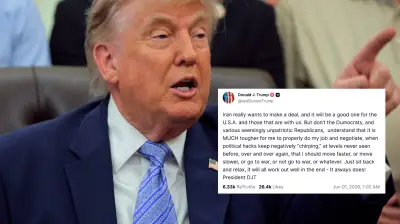
President Donald Trump's recent late-night speculation about Venezuela potentially becoming the 51st state was likely met with quiet satisfaction in the Prime Minister's Office. This development suggests that Mark Carney's powerful speech at the World Economic Forum in Davos—widely interpreted as a direct challenge to the bully president—has successfully persuaded Trump to redirect his attention toward easier targets than Canada or Greenland.
A Temporary Respite from Presidential Pressure
This reprieve may prove temporary, given the president's famously mercurial nature. As Canada, the United States, and Mexico approach the critical stages of new trade negotiations, all indications point toward Trump imposing fresh sectoral tariffs, utilizing the national security provision embedded within the Trade Expansion Act. The administration has already conducted nine industry investigations—either completed or pending—across vital sectors including semiconductors, pharmaceuticals, commercial aircraft, drones, and robotics.
The president faces mounting pressure from both Congress and American voters, neither group showing enthusiasm for his tariff policies. Yet Trump remains a committed protectionist from the tips of his Florsheim black Oxfords to the top of his distinctive combover. Additional tariffs appear inevitable on the horizon.
European Solidarity as a Deterrent
Nevertheless, Trump appears somewhat chastened by the remarkable solidarity that Carney has helped foster among European leaders. The president hasn't mentioned annexing Greenland in nearly two months, and while he recently referred to Carney as "governor," he has refrained from explicit declarations about his 51st state ambitions regarding Canada for a similar period.
During a press conference with the prime ministers of Norway, Sweden, Finland, Denmark, and Iceland on Sunday, European leaders offered consistent praise for Carney's leadership. Iceland's Prime Minister Kristrun Frostadottir noted that Carney has "filled a void" in international diplomacy.
The Davos Declaration That Changed Dynamics
In his January address to the World Economic Forum in Davos, Carney declared Canada's firm solidarity with Greenland and Denmark, emphasizing that middle powers must act collectively "because if you are not at the table, you are on the menu." This powerful metaphor resonated across European capitals and established a new framework for international cooperation.
Denmark's Prime Minister Mette Frederiksen acknowledged that Carney has gained significant support throughout the Nordic countries. "We have never experienced anything like this," she stated. "It showed leadership on how democracies can work together" when confronting "totally unacceptable pressure from the U.S. president."
Building Formal and Informal Alliances
When questioned about whether the threat to Canadian and Danish sovereignty had passed, Carney responded that Canada and its European allies had been unequivocal about fundamental principles of territorial integrity, which "has created space which always should have been there." In simpler terms, they collectively resisted Trump's attempt to bully smaller nations.
While these informal alliances won't single-handedly transform global politics—Iceland's population remains smaller than that of London, Ontario—Carney has successfully galvanized more formal groups of middle powers. Exploratory talks are currently underway between the European Union and the 12-member Trans-Pacific Partnership (of which Canada is a key participant) regarding the formation of a new trading bloc. This initiative represents an idea Carney has championed for some time and publicly promoted last autumn.
The last time Canada's diplomatic voice carried comparable international weight arguably occurred under Brian Mulroney during the apartheid era. Today, Mark Carney's strategic leadership has positioned Canada at the forefront of a European-led resistance against protectionist trade policies, creating a united front that even the most unpredictable American president must acknowledge.