







Terence Corcoran: Any Canadian Auto Trade Deal Will Be Fundamentally Flawed
Canadian Auto Trade Deals Inevitably Flawed, Says Corcoran

Terence Corcoran: Any Canadian Auto Trade Agreement Will Be Fundamentally Flawed

The only right choice for Canadian consumers and workers appears conspicuously absent from the negotiating table as another intense economic policy debate emerges regarding the future of Canada's automotive industry. Both major political parties—the Conservatives and Liberals—have presented broad strategies aimed at supporting and potentially restoring Canadian auto production to previous levels. However, these objectives increasingly resemble fantasy in light of Donald Trump's own protectionist auto trade vision.

The Trump Factor and Global Realities

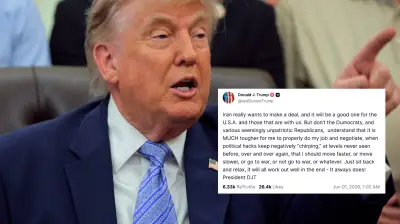
Speaking recently at a Ford manufacturing facility in Detroit, former President Trump declared unequivocally, "We don't need cars made in Canada ... we want to make them here." This statement represents just one of numerous obstacles confronting the Canadian auto sector as it approaches renegotiation of the Canada-United States-Mexico Agreement (CUSMA) on trade. Early discussions are already underway, with U.S. trade representatives noting that Canada appears to be lagging behind Mexico at the negotiation table.

It has become increasingly evident that the future of automotive manufacturing lies predominantly in Asia, particularly in China and India, where competitive labor costs, substantial production capacity, and expanding local markets fuel rapid industry growth. This global context renders Canada's auto industry a relatively minor player primarily focused on protectionist measures rather than international competitiveness.

Wide Pickt banner — collaborative shopping lists app for Telegram, phone mockup with grocery list

Conflicting Canadian Strategies

Reports suggest Canada has been slow in communicating with Washington, possibly reflecting the Liberal government's struggle to establish a coherent strategy. Last month, Prime Minister Mark Carney outlined a somewhat contradictory approach, indicating Canada aims to reduce dependence on the United States while simultaneously advocating for a single, free North American auto market.

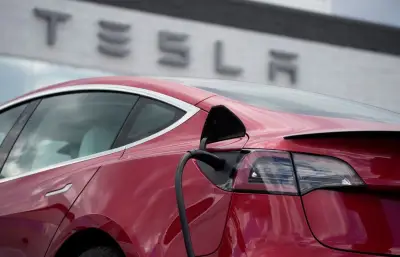
To diminish reliance on American imports, Carney's administration plans to permit China to import 49,000 electric vehicles into Canada under a reduced 6.1 percent tariff—a move certain to complicate CUSMA auto trade negotiations. Adding further complexity, Stella Li, executive vice-president of Chinese EV manufacturer BYD, revealed her company is considering acquiring an existing Canadian automaker to produce electric vehicles domestically. Another Chinese EV producer, Geely, is also exploring opportunities within Canada.

Political Divisions and Union Concerns

Conservative Leader Pierre Poilievre recently unveiled his party's framework for an auto trade pact under CUSMA, emphasizing "secure tariff-free access to the U.S. market" while maintaining and potentially expanding the North American auto market. Poilievre characterized Carney's engagement with China as a "dangerous illusion" that threatens Canadian automotive interests.

Unifor, representing over 40,000 Canadian autoworkers, declared Poilievre's proposal unacceptable and fundamentally flawed. In a diplomatically worded response, Unifor President Lana Payne acknowledged shared objectives with Poilievre—specifically that companies wishing to sell vehicles in Canada should manufacture them domestically—but raised multiple technical concerns. Payne made clear that Carney's strategy suffers from similar deficiencies.

Inevitable Complications in Any Agreement

Any Canadian auto trade deal appears destined to contain significant flaws. Substantial technical, economic, and corporate complications are unavoidable, particularly given current global dynamics. An international automobile production revolution centered in China and other nations continues to reshape the industry landscape. Within this worldwide context, Canada's auto sector remains a relatively insignificant participant narrowly focused on protectionist policies rather than embracing global market realities.

Pickt after-article banner — collaborative shopping lists app with family illustration

The fundamental challenge remains: with Asian manufacturing dominance growing, U.S. protectionist sentiments strengthening, and Canadian political strategies conflicting, any negotiated agreement will likely fail to address the comprehensive needs of Canadian workers, consumers, and the broader economy. The optimal solution for Canada appears absent from current discussions, leaving the nation's auto industry facing an uncertain future regardless of which political approach ultimately prevails.