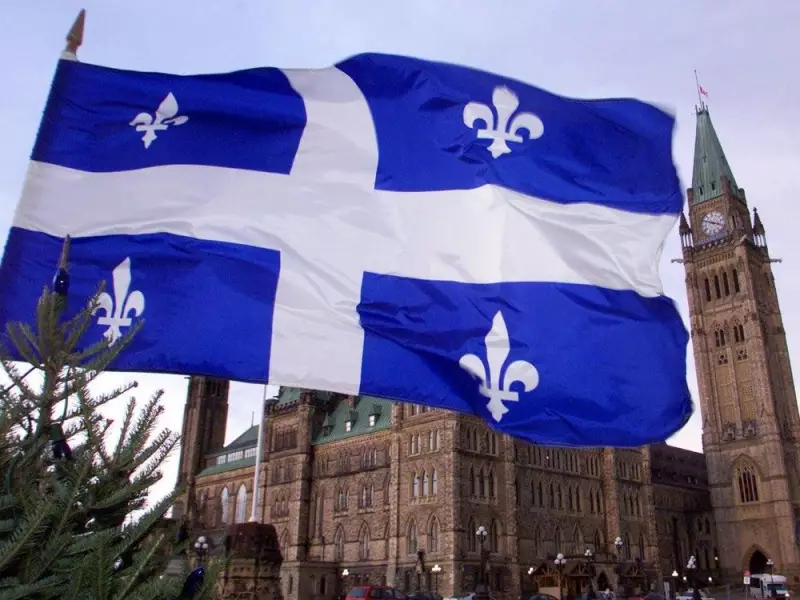
A significant majority of Quebecers would want to hold onto their Canadian passports even if the province voted to become a separate country, according to a revealing new survey. The poll, conducted by Leger Marketing for the Association for Canadian Studies, sheds light on the complex relationship between national identity and citizenship as Quebec's political future comes into sharper focus.
Citizenship and Sovereignty: A Divided Perspective
The survey, fielded last month, found that 58 per cent of Quebecers believe they should be allowed to retain their Canadian citizenship in an independent Quebec. In contrast, just over a quarter of respondents, or 26 per cent, indicated they should have to give it up.
The issue is viewed differently outside the province. Among Canadians polled nationally, only one third agreed that Quebecers should be allowed to remain Canadian citizens post-independence, while 45 per cent said they should not.

"If Quebec breaks off, clearly we’re going to have to review this issue," said Jack Jedwab, president of the Association for Canadian Studies. He emphasized the weight of the decision, noting, "Citizenship entails responsibilities."
Language Security as the Primary Driver
The poll suggests that for many Quebecers, the debate over sovereignty is intrinsically linked to the future of the French language, rather than economic or international standing. More than half (54 per cent) of Francophone Quebecers said the French language would be much more secure in an independent Quebec, while 34 per cent disagreed.
The perspective differs sharply among Anglophone Quebecers. Only 27 per cent thought independence would make French more secure, with 54 per cent indicating it would not.
"What this question suggests is that the obvious driver for Quebecers is language and not a better economy, or a greater status internationally, neither of which the majority of Quebecers think would be the outcome of independence," Jedwab analyzed.
Political Context and Minority Concerns
These findings emerge during a period of political transition in Quebec, following the resignation of Premier François Legault. An election is scheduled for October, where his Coalition Avenir Québec (CAQ) faces a strong challenge from the surging Parti Québécois (PQ). PQ Leader Paul St-Pierre Plamondon has consistently promised a referendum on sovereignty if his party wins power.
The poll also explored perceptions of how independence would affect minority groups within Quebec. The data indicates a recognition that the sovereignty project is largely championed for the linguistic majority.
Among those who believe independence would secure the French language, 49 per cent said English-speaking Quebecers would not be better off, with only 23 per cent saying they would. The sentiment was even more pronounced among those who don't see a linguistic benefit: a mere 5 per cent thought Anglophones would be better off, versus 86 per cent who said they would not.
"Quebecers acknowledge that the push for independence isn’t about the interest of all Quebecers," Jedwab concluded. "It’s about protecting the language of the majority, at least from the standpoint of the vast majority of Quebecers."
Nationally, only 13 per cent of Canadians believe ethnic minorities would be better off in an independent Quebec, with 58 per cent saying they would not. Within Quebec itself, 15 per cent of respondents thought ethnic minorities would be better off, while 57 per cent said they would not.