

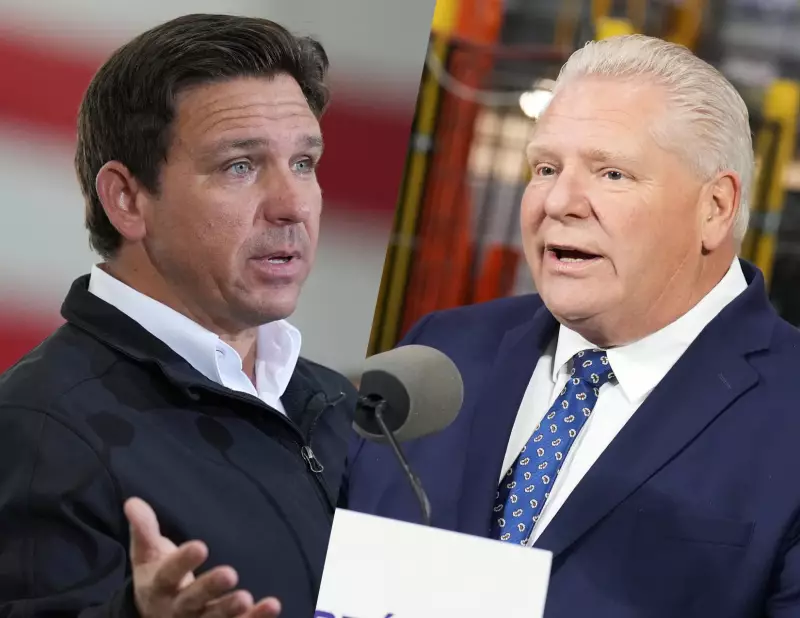
Florida Governor Ron DeSantis has publicly responded to recent remarks made by Ontario Premier Doug Ford regarding the state's tourism industry. The exchange marks a notable moment of cross-border political commentary between leaders of a U.S. state and a Canadian province.
The Spark for the Dispute
The verbal clash was ignited by comments from Premier Doug Ford, who made observations about Florida's appeal as a tourist destination. While the exact nature of Ford's initial statement is not detailed in the provided source material, it was significant enough to prompt a direct and pointed reply from Governor DeSantis. The response from the Florida governor, described as "clapping back," indicates a firm and likely defensive rebuttal aimed at protecting the state's economic interests and reputation.
A History of Political Tensions
While not an everyday occurrence, public disagreements between Canadian provincial and U.S. state leaders are not unprecedented, often revolving around economic competition, policy differences, or regional pride. In this instance, the focus on tourism highlights the significant economic stakes for Florida, a state whose economy is heavily reliant on visitors from across North America and beyond, including many Canadians seeking winter sun.

The timing of the exchange, on December 16, 2025, places it in a context where both regions may be evaluating post-pandemic travel trends and economic recovery. Tourism is a vital sector for both Ontario and Florida, making any public critique a sensitive subject.
Broader Implications and Reactions
This public spat between Governor Ron DeSantis and Premier Doug Ford may have ripple effects beyond a simple war of words. It could influence public perception among travelers and potentially touch on deeper policy divergences between the two jurisdictions. Political analysts often watch such exchanges for insights into broader bilateral relations or shifting competitive dynamics between popular destinations.
For Ontario residents, many of whom are frequent visitors to Florida, the leaders' comments may resonate personally. The outcome of this diplomatic tiff remains to be seen, but it underscores how interconnected the economies and public discourses of neighboring regions can be, even across an international border.






