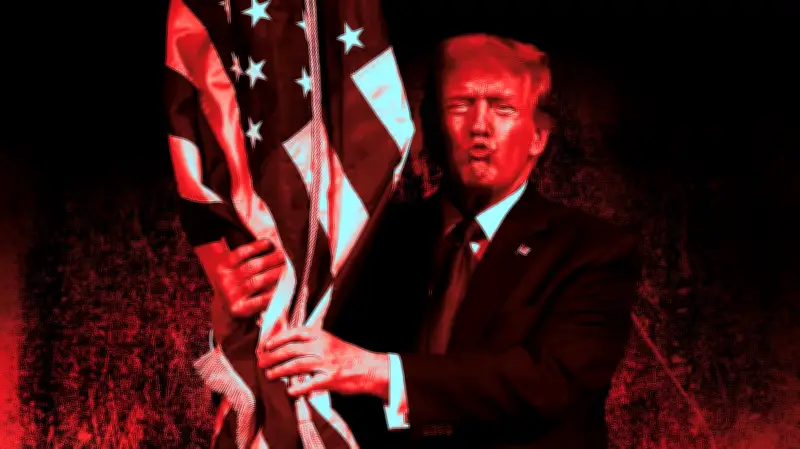
President Donald Trump is planning a July 4 celebration on the National Mall that he calls the “most spectacular TRUMP RALLY of them all,” billed by the White House as “one of the grandest displays of patriotism that the world has ever seen.” But true patriotism, as exemplified by civil rights activist Viola Liuzzo, looks very different.
Viola Liuzzo: A Patriot's Sacrifice
In 1965, Liuzzo, a white 39-year-old mother of five from Detroit, answered Rev. Martin Luther King Jr.'s call to volunteer for the Selma to Montgomery march for voting rights. She drove three days to Selma, staffed a welcome desk, marched across the Edmund Pettus Bridge, and helped drive marchers. After witnessing King's address at the state capital, she volunteered to drive activists back to Selma, where Klansmen shot and killed her.
Liuzzo gave her life in service to her country, believing in the promise that “all men are created equal.” Her husband told President Lyndon Johnson, “My wife died for a sacred battle, the rights of humanity.”

Trump's Vision vs. America's Founding Ideals
Trump offers a different vision: a patriotism rooted in martial nationalism, blood-and-soil citizenship, and authoritarian fantasies of cleansing the country of perceived enemies. He calls political opponents “the enemy within,” immigrants “vermin,” and says those who oppose him are “not people.” This vision is exclusionary and hierarchical, standing as the antithesis of love for one's country.
True patriotism, according to political philosopher Richard Rorty, is like self-respect: a necessary condition for self-improvement. America's great movements—abolition, women's suffrage, labor, civil rights—have all grounded their claims in the Declaration of Independence's promise of equality.
Historical Roots of Egalitarian Patriotism
Abolitionists were the first to turn the Declaration's words into constitutional politics. The Anti-Slavery Society called its preamble the cornerstone of freedom. Frederick Douglass called it “the ringbolt to the chain of your nation's destiny.” Abraham Lincoln saw it as the central principle, an “apple of gold” with the Constitution as the frame.
Suffragists at Seneca Falls in 1848 declared “all men and women are created equal.” The 1938 Steelworkers' Declaration of Independence protested economic inequality. Martin Luther King Jr. called the Declaration a “promissory note” on which America had defaulted, but refused to believe the bank of justice was bankrupt.
Counter-Tradition of Exclusion
This egalitarian patriotism has always faced opposition. John Adams called the Declaration's equality promise “a fraud.” John Calhoun called it “the most false and dangerous of all political errors.” The Dred Scott decision declared Black Americans had no rights. Henry Ford said efforts to make men equal block progress.
Today, far-right figures like Elon Musk warn of white replacement, and Peter Thiel opposes the Declaration's universalism, blaming women's suffrage for incompatibility between freedom and democracy. The conservative Supreme Court ended affirmative action and weakened the Voting Rights Act, while Trump's anti-DEI initiatives resegregate institutions.
Conclusion: Rejecting False Patriotism
Trump's July 4 celebration is privatized, sectarian, and narcissistic—everything democracy is not. But it provides an opportunity to reject false nationalism and reaffirm the true promise of equality. The spirit of Viola Liuzzo lives in Americans who resist injustice, like those protesting mass deportations in Los Angeles, Chicago, Washington, and Minneapolis-St. Paul. It lives in the memories of Renée Good and Alex Pretti, killed while defending others. True patriotism outshines Trump's narrow vision, promising that the revolutionary spirit of 1776 rests in the people, called to “begin the world over again.”