

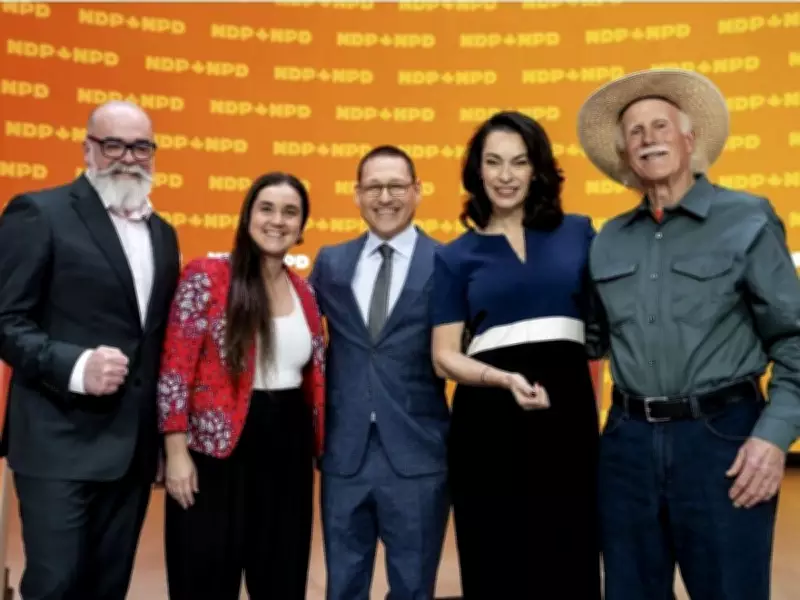
NDP Leadership Final Debate: Avi Lewis Faces Scrutiny as Frontrunner
The five contenders vying to lead the New Democratic Party will convene on Thursday evening in British Columbia's Lower Mainland for the second and final official debate of the party leadership campaign. This English-language debate represents a critical opportunity for candidates to influence NDP members before voting commences next month.
A Crucial Moment for Candidates
The debate, scheduled for 8 p.m. ET, follows November's French-language debate in Montreal where the all-anglophone field struggled significantly. Interim leader Don Davies humorously referred to the Franglais-filled evening as a morale booster for the Bloc Québécois, highlighting the challenges faced by candidates in bilingual political discourse.
This final debate serves as something of a palate cleanser and a decisive moment for candidates to present their visions directly to party members who will soon cast their ballots in the leadership election.

Avi Lewis: The Frontrunner Under Pressure
All eyes will be focused on activist and filmmaker Avi Lewis, who enters the debate as the clear frontrunner. Lewis holds a substantial fundraising advantage over his competitors and has drawn sizeable crowds to recent campaign events across the country.
Lewis has driven much of the campaign conversation with progressive proposals including:
- A public option for groceries
- A national wealth tax targeting the top one percent of Canadians
- A comprehensive Green New Deal to transition fossil-fuel workers to sustainable industries
Debate observers can expect other candidates on stage to challenge Lewis on both the practicality and electoral appeal of his ambitious policy ideas. Leadership rival Heather McPherson, an Edmonton MP, has already tested attack lines against Lewis's positions.
Policy Divisions Emerge
McPherson has questioned whether Lewis's proposed national public grocery chains would provide immediate relief for families struggling with high food prices. She has also criticized what she calls Lewis's "shut it all down today" stance on fossil fuels, arguing that such positions take the NDP "out of the conversation" on energy policy.
These policy disagreements highlight the ideological tensions within the party as candidates position themselves along the political spectrum from pragmatic centrism to bold progressivism.
Home Turf Advantage for Three Candidates
A trio of contenders will enjoy home turf advantage during the British Columbia debate. Lewis, social worker Tanille Johnston, and labour union leader Rob Ashton are all British Columbians with deep connections to the province.
Both Lewis and Johnston have previously run unsuccessfully for federal seats in British Columbia, with Lewis attempting twice. All three candidates are expected to emphasize their local roots and tailor their messages specifically to the West Coast audience.
British Columbia represents the closest approximation of a provincial stronghold for the diminished federal NDP, being home to three of the party's seven remaining Members of Parliament.
Tensions with Provincial Counterparts
Despite British Columbia being one of only two provinces controlled by an NDP government, not all federal leadership candidates see eye-to-eye with the provincial administration. Lewis created friction in November when he criticized B.C. NDP Premier David Eby for supporting liquefied natural gas development in the province.
While Eby remained publicly silent about the criticism, the slight did not go unnoticed within party circles. Former B.C. NDP executive director Michael Gardiner has expressed concerns that Lewis as federal leader would be harmful to the provincial wing of the party, suggesting potential coordination challenges if Lewis wins the leadership.
The Stakes for Canada's Political Landscape
As the NDP prepares to select its next leader, this final debate represents more than just an internal party event. The outcome will shape the direction of Canada's progressive political movement and determine how the party positions itself in relation to both the governing Liberals and opposition Conservatives.

The debate offers candidates their last major platform to articulate their visions for the party's future before members begin casting their votes next month in what promises to be a closely watched leadership contest with significant implications for Canadian politics.





