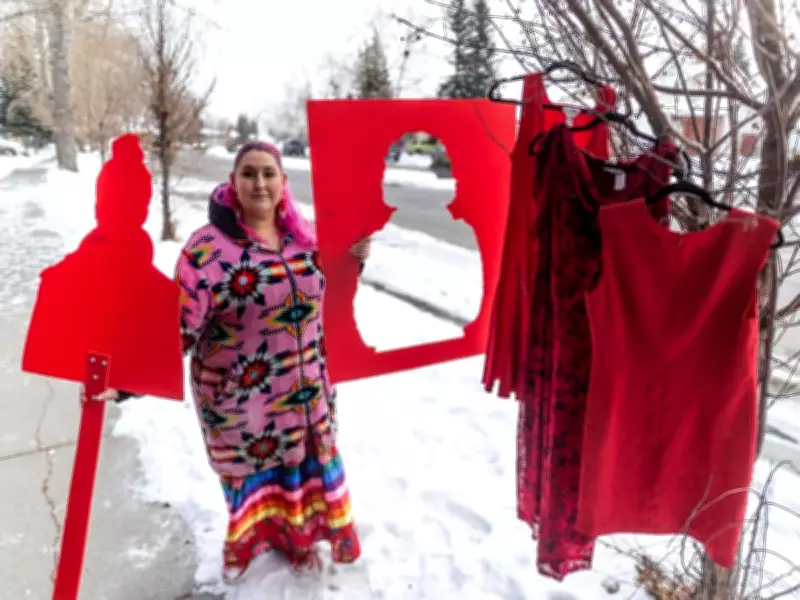
Valentine's Day March Honors Missing and Murdered Indigenous Women in Calgary
Dozens of community members gathered on Saturday evening, February 14th, for an annual Valentine's Day Memorial March in Calgary, paying tribute to missing and murdered Indigenous women, girls, and Two-Spirit peoples. The event, now in its 18th year, began at Scarboro United Church and featured a solemn procession through the streets, combining traditional practices with powerful visual displays to honor those lost and their grieving families.
A Day of Love Transformed into Remembrance
Chantal Chagnon, a Cree and Métis educator and event organizer, explained the poignant timing of the march. "Valentine's Day is traditionally associated with love, and many families, friends, or partners have lost loved ones or are still searching for them and for answers," she said. "This event celebrates those we've lost, remembers their stories, and supports the families striving for justice, offering solace and reminding them they are not alone."
Participants engaged in drumming, singing prayers, and traditional strumming before marching. This year, they carried paper cutouts, silhouettes, and frames, each representing an individual who has disappeared or been killed. These displays included names, ages, and personal details—such as whether they were mothers, daughters, or sisters—to humanize the statistics and connect with onlookers.

Raising Awareness Through Community Action
The primary goal of the march is to raise public awareness about the disproportionate rates of violence against Indigenous women. A 2019 national inquiry report revealed that Indigenous women are 12 times more likely to be murdered or go missing than other women in Canada, with the ratio escalating to 16 times when compared to white women. These staggering figures underscore a systemic crisis that demands urgent attention and action.
Historical data further illuminates the severity of the issue. A 2014 RCMP operational review documented 1,181 police-reported cases from 1981 to 2012, including 164 missing persons, 1,017 homicide victims, and 225 unsolved cases. However, activists and organizations argue that the actual numbers are significantly higher due to underreporting and data gaps.
The Challenge of Incomplete Data
Insufficient data collection has long hampered efforts to address this crisis effectively. The Native Women's Association of Canada (NWAC) began compiling a database in 2005 but faced funding stalls by 2010. In a submission to the United Nations' Permanent Forum on Indigenous Issues, NWAC noted that shifting federal government priorities rendered maintaining the database ineligible for continued support under the Evidence to Action project.
Former Indigenous Affairs Minister Patty Hajdu referenced NWAC research from a decade ago, which estimated over 4,000 missing and murdered Indigenous people at that time. Activists from Walk 4 Justice, who led similar initiatives, reported in 2016 that they stopped counting names after reaching 4,232, highlighting the overwhelming scale of the tragedy and the need for sustained resources and commitment.
This annual Valentine's Day march serves as a powerful reminder of the ongoing struggle for justice and the resilience of Indigenous communities in Calgary and beyond. By blending cultural traditions with advocacy, it fosters solidarity and calls for meaningful change to end the violence and honor the memories of those affected.