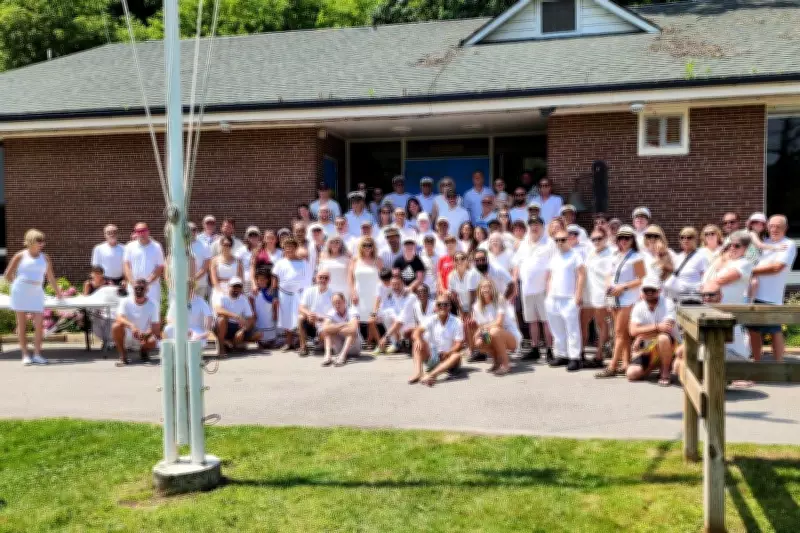
Toronto Humber Yacht Club Declares War on City Hall After Lease Termination Vote
In a dramatic confrontation that has rocked Toronto's municipal landscape, the Toronto Humber Yacht Club has declared open warfare against city hall following a decisive council vote to terminate its long-standing lease. The club's leadership has vowed to pursue every available avenue, including potential legal action, to challenge what they describe as a "massive injustice" perpetrated by their own elected representatives.
A Contentious Council Decision Sparks Outrage
The conflict reached its boiling point during Thursday's city council meeting, where councillors voted 19-5 against renewing the yacht club's lease on city-owned land. The decision followed months of escalating tensions between the club and municipal authorities, particularly with local Councillor Amber Morley, who represents the Etobicoke-Lakeshore ward where the club is located.
Wilson DaSilva, the club's vice-commodore, expressed profound disappointment and anger in an interview with the Toronto Sun. "We're not going to just stand by and let them railroad us like this," DaSilva declared. "There was a massive injustice done there at city council today, and we're just not gonna sit down and take it. So we're gonna fight, and we're gonna fight really hard on this."

Conflicting Narratives and Allegations
The debate revealed starkly different perspectives on why the 70-year-old institution faces closure. Councillor Morley presented a multifaceted argument during the council session, citing environmental concerns about the club's location on a flood plain, compliance issues with land use regulations, and what she described as the organization's failure to address multiple notices of default issued between 2018 and 2024.
"If you show good faith and demonstrate an ability and a willingness to address these compliance issues, we will open up a further conversation," Morley told council members, her voice elevated with emotion. "Despite the environmental challenges, despite the flood risk and those location issues, the difficulty with enforcement on the river and the unique nature of this location."
However, DaSilva vehemently disputes this characterization, claiming that much of what Morley presented to council was inaccurate. "The way they painted us was so false, so outrageous," he insisted. "I'm so angry about how they spin this." The club vice-commodore maintains that members were fully aware of all compliance issues and had already implemented changes, including banning Jet Skis and increasing community engagement efforts.
Legal Complexities and Ownership Questions
Adding complexity to the situation is the fact that while the club operates on city land, it owns its building outright. This ownership structure presents potential legal hurdles for the municipality, as noted by Councillor James Pasternak during the council debate. Pasternak warned that this fact could complicate any attempt to forcibly remove the organization from the property.
The club plans to first appeal to the city's ombudsman, but DaSilva made clear that his organization is prepared for more aggressive action if necessary. "If we have to go legal, we're gonna go legal," he stated unequivocally.
Council Division and Procedural Confusion
The council vote revealed significant division among Toronto's elected officials, with five councillors—Brad Bradford, Jon Burnside, Stephen Holyday, James Pasternak, and Michael Thompson—voting against terminating the lease. Councillors Mike Colle and Nick Mantas were absent for the decision.
During the debate, several councillors expressed frustration with what they perceived as inconsistent information from city staff. Councillor Burnside noted his confusion about standard procedures for lease renewals involving city property, stating, "These are not trick questions. I'm trying to understand... unfortunately, I'm very confused on this file."
Councillor Holyday, whose grandfather was a member of the yacht club, echoed these concerns about transparency. "This is not the best face or best example of government," Holyday remarked. "I've been very upset with what I've seen." He specifically mentioned difficulties obtaining basic information, including jurisdictional questions about the adjacent waterway.

A Community Institution Faces Uncertain Future
The Toronto Humber Yacht Club, despite its name suggesting exclusivity, describes itself as a "blue-collar" organization that has served the community for approximately seven decades. The club had proposed a series of reforms and community engagement initiatives in hopes of securing a lease extension, but these efforts proved insufficient to sway the majority of council members.
DaSilva characterized the city's approach as "cold-hearted" and expressed disappointment that municipal leaders showed little interest in finding a compromise solution. "The feedback I've been getting from the members is that no one wants to sit down and just accept this," he reported. "We just can't allow an injustice like this to go unanswered."
As the yacht club prepares for what promises to be a protracted battle, the conflict highlights broader tensions between long-established community institutions and municipal governance priorities in Canada's largest city. With both sides digging in for a fight, the coming months will determine whether this waterfront institution can survive what may be its greatest challenge in seventy years of operation.