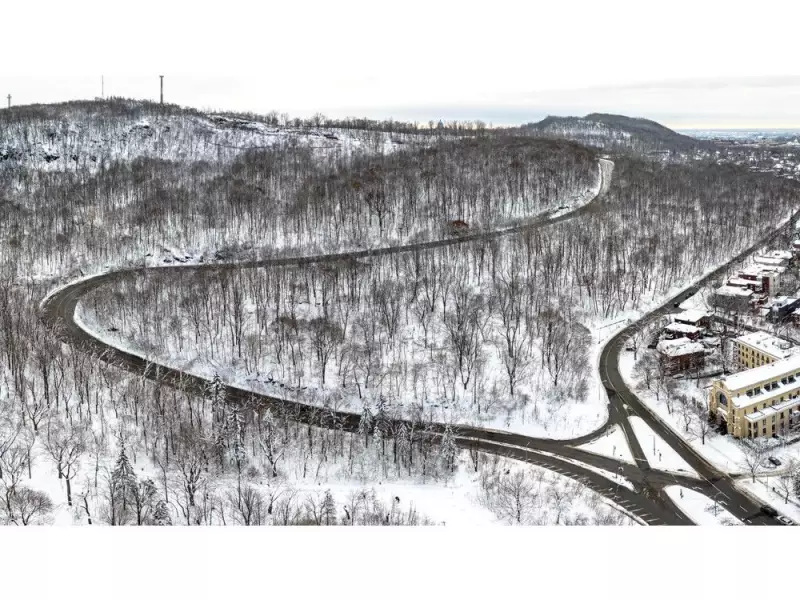
Montreal's new administration, led by Mayor Soraya Martinez Ferrada, has officially hit the reset button on one of the city's most politically charged files: the future of Camillien-Houde Way. The steep, winding road that traverses the back of Mount Royal, connecting the city's east and west, is once again at the centre of a complex urban planning debate.
A Road with Many Identities
Camillien-Houde Way is far more than just a street. It serves as a vital conduit to the summit of Mount Royal, providing access to Beaver Lake, skating rinks, playgrounds, and the iconic cross overlooking Montreal. For cyclists, it's a legendary and challenging climb. For elite athletes, it's a training circuit. For many residents, it's a necessary route to the Mount Royal Cemetery or a functional shortcut across the city. This multiplicity of uses is precisely what makes planning for its future so difficult.
The road's fate has been a political flashpoint for years. Former Mayor Valérie Plante first proposed closing it to through traffic in 2018, a plan met with significant public backlash. Following the largest public consultation in Montreal's history, conducted by the Office de consultation publique de Montréal (OCPM), a consensus emerged to maintain vehicle access.

From One Plan to a Blank Slate
Despite the OCPM's findings, the Plante administration returned to the issue during its second term. In 2023, it unveiled an ambitious $88.9-million redesign that would have closed the road to cars from the east, transformed it into parallel paths for pedestrians and cyclists, and altered traffic flow on the western Remembrance Road. With major construction not slated until after Montreal hosts the 2026 UCI World Road Championships, the plan's ultimate execution was left in doubt.
Mayor Martinez Ferrada, who campaigned on keeping the road open, has now definitively changed course. Her administration's first budget, unveiled in January 2026, revealed the project has been delayed to allow for a new plan to be developed. "We pushed it down the road so we can come up with a new plan," Martinez Ferrada stated, clarifying that the roadway will not be closed to cars. Immediate measures will focus on securing the area for cyclists and preparing for the 2026 cycling championships, including stabilizing the rocky cliffs that line the route.
The Daunting Challenge of a Unified Vision
Creating a viable long-term plan for Camillien-Houde Way presents a formidable challenge. The 2017 tragic death of cyclist Clément Ouimet, who collided with a vehicle making an illegal U-turn, underscores the critical need for improved safety, particularly for cyclists descending at high speeds.
However, the OCPM report and practical considerations highlight other essential factors:
- Accessibility: As a mountain, Mount Royal requires vehicular access for those with mobility issues, young families, or individuals carrying recreational equipment.
- Legal Obligation: A 1928 agreement obligates the city to maintain road access for funeral services at Mount Royal Cemetery.
- Infrastructure: The upcoming eight-year closure of Docteur-Penfield Avenue for reservoir work will make Camillien-Houde a crucial alternative route.
- Geographic Constraints: The narrow road bordered by rock faces offers little room for expansion without significant and likely unacceptable excavation.
The previous proposal for side-by-side cycling and pedestrian paths was questioned by many, given the steep grade that is challenging for casual users and the potential danger of mixing high-speed cyclists with walkers on adjacent paths.
The fundamental question now facing Mayor Martinez Ferrada's team is whether Camillien-Houde Way needs a complete, multi-million dollar overhaul or a series of targeted, pragmatic improvements. With the road's many roles and the diverse needs of Montrealers, finding a solution that satisfies all stakeholders while ensuring safety and preserving access will be her administration's next major test. The conversation has been reset, but the difficult work of building a new consensus is just beginning.