Edmonton Councillor Demands Data on Whyte Avenue Scramble Crosswalk Removal
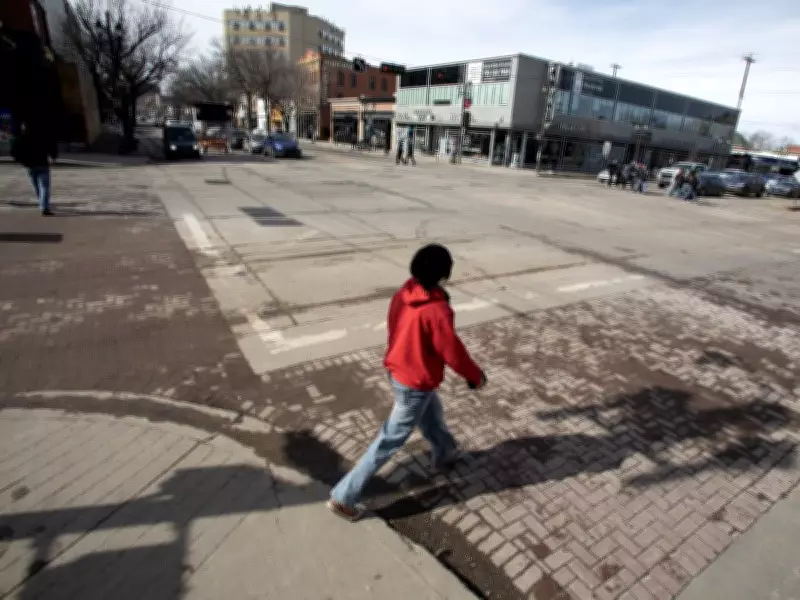
A proposal to eliminate diagonal scramble crosswalks along Whyte Avenue in Edmonton, just five years after their installation, is facing significant opposition from city councillors and residents. The controversial plan, aimed at facilitating Bus Rapid Transit (BRT) lanes, has sparked a heated debate over pedestrian safety and urban design priorities.
Pushback from City Councillor
Ward Papastew Councillor Michael Janz has emerged as a vocal critic of the city's initiative to remove the scramble crosswalks at key intersections, including Gateway Boulevard, 104 Street, and 105 Street. Janz emphasizes that he has received an overwhelming amount of feedback from Edmontonians expressing deep concerns about the potential removal.
"I've heard a huge outcry about the scrambles, and I think it shows Edmontonians want more pedestrian protection and people-friendly spaces," Janz stated. "Many of these are not the usual suspects who write me. There's a lot of fear about dangerous and distracted drivers, many driving bigger and bigger vehicles who can't see you when they're turning."

Pedestrian Safety Concerns
Janz highlighted alarming statistics to underscore the urgency of pedestrian safety measures. "We had 32 Edmontonians killed last year by drivers on our roads. Vehicle design is part of it, but street design is also part of it," he noted. The councillor's remarks reflect a broader anxiety among residents regarding the increasing risks posed by larger vehicles and inattentive motorists in urban areas.
While Janz is not explicitly opposed to the BRT project, he insists on greater transparency from city administration. He demands detailed data on how much delay the scramble crosswalks create for public transit and whether alternative measures, such as converting parking lanes into dedicated bus lanes, could mitigate these delays effectively.
Economic and Community Impact
The councillor also pointed out the economic implications of pedestrian-friendly infrastructure. "Whyte Avenue is supposed to be our main street, it's not supposed to be a commuter route for Sherwood Park residents," Janz argued. "Nobody spends a dollar when they're trying to get from 112 Street to Sherwood Park. They spend a dollar when they're stepping into a shop, having lunch, or listening to music."
Janz envisions Whyte Avenue as a vibrant hub for community engagement and commerce. "It's supposed to be our place where we shop, stroll, grab an ice cream and hang out, go to a festival, look for a furry. This is the wicked and weird place, it's supposed to be one of the great streets of the world. We need to make people a priority," he asserted.
City's Rationale and Proposed Changes
According to the City of Edmonton, the scramble crosswalks, which allow pedestrians to cross diagonally, are seen as an obstacle to improving bus transportation times. The city claims that longer pedestrian crossing times hinder plans to accelerate BRT operations. However, it remains unclear whether these delays would persist once dedicated bus lanes are established on either side of Whyte Avenue.
If the plan proceeds, pedestrians will revert to traditional 90-degree crossings at intersections. In response to safety concerns, the city proposes implementing new restrictions on left and right turns, along with extensions of sidewalk curbs, to enhance driver awareness and protect pedestrians.
Community Feedback and Next Steps
The removal plans were quietly published on the city's website over the past week, prompting a swift and passionate response from the community. Janz's call for data underscores a growing demand for evidence-based decision-making in urban planning. As Edmonton balances the needs of public transit efficiency with pedestrian safety and economic vitality, the debate over Whyte Avenue's future continues to intensify.
Residents and stakeholders await further details from city administration, hoping for a resolution that prioritizes both mobility and the well-being of those who live, work, and play in this iconic Edmonton neighborhood.