

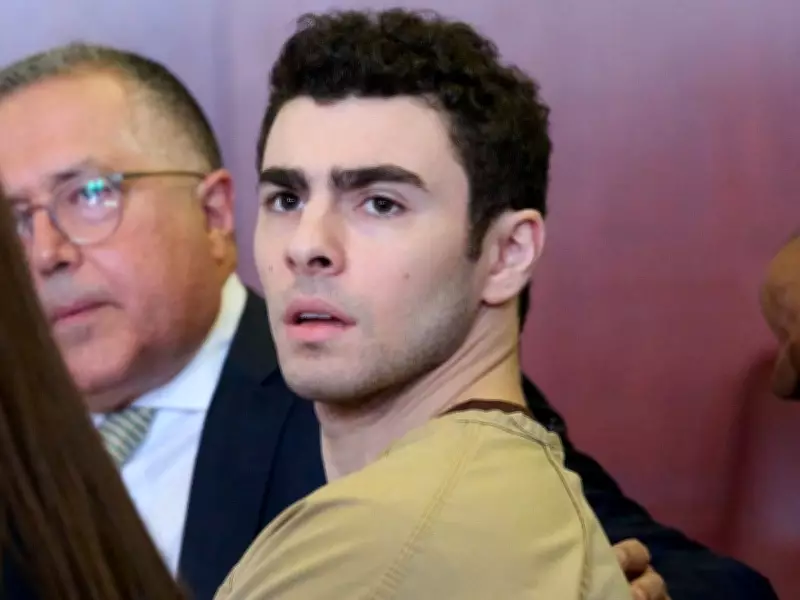
Luigi Mangione, the man accused of killing UnitedHealthcare CEO Brian Thompson, will not face the death penalty if convicted, following a significant legal ruling that federal prosecutors have decided not to challenge.
Judge's Ruling Eliminates Capital Murder Charge
In January, U.S. District Judge Margaret Garnett made a pivotal decision in the high-profile case, ruling that prosecutors cannot pursue a capital murder charge against Mangione. This ruling means that even if Mangione is found guilty of causing Thompson's death, he cannot receive the death penalty in federal court.
Federal Stalking Charges Remain
While the capital murder charge has been dismissed, Judge Garnett determined that a jury could still consider whether Mangione caused Thompson's death under two federal stalking laws. If convicted on these charges, Mangione faces the possibility of life imprisonment without parole, representing a severe penalty that stops short of execution.

The Justice Department confirmed in a one-page letter to Judge Garnett that prosecutors will not appeal her decision to throw out the murder charge. This formal acceptance means the death penalty is definitively off the table in the federal proceedings against Mangione.
Legal Reasoning Behind the Decision
Judge Garnett's ruling centered on specific legal requirements for capital murder charges. She determined that the federal capital murder statute requires prosecutors to prove the killing was committed in relation to a separate crime of violence. The judge concluded that stalking charges, while serious, did not meet the legal standard to qualify as a "crime of violence" under this specific statute.
Prosecutors had argued vigorously that the stalking charges warranted the death penalty if Mangione was convicted of murder, but Judge Garnett ultimately disagreed with the government's interpretation of the law.
Parallel State Murder Case Continues
Mangione still faces a parallel murder case in New York state court, where he has pleaded not guilty. However, New York state does not permit capital punishment, meaning even if convicted in state court, Mangione would not face execution. This creates a situation where neither jurisdiction can pursue the death penalty against him.
The federal trial is scheduled to begin with jury selection on September 8, while the New York state judge presiding over Mangione's case has set a June 8 trial date for the parallel proceedings.
Background of the Case
Brian Thompson was shot on December 4, 2024, outside a midtown Manhattan hotel in an incident that has drawn intense national attention. The case has generated significant public interest, with some supporters cheering Mangione as expressing rage against the U.S. healthcare system.
Attorney General Pam Bondi announced early last year that the United States would seek the death penalty against Mangione, describing the alleged crime as "a premeditated, cold-blooded assassination." That position has now been effectively nullified by the judge's ruling and the prosecution's decision not to appeal.
Mangione has pleaded not guilty in both federal and state cases. His legal team has raised concerns about potential "double jeopardy" issues arising from facing trials in both federal and state courts for the same alleged murder.
The case, officially designated as US v. Mangione, 25-cr-176, continues in the U.S. District Court for the Southern District of New York in Manhattan, with significant implications for how federal stalking laws intersect with murder charges in high-profile cases.






