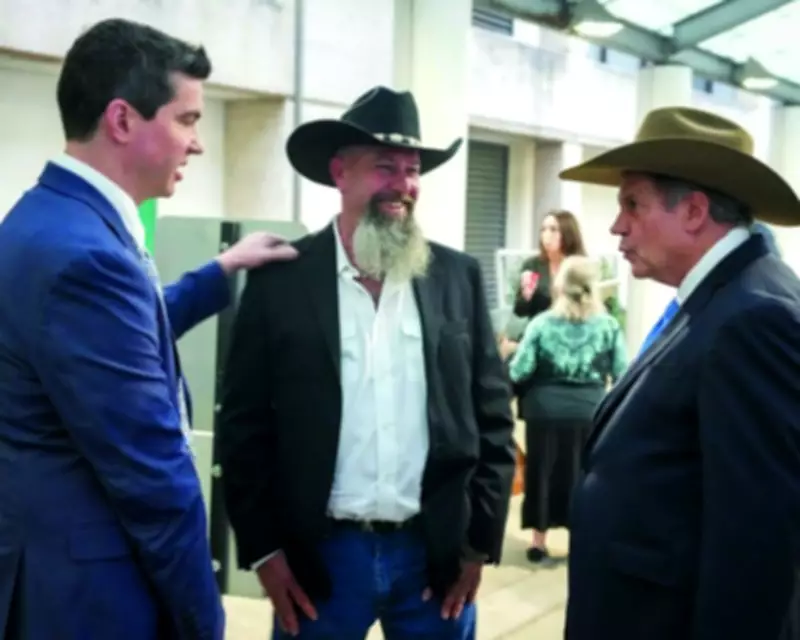
Texas Judge Exonerates Four Men in 1991 Austin Yogurt Shop Murders
On Thursday, February 19, 2026, a Texas prosecutor requested a judge to formally declare four men innocent in the notorious 1991 Austin yogurt shop murders, a brutal crime that shocked the city and remained unsolved for over three decades. This declaration marks the end of a long and painful legal saga for the wrongfully accused individuals and their families.
Decades of Injustice Overturned
One of the men, Robert Springsteen, was convicted and sentenced to death row, while the others—Michael Scott, Forrest Welborn, and Maurice Pierce—faced years of legal battles. Now, more than 25 years later, the state has admitted it made a grave error. At a hearing before state District Judge Dayna Blazey, Travis County First Assistant District Attorney Trudy Strassburger stated, "Over 25 years ago, the state prosecuted four innocent men... We could not have been more wrong."
An official ruling of "actual innocence" not only clears the men's names but also opens the door for them and their families to seek financial compensation for the years lost to wrongful imprisonment. Strassburger emphasized that all four lived under the shadow of the murders, never having the chance to lead normal lives.

New Suspect Revealed Through Cold Case Investigation
The breakthrough came when cold case detectives linked the murders to a different suspect in 2025. Robert Eugene Brashers, who died in 1999 after shooting himself during a police standoff, has been tied to violent crimes in multiple states. Advanced DNA testing since 2018 connected Brashers to:
- The 1990 strangling of a woman in South Carolina.
- The 1997 rape of a 14-year-old girl in Tennessee.
- The 1998 shooting of a mother and daughter in Missouri.
In the Austin case, DNA found under the fingernail of victim Amy Ayers matched Brashers' DNA from the South Carolina murder, providing critical evidence that led to the exoneration hearing.
Details of the Horrific Crime and Legal Battles
The 1991 murders involved four teenage girls—Amy Ayers, 13, Eliza Thomas, 17, and sisters Jennifer and Sarah Harbison, 17 and 15—who were found gagged, bound, and shot in the head inside an I Can't Believe It's Yogurt shop. The killer set the building on fire, destroying much of the evidence, complicating the investigation for years.
Police initially arrested the four men in 1999 after chasing thousands of leads and dealing with false confessions. Springsteen and Scott were convicted based on confessions they later claimed were coerced, with both convictions overturned in the mid-2000s. Welborn was charged but never tried after grand juries refused to indict him, and Pierce spent three years in jail before charges were dropped. Prosecutors attempted to retry Springsteen and Scott, but a judge dismissed the charges in 2009 after new DNA testing pointed to another male suspect.
Impact and Cultural Resonance
The case regained public attention in 2025 following an HBO documentary series that revisited the unsolved mystery. Springsteen's lawyer, Amber Farrelly, highlighted the severity of the injustice, noting, "Let us not forget that Robert Springsteen could be dead right now, executed at the hands of the state of Texas." The exoneration hearing was attended by family members, including Kim Pierce, the widow of Maurice Pierce, who died in 2010, underscoring the lasting emotional toll on all involved.
This ruling closes a painful chapter for Austin, a city long scarred by the killings and the failure to solve them, while highlighting advancements in forensic science that can rectify past wrongs in the justice system.