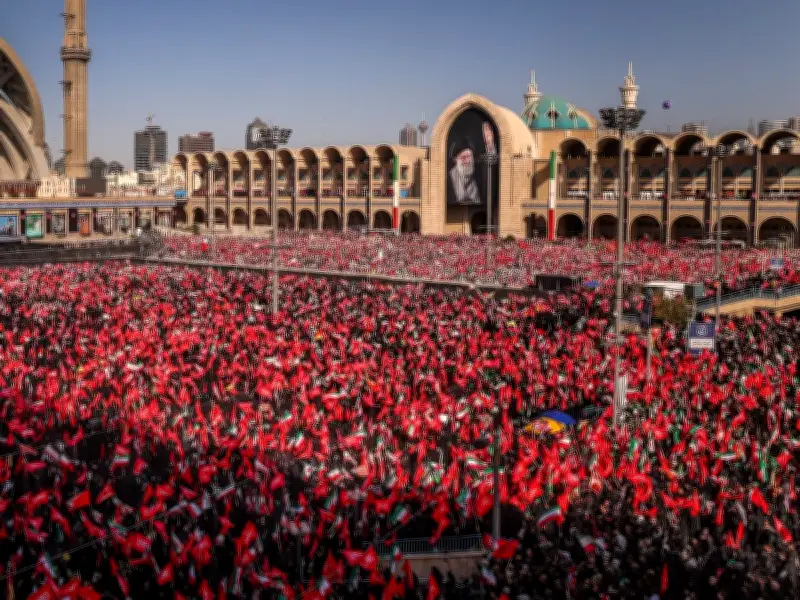
Iran is staging a six-day imperial funeral for Ali Khamenei, the supreme leader killed in a joint U.S.-Israeli strike on Feb. 28. The procession, moving from Tehran through Qom, Najaf, Karbala and Mashhad, is designed to project 15 to 20 million mourners, ending with burial on Thursday. But according to Avideh Motmaen-Far, writing for the National Post, this spectacle is not a measure of the regime's strength but a monument to Western failure and the deal that financed it.
Khamenei's death and the delayed funeral
Khamenei has been dead since Feb. 28, killed along with several relatives. His body was kept in cold storage for four months, not out of piety but calculation, waiting for the safest week to convert a corpse into a demonstration of power. That week arrived courtesy of the ceasefire. You cannot parade 20 million people through five cities while bombs are falling. The truce made the parade possible.
U.S. President Donald Trump announced the ceasefire's end on Wednesday, putting the burial scheduled for the next day in question. However, images of mourners had already flooded the globe for five days.

The price of the ceasefire
The truce came at a staggering price. When the strike killed Khamenei and left his anointed successor bleeding and hidden, the regime was as vulnerable as it had been since 1979. Instead of pressing the advantage, the West reached for the negotiating table and called the retreat peace.
The Islamabad Memorandum, signed at Versailles in mid-June, reportedly delivered Tehran a $300-billion reconstruction plan, removal of all types of sanctions, access to frozen billions, an acknowledged right to enrich uranium, and permission to keep building ballistic missiles. Every one a former red line, surrendered while the regime was on its back. Foreign Minister Abbas Araghchi boasted of oil waivers, a lifted port blockade and released assets.
Impact on the Strait of Hormuz
For proof of what appeasement buys, look at the Strait of Hormuz. The deal's headline deliverable was keeping the strait open. Iran reclosed it on June 20, three days after signing, and its negotiators now float a permanent tolling regime, actual charges for passage through the world's most important energy chokepoint. The West went to war, killed the supreme leader, and negotiated an outcome in which the regime emerges with the standing to tax global oil traffic at will. That is not a chokehold loosened. It is a chokehold formalized, notarized and put on a payment plan.