

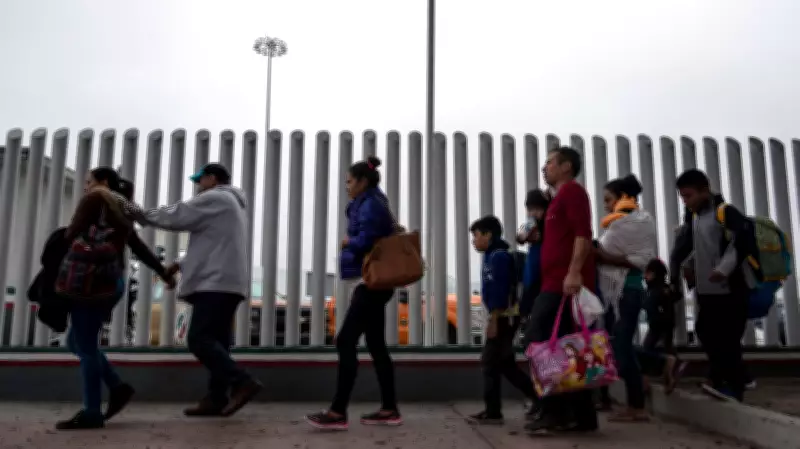
Supreme Court to Decide Fate of Asylum 'Turnback' Policy at U.S. Border
On Tuesday, the U.S. Supreme Court will hear arguments in the pivotal case Noem v. Al Otro Lado, which centers on whether American border guards can legally prevent migrants from making asylum claims at ports of entry. This case challenges the so-called "metering" or "turnback" policy, initially implemented during the Obama administration and expanded under President Donald Trump. Under this policy, migrants arriving at southern border ports of entry were turned back into Mexico without having their asylum cases assessed, regardless of the merits of their claims, and without any formal record or future appointment to return.
Legal and Humanitarian Stakes in the Asylum Debate
The core legal question before the justices is whether an individual who presents themselves at a border port of entry and expresses a fear of persecution, but is physically stopped from crossing, has technically "arrived in" the United States under asylum law. Lower courts, including the Ninth Circuit Court of Appeals in a 2024 ruling, have determined that such individuals are considered to have arrived, thus making the turnback policy unlawful. Immigration advocates argue that this interpretation upholds a century-old principle ensuring that border officials evaluate all cases presented at ports of entry.
However, the Trump administration contends in legal briefs that, in ordinary English, a person only "arrives in" a country when they cross its borders, not when they are stopped in another nation. They assert that the appeals court ruling undermines executive tools for managing border surges and preventing overcrowding at ports. This case has significant implications, as former President Trump seeks to revive the policy, having successfully petitioned the Supreme Court to take up the matter last year.

Humanitarian Consequences and Historical Context
Advocates highlight the dire humanitarian impacts of the turnback policy, which left thousands of migrants stranded in Northern Mexico, where they faced risks of kidnapping, rape, and murder. Rebecca Cassler, senior litigation attorney for the American Immigration Council, emphasized that many migrants were trying to follow U.S. law by approaching ports of entry, only to suffer greatly as a result. She warned that the Trump administration is seeking a "blank check" to restrict asylum rights further.
The historical context of asylum failures, such as the MS St. Louis incident during the Holocaust, underscores the stakes. In 1939, the United States turned away over 900 Jewish refugees, leading to the deaths of 254 in the Holocaust. This event has since been cited as a cautionary tale, influencing modern asylum laws. In a recent amicus brief, the humanitarian group HIAS referenced this history, arguing that the turnback policy reverts to a period of arbitrary procedures and danger for those fleeing persecution.
Broader Immigration Policy Landscape
This case is part of a broader trend of policies aimed at limiting asylum claims at the U.S. border. Previous measures, such as the "Remain in Mexico" and "Title 42" policies, along with Biden-era crackdowns, have similarly restricted access. Under Trump's second term, asylum rights have been nearly eliminated as part of a wider campaign against immigration. Melissa Crow, director of litigation at the Center for Gender and Refugee Studies, noted that for people fleeing persecution, the outcome of this case is a matter of life and death, as it could grant the administration more leeway to curtail asylum protections.
As the Supreme Court deliberates, the decision will not only affect the legality of the turnback policy but also shape the future of U.S. asylum law and the rights of migrants seeking refuge at American borders.






