

ICE Officers Deployed to Airports During Government Shutdown
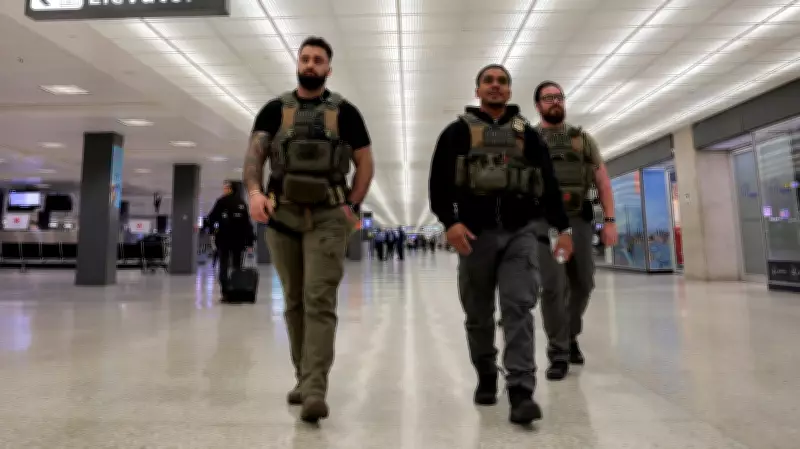
This week, President Donald Trump ordered the deployment of Immigration and Customs Enforcement (ICE) officers to more than a dozen airports across the United States. This move comes amidst staffing shortages caused by the ongoing partial government shutdown, which has severely impacted the Department of Homeland Security, including the Transportation Security Administration (TSA).
Critics argue that the decision is not primarily about enhancing traveler safety but rather serves as an additional layer of intimidation, aligning with Trump's broader mass deportation agenda. In recent days, social media has been flooded with videos showing ICE agents at airports, often seen looking at their phones, avoiding cameras, or closely monitoring TSA agents who continue to work without pay.
Unsettling Observations: People of Color in ICE Uniforms
A particularly disturbing aspect of these deployments has been the visible presence of many ICE officers who are people of color. Queer activist Matt Bernstein posted a viral video from JFK Airport featuring ICE officers, most of whom were Black and brown men. Similarly, a post on X highlighting a Black ICE officer went viral, with one user commenting, "Stud ICE Agent is not what we mean when we say representation matters..."

On Sunday, just before the widespread airport deployments, a woman was arrested at San Francisco International Airport, with one of the main ICE officers involved appearing to be an Asian man. This has sparked unease among many observers, who note the irony of nonwhite officers arresting immigrants who often share similar racial or ethnic backgrounds.
On Instagram, creator Dominique Bowen expressed frustration in a video, stating, "They know they looking dumb, too. Are ya'll watching the news? They're looking for you, dummy. They're looking for your mamas, your grandmama, your brother."
Complicating Liberal Narratives on Immigration
This reality challenges simplistic liberal narratives that often portray support for Trump's anti-immigrant policies as coming solely from white conservatives. The presence of people of color in ICE roles underscores a more complex and uncomfortable truth: immigration enforcement relies, in part, on the complicity of individuals who share identities with those most at risk.
Historically, many Department of Homeland Security agents have been people of color, a trend noted by those who have navigated the U.S. immigration system. For instance, during my family's own struggle to obtain permanent residence, we observed that numerous officers enforcing immigration laws had "ethnic" last names and resembled my parents.
Incentives and Internalized Beliefs Driving Recruitment
Several factors contribute to this phenomenon. ICE offers attractive incentives to recruit from vulnerable populations, including:
- Signing bonuses of up to $50,000
- Student loan forgiveness programs
- Extensive health benefits
For some, becoming an ICE agent represents a path to upward mobility and financial stability that might otherwise be unattainable. Additionally, there is a problematic belief within some immigrant communities that those who arrive "the right way" are superior to others, despite the hypocritical nature of this view given America's own immigration history.
It is also important to recognize that immigration laws have become increasingly strict over time. Many who emigrated in the 1980s or 1990s faced fewer hurdles compared to those attempting to enter today, adding layers of complexity to the debate.
Moral Implications and Community Betrayal
While the situation is undeniably complicated, it does not morally absolve those participating in enforcement actions, especially individuals from immigrant families who might be expected to show greater empathy. Having spent over half my life navigating the U.S. immigration system, I find it difficult to comprehend actively denying someone the chance for safety and a better life, particularly since no one chooses their country of birth.

When Black and brown communities see themselves reflected in ICE uniforms, the response is not merely anger—it is a profound sense of betrayal. This feeling should not be easily dismissed or forgotten as we continue to grapple with the broader implications of immigration policy in America.





