

Victor Davis Hanson: The Changing Face of American Immigration
In a recent commentary, historian Victor Davis Hanson reflects on the dramatic shift in attitudes among immigrants to the United States, contrasting historical gratitude with contemporary hostility. He argues that this transformation stems from policy changes and ideological shifts that have reshaped the nation's approach to newcomers.
Historical Foundations of Immigrant Success
Hanson begins by highlighting the legacy of legal immigrants who have fueled American innovation, citing founders of major companies like eBay, Google, Nvidia, SpaceX, Stripe, Sun Microsystems, Tesla, and Yahoo. He references the 1963 film America, America by Elia Kazan, which portrays the arduous journey of immigrants seeking opportunity in the U.S., embodying a traditional view of hyperpatriotic gratitude.
Examples such as Dr. Max Nikias, a Cypriot immigrant who became president of the University of Southern California, and Hanson's own experiences with immigrant farm families in California's San Joaquin Valley, illustrate a past era where hard work and love for America were paramount. His Swedish grandfather and other family members who served in World Wars I and II further exemplify this deep-seated loyalty.

The Rise of Ingratitude and Hostility
However, Hanson contends that recent decades have seen a troubling reversal. He points to incidents where immigrants, visitors, and foreign students have expressed anti-American sentiments, such as protests cheering on Iran and its proxies like Hezbollah and Hamas. Cases like Dr. Fatemeh Ardeshir-Larijani, daughter of an Iranian official, and Mahmoud Khalil, a Columbia University student leading pro-Hamas encampments, underscore this trend.
Naturalized citizens and illegal aliens have also been implicated in violent acts. Hanson lists several examples from March 2026:
- Ndiaga Diagne, a naturalized citizen from Senegal, shot and killed three people in Austin, Texas.
- Emir Balat and Ibrahim Kayumi, sons of naturalized citizens, threw IEDs in New York.
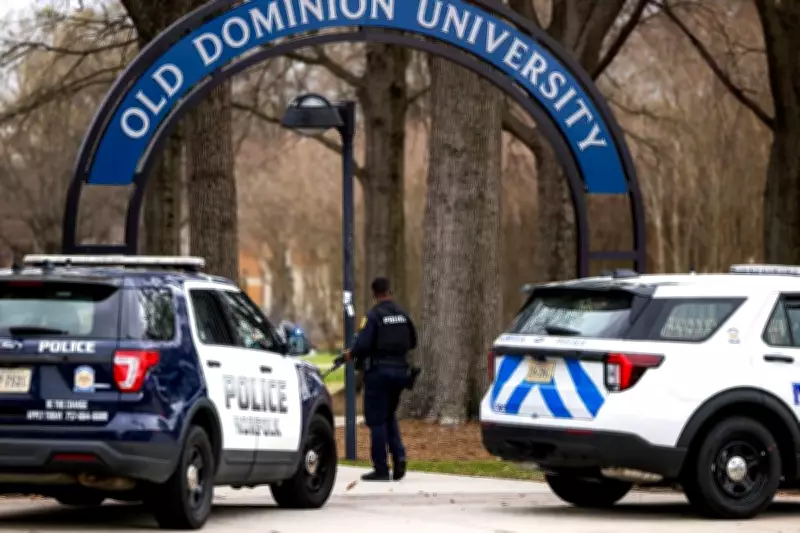
- Mohamed Bailor Jalloh, a naturalized citizen from Sierra Leone, murdered a military instructor in Virginia.
- Ayman Muhammed Ghazali, a naturalized citizen from Lebanon, attempted a car bombing in Michigan.
He also mentions the Tsarnaev brothers' Boston Marathon bombing and Major Nidal Hasan's Fort Hood shooting as earlier instances of immigrant-led terrorism.
Policy Shifts and Ideological Drivers
Hanson traces this change to the 1965 Hart-Celler Act, which replaced merit-based immigration with family ties and labor needs, shifting demographics away from Europe. He argues that Democrats have since embraced open borders and a "salad bowl" model over the "melting pot," aiming to create a dependent constituency for socialist agendas.
The ideology of diversity, he claims, has been weaponized to portray America as oppressive, leading to a culture where criminals are seen as victims. Examples include the portrayal of illegal alien Kilmar Abrego Garcia as a martyr and the celebration of figures like Dzhokhar Tsarnaev in media.
Consequences and Ironies
The commentary concludes with a stark assessment: the U.S. has become its own "Dr. Frankenstein," fostering a class of immigrants who mirror the left-wing critique of America as evil. Hanson questions why individuals like Eileen Gu, an American-born skier competing for China, feel no allegiance, suggesting it reflects a relativist culture that eschews judgment.
He warns that without a return to traditional values of gratitude and merit, the nation risks further violence and societal decay, urging a reevaluation of immigration policies to prioritize safety and integration.






