

Canadian Grandfather Returns Home After Controversial Detention at 'Alligator Alcatraz'
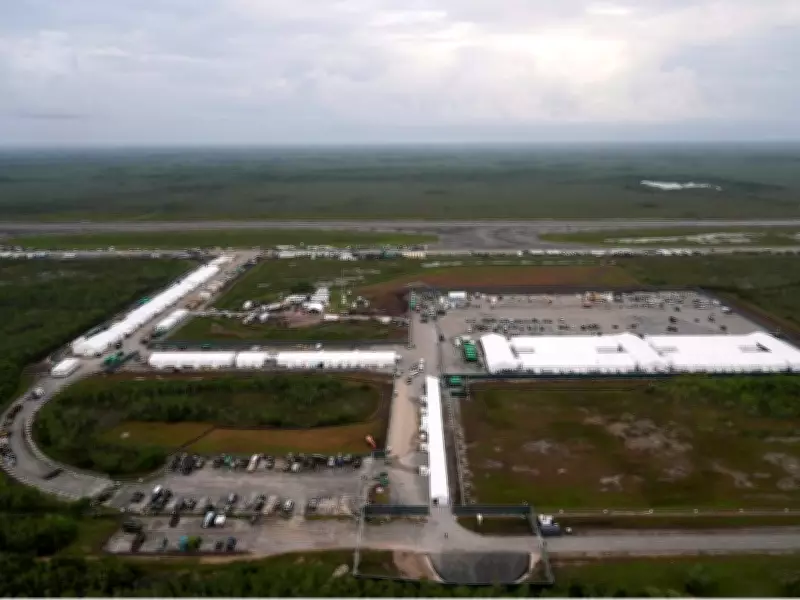
Douglas Dixon, a 61-year-old grandfather originally from Montreal, has returned to Canada after being detained by U.S. Immigration and Customs Enforcement and held at the infamous detention facility nicknamed "Alligator Alcatraz" in the Florida Everglades.
Decades in America End Abruptly
Dixon had lived in the United States for more than two decades with a Green card before his detention began on February 10, 2026. The incident occurred as he checked in with his probation officer regarding a tax evasion conviction. He arrived back in Canada on Wednesday at Pearson International Airport via an American Airlines flight from Miami.
"It's good to be back in Canada," Dixon told CP24 in an interview, adding that his perspective on his once-adopted home has fundamentally changed. "I did not think the United States was going to treat people inhumanely. They do not care about the human condition inside those detention centres."

Tax Troubles Lead to Detention
Originally from Montreal, Dixon moved to Florida's Gulf Coast to raise his family. The COVID-19 pandemic forced him to close his Tropical Smoothie Cafe business in Port Charlotte, leading to financial difficulties. He fell behind on tax filings, eventually owing more than US$30,000 with interest.
Dixon pleaded no contest to tax evasion in 2022 and agreed to a monthly repayment plan. He reported having paid back two-thirds of the amount over three years, with approximately $12,000 remaining owed to the American government. Prior to his arrest, he was working as a food delivery driver for DoorDash.
Arrest and Detention Conditions
During what he thought would be a routine probation appointment on February 10, Dixon was arrested by ICE agents who pushed him against a wall, placed him in handcuffs and shackles. "I was dumbfounded," Dixon told CTV News. "I thought I was just going to a regular appointment."
He was among 18 people detained at the probation office and transported to Alligator Alcatraz. At the facility, Dixon described receiving minimal provisions:
- A pair of underwear
- Flip-flops
- An orange jumpsuit
After being fingerprinted and given a yellow color-coded bracelet indicating he was scheduled for a hearing, Dixon was placed in what he called a "cage" - a communal metal cell containing:
- 16 bunk beds for 32 men
- Two urinals
- One toilet
Detainees received three meals daily but were only allowed to shower three days after arrival and had just one hour of yard time every four days. Dixon reported the facility was freezing cold and sleep was nearly impossible due to constant noise and disruption.
Medical Issues and Transfer
After nine days at Alligator Alcatraz, Dixon was informed he would be transferred to a smaller facility in Clewiston, Florida. However, he became ill before the transfer and was instead moved to the Glades County Detention Centre in Moore Haven, Florida, where he was diagnosed with a urinary tract infection and treated with antibiotics.
Swift Deportation Decision
In late March, Dixon attended an immigration hearing where his lawyer presented 14 character reference letters from friends. Despite this evidence, the hearing concluded in minutes with a judge ordering Dixon's deportation back to Canada and imposing a lifetime ban from the United States.
Defrauding the government of more than $10,000 in revenue is considered "an aggravated felony" under American immigration law, according to CTV News. This classification significantly impacted Dixon's case.
Return to Canada
After 65 days in detention, Dixon was transported to Miami International Airport by ICE without an opportunity to say goodbye to family members. He will now live with his sister and her family in Montreal while his wife, Jo Ann Collison, packs up their life in Florida before returning to Canada to reunite with her husband.
Broader Context
Since October 1, U.S. Customs and Border Protection data indicates 32 Canadians were among more than 71,400 migrants deported from the United States. The Alligator Alcatraz facility, officially known as the Dade-Collier Training and Transition facility, has gained notoriety for its conditions and location in the remote Florida Everglades.

Dixon's experience highlights the complex intersection of immigration enforcement, criminal convictions, and detention conditions that continues to generate controversy in U.S.-Canada relations and broader immigration policy discussions.





