

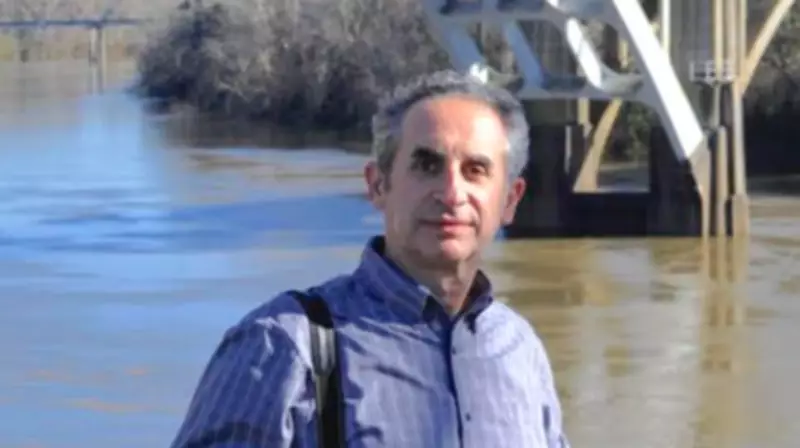
Living Between Two Worlds: A Syrian American's Journey Through War and Home
For forty years as an immigrant to the United States from Damascus, Syria, I have experienced war not as a distant concept but as something intimately familiar—an ever-present shadow that feels closer than my own skin. It is a profound sadness that quietly tears at my soul each time conflict erupts, and the very fact that I can say "each time" shakes the foundation of my existence. Why must there always be another time?
Arriving With Dreams, Facing Suspicion
I arrived in this country in 1984 as an eighteen-year-old brimming with dreams, seeking the freedom and opportunities that might sound cliché but remain profoundly true. Throughout my adult life here, war has arrived through headlines, conversations, and the subtle shift in how people regard me when news turns to the Middle East. Consequently, we Muslims have become entities that many Americans view not just with prejudice but with deep suspicion.
On multiple occasions, I have been asked directly and without hesitation if I am a terrorist. This has happened not only here in Alabama but across this vast nation I now call home. I have learned to respond with patience, occasionally with humor, but mostly with silence. Regardless of my response, the question lingers long after it is spoken, leaving a wound that oozes blood and shame—a wound that remains red and raw.

The Daily Dance Between Two Realities
This is not merely a story about hurtful questions. It is about waking each day to two worlds painfully entangled. In one world, there are grocery lists, casual conversations, and the gentle rhythm of Southern life. A cashier smiles and asks about my day. Someone comments on the weather. A neighbor waves. Life feels steady, almost tender in its predictability.
In the other world, my phone illuminates before sunrise with messages from relatives—missed calls, headlines I hesitate to click, names of cities that sound like home now spoken in the language of destruction. Every day, I move between these realities with considerable guilt.
During the decade-long Syrian war, I once stood in line at my Birmingham coffee shop while speaking to my mother in Damascus. When I asked how things were, it was my turn at the counter, so I nodded at the barista taking my cappuccino order, then returned to my mother, who said, "The bombings were not that close today. Our building did not shake." Similar interactions occurred during the Gulf War when I had relatives in Kuwait. While I lived my American life, facing dilemmas like where to eat lunch or when to collect dry cleaning, they lived "over there," deciding whether risking their lives to visit a store was worthwhile.
The Damascus That Lives Within
As the conflict between my two worlds intensifies, so do the sweet memories of my first home. When I close my eyes, I return to Damascus—not the city of headlines, but the one that lives inside me. I see myself as a boy, running through the streets of the Abbo Rommana neighborhood on Abdul Malek Street, my feet flying over sidewalks, laughter echoing against cement buildings. Days felt endless, filled with play without concern for time or anything beyond the next game or joke.
On Fridays, I walked with my father to the mosque. He moved with quiet dignity, greeting people along the way. Inside, adults stood shoulder to shoulder in prayer—composed and reverent—while we boys tried to remain still but rarely succeeded, sneaking glances and suppressing laughter. After prayers, we ran across vast rugs, our bare feet sinking into their softness as if the mosque itself embraced us.
Life spilled into the streets where food was not merely consumed but lived. The scent of shawarma turning over red coals enveloped us. Vendors pushed carts where falafel crackled in hot oil—cumin, sumac, and fresh parsley rising like promises. Others sold cactus pears with bright skins, boiled corn steaming into evening air, and roasted chestnuts warming our hands on cool nights. We indulged as the lone Arabic ney sang nearby.

We stood outside late into the night—talking, laughing, sharing stories that felt important even if they were not. Our street was our world, shaping us and making us feel part of something larger. This is the Damascus I carry when I hear "war"—not strategy, politics, or maps, but memory, texture, the sound of a farmer calling out his apples, the scent of cardamom rising from bitter Arabic coffee, the vivid colors of Souq al-Hamidiyah with its narrow shops overflowing with za'atar, Aleppo pepper, prayer rugs, rosary beads, engraved copper pots, mosaic boxes, and forgotten books. Home.
The Contradiction of Gratitude and Grief
Then I open my eyes, and I am in Alabama. Life here is different—another home I have built, a place that has given me much. I built a life, raised a family, found friendships, and discovered parts of myself I might never have known otherwise. I love much about living here, especially the freedom I grew up yearning for—the ability to speak, write, and share my story in my own voice.
Yet, there is tension I cannot ignore. The same country that granted me this life is often implicated in the destruction I wake to each morning. This is the contradiction I carry: loving a place that gave me wings while grieving what it has done, and continues to do, to the very place that shaped those wings' feathers.
There are moments when this tension feels overwhelming—when gratitude and grief sit side by side, neither willing to yield. When someone asks, "How are you?" I pause a second too long because the answer depends on which world I inhabit at that moment.
Finding Hope in Human Connection
Grief arrives loudly via breaking news and urgent messages, or quietly, slipping into ordinary days—in how my hand lingers on my phone before setting it down, or how an Arabic word suddenly pulls me into a memory so vivid it feels like I never left. When my sister calls me "Karromay" (little Karim), I am instantly back in Damascus where my mother always used that tender term. She passed away a couple of years ago during the massive earthquake that struck Syria and Turkey.
Different things ignite this grief—a stray remark, a question about "those people over there," a look heavy with suspicion. There is loneliness in this, not because people here do not care, but because explaining what it means to carry noise and silence simultaneously is challenging. It is difficult to be seen as something other than human—as a symbol, a question.
Yet, there is also hope. Fragile but persistent, I have seen it in small moments: a stranger's kindness, someone choosing to listen instead of judge, the quiet recognition that we are more alike than different. Watching another war unfold from Alabama has taught me that while we cannot control others' actions or stop wars with our hands alone, each of us inhabits a small world we can influence.
We can smile at a stranger, reach out to someone different, choose compassion over fear, and remember that the person before us carries a story we may never fully understand. We can be—simply and profoundly—human. That may be, in the smallest of ways, where peace begins.





