

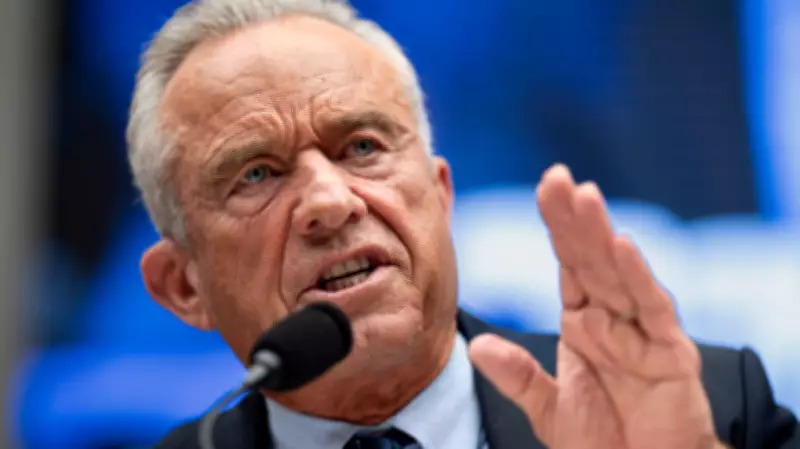
Health Secretary RFK Jr. Dismisses Danish Study on Tylenol-Autism Link as 'Fraudulent'
Health Secretary Robert F. Kennedy Jr. has vehemently rejected the findings of a recent Danish study that found no connection between autism and Tylenol use during pregnancy, labeling the research as "garbage" and "fraudulent." During a hearing before the House Committee on Education and Workforce on Friday, Kennedy called for the study to be retracted, sparking a heated debate over scientific evidence and public health messaging.
Kennedy's Criticism of the Study Methodology
Kennedy argued that the study, published this week in the peer-reviewed medical journal JAMA Pediatrics, relied solely on prescription data, which he claimed limited its scope. He emphasized that acetaminophen, the active ingredient in Tylenol, is often purchased over the counter without a prescription. "It was a garbage in, garbage out study. The industry has the capacity to generate these studies all the time and it's fraudulent," he told lawmakers.
The study evaluated medical records from over a million women in Denmark to assess potential associations. In response to Kennedy's concerns, the publication acknowledged that "true exposure level among those with low-level exposure was likely underestimated," but noted that past research on over-the-counter drugs has shown such bias to be largely negligible.

Expert Pushback Against Kennedy's Claims
Dr. Jeffrey S. Morris, a professor of public health and preventive medicine at the University of Pennsylvania, criticized Kennedy for failing to acknowledge key aspects of the study. Morris pointed out that the paper addressed potential bias and that earlier Danish research from 2021 specifically examined the validity of prescription registries for assessing medication use, concluding non-recorded use had a "virtually negligible" influence.
"He overlooks the fact that the paper acknowledged and earlier Danish research directly examined the potential bias from low-dose, non-prescription use," Morris said in an online response. He added that the study found no elevated autism risk even among children of high-dose prescription users, who should be at greatest risk under Kennedy's framework. "Calling for retraction, dismissing the study outright, along with all of the other literature failing to support his narrative, is not intellectually honest," Morris stated.
Broader Context and Political Implications
This controversy comes amid Kennedy's ongoing efforts to link Tylenol to autism. A year ago, he pledged to identify the cause of the autism epidemic by September, but after missing that deadline, he shifted focus in October to proving that Tylenol use during pregnancy can cause autism. Despite admitting no conclusive evidence exists, he continues to urge caution.
President Donald Trump has also weighed in, advising pregnant women to "tough it out" and avoid Tylenol for fevers, a stance medical experts have called "reckless and irresponsible." The maker of Tylenol, Kenvue, did not immediately respond to requests for comment on the latest developments.
Another study from Sweden in 2024 also found no causal link between autism and Tylenol among siblings, further complicating Kennedy's assertions. His office has not commented on these findings or the 2021 study addressing his methodological concerns.






